
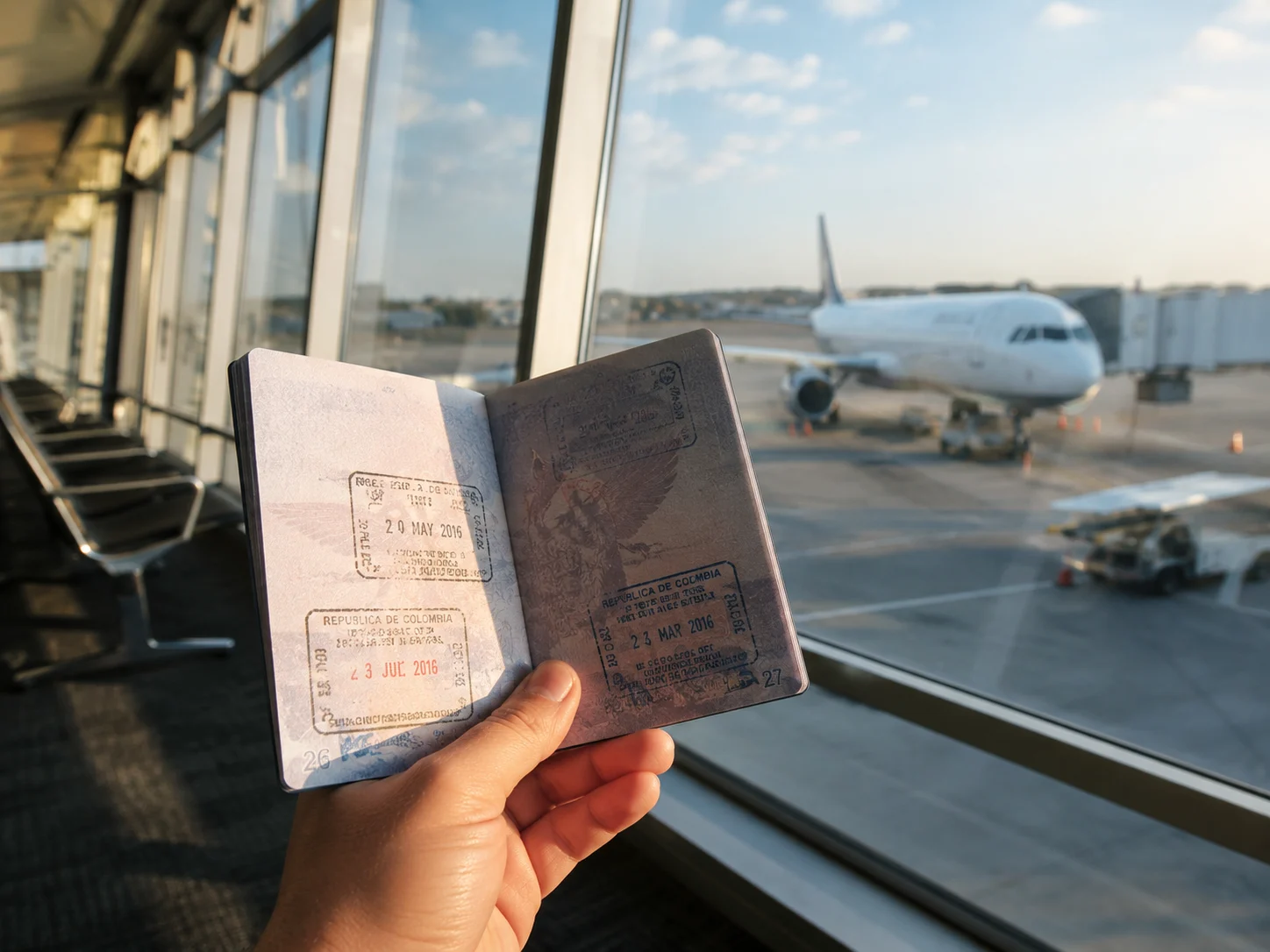
Canada at the 2026 World Cup - 13 matches, two cities
Canada is one of three co-hosts of the 2026 FIFA World Cup, alongside the United States and Mexico. The tournament runs from June 11 to July 19, 2026, with 48 teams and 104 matches in total. Of those, 13 matches are played on Canadian soil, divided between two stadiums in two cities. If your team's path runs through Canada, this is where you will be heading.
| City | Stadium | Matches |
|---|---|---|
| Toronto | BMO Field | Group + knockout fixtures |
| Vancouver | BC Place | Group + knockout fixtures |
Both BMO Field in Toronto and BC Place in Vancouver are being expanded and upgraded for the tournament. Toronto and Vancouver are roughly 3,300 km apart, so fans following a single team across Canadian matches should plan for a domestic flight between them. Crucially, entering Canada has nothing to do with which city you are visiting - the entry rules are national, set by Immigration, Refugees and Citizenship Canada (IRCC) and enforced by the Canada Border Services Agency (CBSA).
There is one point worth repeating up front because it trips up so many people: there is no dedicated "World Cup visa" for Canada. A match ticket is not a travel document and does not, on its own, let you cross the border. You enter through one of the two standard visitor routes below, and you do it the same way a tourist would in any other year.
Two entry routes - eTA or TRV
Which route applies to you depends entirely on your nationality (and, in some cases, your existing US visa status). Every foreign visitor flying to Canada falls into one of two buckets: visa-exempt travellers who need an eTA, or everyone else who needs a TRV. There is no third option and no shortcut for football fans. The table below is the fastest way to see where you stand.
| You are... | What you need | How you get it |
|---|---|---|
| From a visa-exempt country (e.g. UK, EU, Japan, Australia, South Korea), flying in | eTA | Apply online, CAD 7, usually approved in minutes |
| A lawful US permanent resident (green card holder), flying in | eTA (carry your green card too) | Apply online, CAD 7 |
| From any other country (e.g. Nigeria, Ghana, India, Egypt, Morocco) | TRV (Temporary Resident Visa) | Apply online + biometrics, ~4-8 weeks |
| A US citizen | Neither (passport only) | Just carry a valid US passport |
| Transiting by air through Canada (changing planes only) | eTA or TRV depending on nationality | See the transit section below |
If you are not sure which list your country is on, the safest move is to check the official IRCC "Find out if you need a visa" tool before you book anything. For a nationality-by-nationality breakdown across all three host countries, see our World Cup 2026 visa by nationality guide. The rest of this page explains each route in detail.
Route 1 - the eTA for visa-exempt fans
An Electronic Travel Authorization (eTA) is an electronic permit, electronically linked to your passport, that visa-exempt travellers need to fly to or transit through Canada by air. It is not a sticker or a separate card - it lives in Canada's system and is checked against your passport when you board. It costs CAD 7, is valid for up to five years (or until your passport expires), and allows multiple visits, each typically up to six months.
The application is short and done entirely online. You will need your passport, a credit card to pay the CAD 7 fee, and an email address. Most applications are approved within minutes, but some are flagged for additional review that can take several days, so do not leave it to the airport. When asked about the purpose of your trip, we advise noting "FIFA World Cup 26" in the application so your intent is clear and consistent with the documents you carry.
- Go to the official IRCC eTA application page (only use the genuine Government of Canada site - avoid copycat sites that charge inflated fees).
- Have your valid passport, a credit or debit card, and an email address ready.
- Complete the online form with your passport and travel details; note "FIFA World Cup 26" as your purpose of travel.
- Pay the CAD 7 fee online.
- Wait for the email confirmation - most are approved within minutes; some take a few days.
- Once approved, the eTA is linked to that passport automatically. Travel with the same passport you applied with.
The air-transit rule fans miss
Here is the single most common Canada mistake World Cup fans make. An eTA is required even for AIR TRANSIT through a Canadian airport. That means if your flight to another country merely connects through Toronto Pearson or Vancouver International - even if you never leave the airport and never officially "enter" Canada - you still need a valid eTA (or a TRV, depending on your nationality) to board that flight.
This catches people out constantly. A fan flying from Europe to a US host city on a ticket routed through Toronto assumes they need nothing for Canada because they are not stopping there. The airline will refuse to board them without the eTA. Because connecting flights via Toronto and Vancouver are common on transatlantic and transpacific routes, check your full itinerary - not just your final destination - and get the eTA if any leg touches Canadian airspace and ground.
| Your situation | Do you need a Canadian authorization? |
|---|---|
| Flying into Toronto/Vancouver to watch a match | Yes - eTA or TRV |
| Connecting through a Canadian airport en route elsewhere (air transit) | Yes - eTA or TRV (commonly missed) |
| Driving across the US-Canada land border | Yes - eTA not required for land entry, but a TRV is if your nationality needs one |
| US citizen, any of the above | No visa or eTA - valid US passport only |
Note the nuance in that table: the eTA requirement is specifically tied to arriving by air. Visa-exempt travellers entering Canada by land or sea (for example, driving across the border from a US match city) are not required to have an eTA. But travellers whose nationality requires a TRV need that visa regardless of how they arrive - by air, land, or sea.
Route 2 - the TRV for everyone else
If your nationality is not on Canada's visa-exempt list, you need a Temporary Resident Visa (TRV), also called a visitor visa. This applies to fans from many of the nations sending large travelling supports, including Nigeria, Ghana, Egypt, Morocco, India, and others. The TRV is a counterfoil placed in your passport, and unlike the eTA it involves giving biometrics (fingerprints and a photo) and a longer processing time of roughly 4 to 8 weeks.
Because of that processing window, the advice is simple and urgent: apply early. As the tournament approaches, application volumes rise and processing can stretch beyond the typical range at busy visa offices. If your team has qualified or you are planning to follow the knockout rounds, do not wait for a specific match draw to start - begin the TRV process as soon as you reasonably can.
- Create an account and apply online through the official IRCC portal for a visitor visa (TRV).
- Complete the application form and upload supporting documents (passport, photo, proof of funds, ties to home, and your match tickets or proof of purchase).
- Pay the application fee and, where applicable, the biometrics fee.
- Receive your biometrics instruction letter, then book and attend an appointment at a Visa Application Centre to give fingerprints and a photo.
- Wait for processing (typically 4-8 weeks; allow more during peak demand).
- If approved, your passport is returned with the TRV counterfoil. Travel with that passport and your supporting documents.
A TRV does not guarantee entry any more than an eTA does. It authorizes you to travel to a Canadian port of entry and request admission; the CBSA officer there still makes the final call. Carry your full document set with you on arrival, not just the visa.
Document checklist for the border
Whether you hold an eTA or a TRV, the documents you carry to the CBSA officer matter. The officer wants to see a coherent, believable visitor: someone with a clear reason to be in Canada, the means to support themselves, and strong reasons to leave when the trip ends. Tailor your story to the obvious truth - you are here for the football - and have the paperwork to back it up.
- A valid passport (and your eTA-linked passport must be the one you applied with).
- Your match tickets or FIFA proof of purchase.
- Confirmed accommodation (hotel bookings) in Toronto and/or Vancouver.
- Return or onward flight tickets showing you will leave Canada.
- Proof of funds to cover your stay (bank statements, credit cards).
- Evidence of ties to your home country (employment letter, property, family) - especially important for TRV holders.
- If you are a US green card holder using an eTA, carry your green card.
Be ready to answer simply and consistently: why you are visiting ("attending FIFA World Cup matches"), how long you are staying, and when you are leaving. Inconsistency between your documents and your answers is one of the fastest ways to invite extra scrutiny.
Crossing between Canada, the US, and Mexico
This World Cup is spread across three countries, and many fans will attend matches in more than one. The critical thing to understand is that each country's entry document is completely separate. A US visa or ESTA does not grant you entry to Canada, and a Canadian eTA or TRV does not grant you entry to the United States. Each border is its own checkpoint with its own paperwork.
If your itinerary includes US host cities, you will need the relevant US authorization on top of your Canadian one - see our US World Cup visa guide. If you are also heading to Mexico for matches in Mexico City, Guadalajara, or Monterrey, check the Mexico World Cup visa guide, where holders of a valid US visa can often enter without a separate Mexican visa. The point is to map every border on your route and carry the right document for each.
| Destination country | What gets you in |
|---|---|
| Canada | eTA (visa-exempt) or TRV - NOT a US visa or ESTA |
| United States | ESTA (VWP) or B1/B2 visa - NOT a Canadian eTA or TRV |
| Mexico | Visa-free for many, or a valid US/Canada/Schengen visa for some - check separately |
For fans crossing the US-Canada land border between match cities - say from Seattle up to Vancouver - remember the rule above: the eTA is not required for land entry, but a TRV still is if your nationality needs one. Plan the documents for the direction you are travelling, and keep both countries' paperwork on hand if you are bouncing back and forth.
The honest reality - the officer decides
It cannot be said too plainly: neither an eTA nor a TRV is a guarantee of entry. Both documents authorize you to travel to Canada and present yourself at the border. The CBSA border services officer at the airport (or land crossing) makes the final decision on whether you are admitted, and that is true no matter how clean your paperwork looks. Most genuine fans with good documents pass through without issue, but admission is never automatic.
Officers can and do refuse entry to people who seem to lack a clear purpose, sufficient funds, or a credible intention to leave. The honest way to protect yourself is to be exactly what you say you are: a fan, here for the matches, with tickets, a hotel, a return flight, and the funds to enjoy the trip. If you want to understand the common reasons visitors get turned away and how to avoid them, read our guide on visa rejection reasons.
Finally, rules and fees change. Everything here is accurate as of 2026, but you should always confirm the current requirements with IRCC and the Government of Canada directly before you travel, and cross-reference the three-country picture in our FIFA World Cup 2026 visa hub.
Get personalized visa guidance
Every visa situation is different. Tell us about yours and our vetted consultants will review your case within 24 hours.
Frequently asked questions
Do I need a visa for the World Cup in Canada?
It depends on your nationality. Visa-exempt travellers (such as those from the UK, the EU, Japan, Australia, or South Korea) do not need a visa but do need an eTA (CAD 7) to fly in. Everyone else needs a Temporary Resident Visa (TRV). US citizens need only a valid passport. There is no special World Cup visa - you enter Canada through the same routes as any other visitor.
What is an eTA and how much is it?
An eTA (Electronic Travel Authorization) is an electronic permit linked to your passport that visa-exempt travellers need to fly to or transit through Canada by air. It costs CAD 7, is applied for online, is valid for up to five years (or until your passport expires), and allows multiple visits of up to about six months each. Most applications are approved within minutes.
Do I need an eTA just to transit through Canada?
Yes. An eTA is required even for air transit through a Canadian airport. If your flight connects through Toronto or Vancouver on the way to another country - even if you never leave the airport - you still need a valid eTA (or TRV, depending on your nationality) to board. This is the rule fans miss most often, so check your full itinerary, not just your final destination.
How long does a Canadian TRV take?
A Temporary Resident Visa typically takes around 4 to 8 weeks to process, and it requires biometrics (fingerprints and a photo) at a Visa Application Centre. Processing can stretch longer during peak demand as the tournament approaches, so apply as early as possible rather than waiting for a specific match draw.
Is there a special World Cup visa for Canada?
No. There is no special or dedicated World Cup visa for Canada. Fans enter through the standard visitor routes - an eTA for visa-exempt travellers or a TRV for everyone else. A match ticket is not a travel document and does not, by itself, grant entry.
Does a US visa or ESTA let me into Canada?
No. Each country's entry document is separate. A US visa or ESTA does not grant entry to Canada, and a Canadian eTA or TRV does not grant entry to the United States. If you are attending matches in both countries, you need the correct authorization for each one and should carry both.
Does holding an eTA or TRV guarantee I will be let in?
No. Neither document guarantees entry. They authorize you to travel to a Canadian port of entry and request admission. The CBSA border services officer makes the final decision on whether you are admitted, based on your purpose, funds, documents, and intention to leave. Carry your tickets, accommodation, return flight, and proof of funds to support your case.
Do I need an eTA to drive across the land border from the US?
The eTA is specifically required for air travel, so visa-exempt travellers entering Canada by land or sea (for example, driving from Seattle to Vancouver) do not need one. However, if your nationality requires a TRV, you need that visa no matter how you arrive - by air, land, or sea.
Related articles
Use our free tools
Free calculators for Canada CRS, Australia points, UK skilled worker, Germany Opportunity Card, and 34-country salary thresholds.
See all tools