
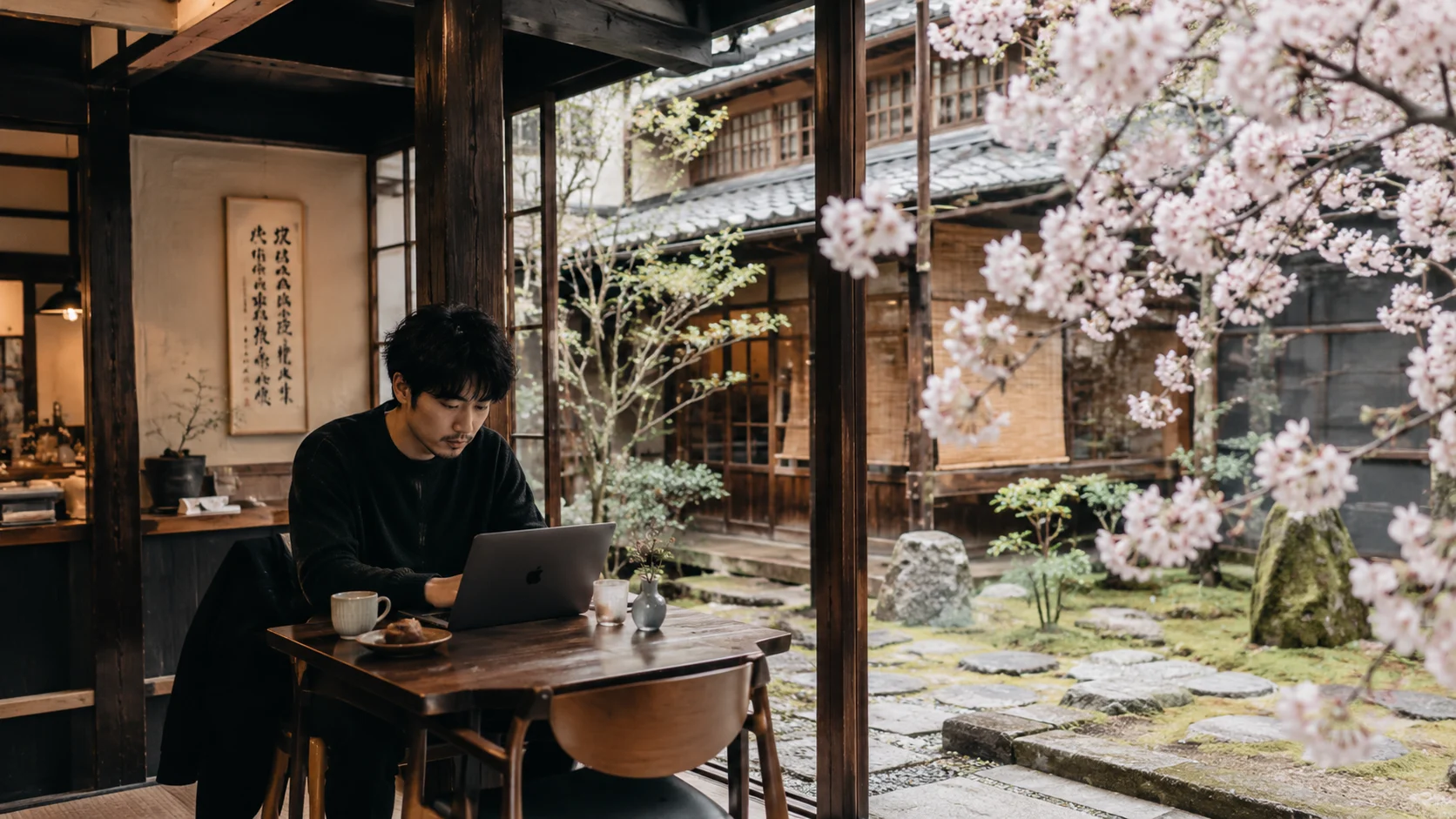
What is the Japan digital nomad visa?
Japan launched its dedicated Designated Activities (digital nomad) visa on 31 March 2024 after a long internal consultation by the Immigration Services Agency. The visa formalises a legal status for high-earning remote workers who previously had to rely on the 90-day visa waiver and repeated re-entries. It is classified as a Designated Activities visa, sitting alongside specialised categories such as researcher dependents and working holiday participants, rather than being a true work visa.
The structure is deliberately restrictive. The visa is valid for 6 months, cannot be renewed inside Japan, and you must leave the country at the end of the period and wait at least 6 months before you can apply for another one (often described as a 6-on, 6-off pattern). It does not lead to residency. It does not allow employment with a Japanese company. And it is only available to nationals of a limited set of countries that combine both a tax treaty with Japan and visa-waiver agreements. The design intent is to attract higher-end remote talent for medium-length stays without creating a back-door immigration channel.
Despite the restrictions, the visa solves a real problem for the small population of high earners who genuinely want 6 months of legal living in Tokyo, Kyoto, Osaka, or Fukuoka while continuing to work for foreign employers. Compare with our Japan country page, our South Korea DN visa guide, and our Taiwan DN visa guide for the East Asian regional picture.
Requirements and income threshold
Japan's income threshold is the highest of any Asian digital nomad visa: JPY 10,000,000 per year, approximately USD 66,400 at typical 2026 exchange rates. The income must come from overseas sources only (employment or freelance work for non-Japanese companies). You also need to demonstrate private health insurance covering at least JPY 10 million in medical expenses, since digital nomad visa holders are NOT eligible to enrol in Japan's National Health Insurance system.
| Requirement | Detail |
|---|---|
| Income | JPY 10,000,000 per year (approximately USD 66,400), from overseas sources only |
| Eligibility | Nationals of countries with both visa waiver AND tax treaty with Japan. Examples: US, UK, Australia, New Zealand, Singapore, South Korea, Canada, most EU states, Israel, UAE |
| Health insurance | Private insurance covering at least JPY 10 million (USD 66,400) in death, injury, and illness in Japan |
| Spouse and children | Allowed (matching 6-month status), no additional income required if accompanying primary |
| Activity restriction | Remote work for foreign employer or clients ONLY. No employment with Japanese companies. |
| Stay limit | 6 months, non-renewable. Must leave Japan and wait at least 6 months before reapplying. |
| Residency status | Does NOT count as Japanese residency. No residence card issued. No My Number registration. |
| Other | Valid passport (12+ months remaining), application form, photos, proof of accommodation |
The income proof is verified against the last calendar year, typically via foreign tax returns, employment contracts, or freelance contracts with foreign clients. Self-employed applicants generally need a combination of contracts and bank statements showing consistent foreign-source income. Tax residence in the country supplying the income is helpful but not formally required. The private insurance requirement is the second hurdle: standard travel insurance is usually insufficient, and most applicants buy a Japan-specific medium-term policy from providers such as Cigna Global, Allianz Care, or specialised Japan-issued international plans.
Tax treatment
Japan's 6-month visa cap is deliberately structured to keep most holders below the tax residency threshold. Japan considers you a non-resident for tax purposes if you spend less than 1 year in the country with no intent to establish a domicile, and only taxes non-residents on Japan-source income. Since digital nomad visa holders earn all their income from foreign sources, the practical tax burden in Japan is usually zero.
However, the rules become more nuanced if you reach the 1-year cumulative presence threshold or display intent to settle. For Japan tax purposes there are three categories: non-resident (less than 1 year, taxed only on Japan-source income), non-permanent resident (1 to 5 years, taxed on Japan-source plus foreign income remitted to Japan), and permanent resident for tax (5+ years, taxed on worldwide income). A 6-on, 6-off pattern across several years can accidentally trigger the 1-year cumulative threshold, after which foreign income remitted to Japan becomes taxable.
Japan has tax treaties with over 75 countries including the US, UK, Australia, Canada, Singapore, South Korea, Germany, France, Italy, the Netherlands, and most major economies. The treaties prevent double taxation on most income types. US citizens always remain liable for US federal filings on worldwide income, with the US-Japan tax treaty and Foreign Earned Income Exclusion providing relief. UK citizens generally lose UK residency once they meet the Japanese statutory test if combined with other ties.
How to apply - step by step
Applications are filed at a Japanese embassy or consulate outside Japan. There is no in-Japan application route. Processing typically takes 1 to 3 months, slower than many other Asian visa programs. Most applicants apply in their home country, although you can apply at any Japanese diplomatic post if you can show local residence.
- Confirm your nationality is on Japan's eligible list. The country must have BOTH a visa waiver agreement AND a tax treaty with Japan. Examples include the US, UK, Australia, New Zealand, Canada, Singapore, South Korea, most EU states, Israel, and UAE.
- Gather income documentation showing JPY 10 million (USD 66,400) per year from overseas sources. Acceptable evidence includes prior year tax returns, employment contracts with foreign employers, freelance client contracts, and bank statements.
- Purchase private health insurance with JPY 10 million minimum coverage for death, injury, and illness in Japan. Most policies are issued by international insurers (Cigna Global, Allianz Care, IMG) or specialised Japan-targeted plans.
- Book accommodation in Japan for at least the first month. Hotels, serviced apartments, monthly Airbnb, or share house contracts are all accepted.
- Complete the Japanese visa application form. The Designated Activities visa code for digital nomads is unusual, so check the embassy's specific guidance on which boxes to tick.
- Submit the application in person or by mail to your nearest Japanese embassy or consulate. Pay the visa fee (typically free or under USD 50 depending on country).
- Wait 1 to 3 months for processing. The Immigration Services Agency reviews each case in Tokyo before a sticker is issued at the local consulate.
- Enter Japan within 3 months of visa issue. At immigration you receive a 6-month landing permission stamp. Note: you do NOT receive a residence card, so do not register at the local city office as a resident.
Spouses and children apply separately under the family Designated Activities subcategory, using copies of the primary applicant's approval as part of their evidence. Family applications add 4 to 6 weeks to the overall timeline. There is no online portal yet; all applications are paper-based.
Cost breakdown
Japan is the most expensive Asian nomad destination. The visa fee itself is modest (often free), but the cost of living, accommodation, and private health insurance make Japan substantially more expensive than Taiwan, Thailand, or Malaysia.
| Item | Cost (USD) |
|---|---|
| Digital nomad visa fee (single entry) | $0 - $50 |
| Private health insurance (6 months, JPY 10M cover) | $600 - $1,800 |
| Document translations and notarisation | $50 - $200 |
| First month accommodation (Tokyo 1br) | $1,400 - $2,500 |
| Accommodation deposit and key money (often 2-3 months) | $2,800 - $7,500 |
| Flights to Tokyo | $700 - $1,800 |
| Suica or Pasmo IC card | $15 - $30 |
| Bank account opening (limited options on DN visa) | $0 - $50 |
| Total first 6-month setup | $5,565 - $13,930 |
Ongoing monthly costs are high. Most digital nomad visa holders report comfortable monthly spending of USD 3,500 to 5,500 in central Tokyo, USD 2,800 to 4,500 in Osaka or Kyoto, and USD 2,200 to 3,500 in Fukuoka. The dominant cost factor is rent: Tokyo central 1br apartments rarely go below USD 1,400, and many landlords demand a Japanese guarantor that DN visa holders cannot provide, pushing nomads toward serviced apartments or share houses at a premium.
Cost of living
Tokyo is among the most expensive Asian cities for accommodation. Fukuoka offers the best value among the major cities, with most of Japan's infrastructure and food culture at substantially lower cost.
| Item | Tokyo | Fukuoka |
|---|---|---|
| Rent (1 bedroom, central) | $1,400 - $2,500 | $700 - $1,200 |
| Groceries and home food | $400 - $600 | $300 - $450 |
| Restaurants (local izakaya and casual) | $400 - $700 | $300 - $500 |
| Public transport monthly (JR, metro) | $100 - $180 | $50 - $100 |
| Coworking membership | $250 - $450 | $150 - $280 |
| Mobile and home internet (fibre) | $60 - $90 | $50 - $80 |
| Private health insurance (split monthly) | $100 - $300 | $100 - $300 |
| Total estimated monthly | $2,710 - $4,820 | $1,650 - $2,910 |
Japan offers world-class food culture at remarkable value (a sushi lunch set for USD 12 to 20 is normal even in central Tokyo). Restaurant dining for higher-end kaiseki or omakase runs USD 80 to 250. Japan has excellent fibre internet (1 Gbps for around USD 50 to 70 per month) and outstanding public transport, although taxis are expensive. The biggest hidden costs are short-term accommodation premiums and the practical impossibility of signing a regular Japanese lease on a DN visa.
Family and dependents
Japan's digital nomad visa explicitly allows spouses and children to accompany the primary holder. Family members apply under the family Designated Activities subcategory and receive matching 6-month landing permission. The primary holder's JPY 10 million income proof is shared evidence; family members do not need independent income demonstration.
Each family member requires their own visa application, fee, and private health insurance. For a family of four, factor in 4 separate insurance policies (the JPY 10 million cover applies to each individual). Children attend international schools for the 6-month period, although most reputable international schools have minimum 1-year enrolment policies, making short-term schooling tricky. Some families choose homeschooling for the 6-month window, or place older children in language schools.
Spouses on the family Designated Activities visa cannot work for Japanese employers and are subject to the same activity restrictions as the primary holder. They can do remote work for foreign clients without restriction. The family-friendly elements break down quickly if you want to settle: there is no path from the DN visa to a residence card, so Japanese schools and tenancy systems remain largely closed to DN visa families.
Path to residency
The Japan digital nomad visa explicitly does NOT count as Japanese residency. DN visa holders do not receive a residence card (zairyu card), do not get a My Number (Japanese tax/social security ID), and cannot register at the local municipal office as residents. This means the 6 months you spend in Japan are legally treated as an extended visit, not as a step toward permanent residency.
Standard paths to Japanese permanent residency require 10 years of continuous residence (5 years on the Highly Skilled Professional points-based visa, or 1 to 3 years for the very top scorers). DN visa time does not count toward any of these thresholds. If your long-term goal is Japanese permanent residency or citizenship, you need to transition to a proper work visa, Highly Skilled Professional visa, Spouse visa, or Business Manager visa.
Most DN visa holders treat Japan as a 6-month workcation, often repeated every other year using the 6-on, 6-off pattern. If you want a longer-term Japanese base, the Highly Skilled Professional points-based visa is by far the cleanest route, with a fast track to permanent residency for high earners. Browse our Japan country page for the full range of pathways.
Best cities for digital nomads
Tokyo dominates global perception of Japan, but Osaka, Kyoto, and especially Fukuoka have developed mature remote-work scenes. Six months is enough time to base in one city plus extensive domestic travel using the Shinkansen network.
- Tokyo (capital, 37M metro). The obvious tech and cultural hub. Shibuya, Shinjuku, Ebisu, and Nakameguro are popular nomad neighbourhoods. Coworking: WeWork, The Hive, Impact HUB, Mercari Office, Plug and Play. Rent USD 1,400 to 2,500 for a 1br near central JR or metro. Internet 1 Gbps fibre is standard. Trade-off: expensive accommodation and a high-pressure pace.
- Osaka (3M city). Japan's second city. More relaxed than Tokyo, famous food scene (takoyaki, okonomiyaki), better value rent. Coworking: WeWork Namba, billage OSAKA, The Deck. Rent USD 900 to 1,500 for a 1br. Great Shinkansen connectivity to Kyoto (15 min) and Tokyo (2.5 hours).
- Kyoto (1.5M city). Cultural heart of Japan. Quieter, traditional, harder to find modern accommodation but the lifestyle dividend is real. Coworking: HOTSPOT Kyoto, FabCafe. Rent USD 800 to 1,400 for a 1br. Better suited to nomads who can do deep focus work and want temple-walks instead of nightlife.
- Fukuoka (1.6M city). The hidden gem. Substantially cheaper than Tokyo, very business-friendly municipal government, growing startup scene (Fukuoka Growth Next coworking), short flights to Seoul (1 hour) and Taipei (2.5 hours). Rent USD 700 to 1,200 for a 1br. The smartest pick for value-conscious nomads who still want a major Japanese city.
- Sapporo (north, 2M). Best for nomads who love cooler weather, skiing, and a slower pace. Hokkaido has a small but growing tech scene. Rent USD 600 to 1,000 for a 1br. Winter is cold; summer is mild and beautiful.
Pros and cons
Japan offers a unique blend of world-class infrastructure, safety, and cultural depth, but the high income bar, 6-month cap, and absence of a residency path make this a niche visa for established high earners.
- Pro: Among the safest and best-organised countries on earth
- Pro: World-class fibre internet and public transport
- Pro: Outstanding food culture at remarkable value
- Pro: Family-friendly visa structure (spouse and children eligible)
- Pro: Clear tax treatment, usually zero Japanese tax for 6-month stays
- Pro: Excellent base for travel across Asia (cheap flights Seoul/Taipei/Hong Kong)
- Con: Highest income threshold of any Asian DN visa (USD 66,400 per year)
- Con: Only 6 months, non-renewable, must leave and wait 6+ months to reapply
- Con: No residence card, no My Number, cannot register as resident
- Con: Not eligible for National Health Insurance (private cover mandatory)
- Con: Limited to nationals of select tax-treaty and visa-waiver countries
- Con: Very expensive accommodation, especially in Tokyo
- Con: Difficult to sign standard tenancy agreements without residence status
- Con: Does NOT lead to permanent residency or citizenship
Frequently asked questions
When did Japan launch its digital nomad visa?
Japan launched its dedicated Designated Activities (digital nomad) visa on 31 March 2024 through the Immigration Services Agency. It is a 6-month single-entry visa for high-earning remote workers from countries with both a visa-waiver agreement and a tax treaty with Japan.
What is the income requirement?
JPY 10,000,000 per year, approximately USD 66,400 at typical 2026 exchange rates, from overseas sources only. Income must come from non-Japanese employment or freelance contracts. This is the highest income bar of any Asian digital nomad visa and rules out a large share of typical mid-career nomads.
Can I renew the visa or extend my stay?
No. The visa is valid for exactly 6 months and cannot be renewed or extended inside Japan. After the 6 months you must leave the country, and you must wait at least 6 months before applying for a new digital nomad visa. Many people refer to this as the 6-on, 6-off pattern.
What countries are eligible?
Only nationals of countries with both a visa-waiver agreement AND a tax treaty with Japan can apply. Eligible nationalities include the US, UK, Australia, New Zealand, Canada, Singapore, South Korea, most EU member states, Israel, and the UAE. If your country is not on both lists you cannot apply.
Do I need health insurance?
Yes, mandatorily. Digital nomad visa holders are not eligible to enrol in Japan's National Health Insurance, so you must hold a private policy covering at least JPY 10 million (USD 66,400) in death, injury, and illness in Japan. Standard short-term travel insurance is usually insufficient; most applicants buy a Japan-specific medium-term policy from international insurers.
Can my spouse and children come with me?
Yes. Spouses and children can apply under the family Designated Activities subcategory and receive matching 6-month status. The primary holder's income proof covers the family. Each family member needs their own private health insurance policy with JPY 10 million coverage and their own visa application and fee.
Will I owe Japanese tax on my foreign income?
Generally no. As a non-resident for tax purposes (less than 1 year continuous stay with no intent to settle), Japan taxes you only on Japan-source income. Since DN visa holders earn only foreign-source income, the practical Japanese tax is usually zero. The picture changes if you repeatedly use the 6-on 6-off pattern and accidentally cross the 1-year cumulative presence threshold.
Does the digital nomad visa lead to residency?
No. The DN visa explicitly does not count as Japanese residency. You do not receive a residence card (zairyu card), do not get a My Number, and cannot register at the municipal office. Time on the DN visa does not count toward any path to permanent residency. If your long-term goal is Japanese PR, look at the Highly Skilled Professional points-based visa or a sponsored work visa instead.
Related articles
Use our free tools
Free calculators for Canada CRS, Australia points, UK skilled worker, Germany Opportunity Card, and 34-country salary thresholds.
See all tools