
What is changing (and what is not)
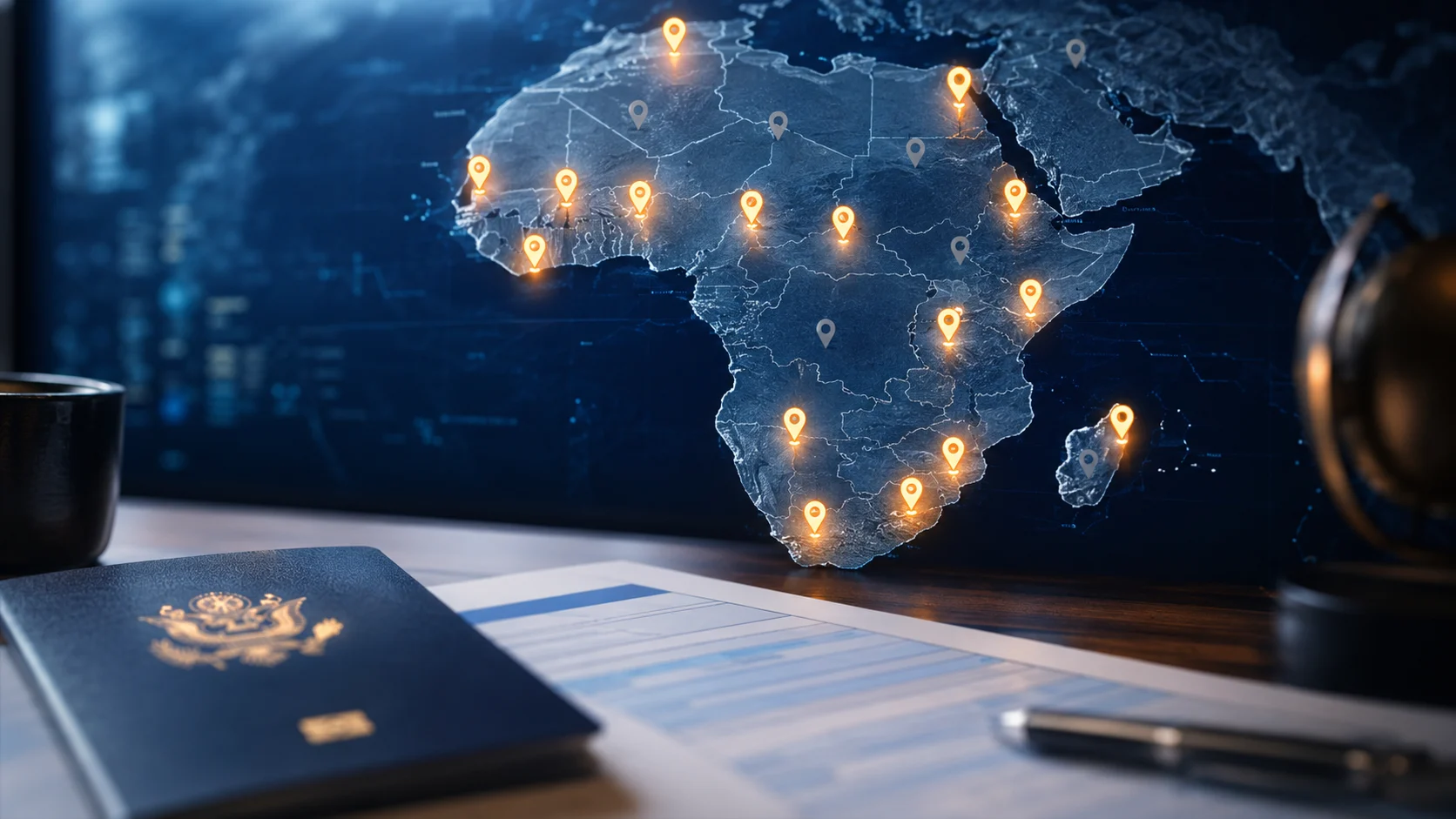
According to reporting that emerged in June 2026, the US State Department is consolidating visa processing across Africa from roughly 50 sites down to about 20 regional hubs spread across 19 countries. The change is significant: for the first time, large numbers of applicants will reportedly no longer be able to apply for a US visa in their own country and will instead need to travel to a designated hub nation in their region.
It is important to be precise about what this does and does not mean, because early coverage has caused confusion. The reported change removes local visa processing from non-hub countries only. It does not, according to the same reporting, close embassies entirely. US embassies in affected countries are expected to stay open for non-visa services such as emergency assistance, support for US citizens abroad, passport renewals for Americans, and routine diplomatic functions.
- What is changing: roughly 50 processing sites are being cut to 20 regional hubs across 19 countries.
- What is being removed: local (in-country) US visa application and interview processing in around 30 non-hub countries.
- What is staying: embassies in non-hub countries remain open for emergencies, US citizen services, and other non-visa functions.
- Timing: the consolidation is reportedly rolling out within weeks of the June 2026 announcement.
- Context: this is part of the broader 2026 US immigration and consular restructuring, not a standalone measure.
The remainder of this guide walks through the 19 hub countries, the roughly 30 countries reportedly losing direct processing, where each region is likely to be rerouted, and a clear action plan so you can plan around the change with as little disruption as possible.
The 19 countries that keep US visa processing
Based on June 2026 reporting, the following 19 countries are expected to retain US visa processing as regional hubs, with 20 hub cities in total (South Africa reportedly keeps two posts). If your country appears here, you should be able to continue applying locally, though you should still expect higher demand as applicants from neighbouring countries are routed to these posts.
| Country | Hub City | Region |
|---|---|---|
| Nigeria | Lagos | West Africa |
| Ghana | Accra | West Africa |
| Ivory Coast | Abidjan | West Africa |
| Senegal | Dakar | West Africa |
| Liberia | Monrovia | West Africa |
| Togo | Lome | West Africa |
| Cape Verde | Praia | West Africa |
| Kenya | Nairobi | East Africa |
| Ethiopia | Addis Ababa | East Africa |
| Tanzania | Dar es Salaam | East Africa |
| Uganda | Kampala | East Africa |
| Rwanda | Kigali | East Africa |
| Djibouti | Djibouti | East Africa |
| South Africa | Johannesburg and Cape Town | Southern Africa |
| Angola | Luanda | Southern Africa |
| Mauritius | Port Louis | Southern Africa |
| DR Congo | Kinshasa | Central Africa |
| Cameroon | Yaounde | Central Africa |
| Equatorial Guinea | Malabo | Central Africa |
For our core audience, the most relevant hubs are likely Nigeria (Lagos), Ghana (Accra), Kenya (Nairobi), and South Africa (Johannesburg and Cape Town). These posts already handle large volumes and will reportedly absorb applicants from surrounding non-hub countries, so booking early matters even if you live in a hub country.
Note the regional spread: seven hubs in West Africa, six in East Africa, three in Southern Africa, and three in Central Africa. The design appears intended to give each sub-region at least one accessible processing centre, though for some applicants the nearest hub may still be a long and costly journey away.
Countries losing direct US visa processing
According to June 2026 reporting, around 30 countries will lose local US visa processing and applicants will need to reroute to the nearest hub. Official post-by-post assignments had not been published at the time of writing, so the guidance below is our best estimate based on geography and is subject to official confirmation. Do not book non-refundable travel until you have verified your assigned post on the official directory.
| Region | Countries likely affected | Likely hub(s) - pending confirmation |
|---|---|---|
| West Africa (non-hub) | Mali, Burkina Faso, Guinea, Sierra Leone, Gambia, Benin, Niger | Accra, Dakar, Abidjan or Lagos |
| East Africa / Horn | Sudan, Somalia, Eritrea, South Sudan | Nairobi or Addis Ababa |
| Southern Africa | Zambia, Zimbabwe, Botswana, Namibia, Mozambique, Malawi | Johannesburg |
| Central Africa | Non-hub Central African states | Kinshasa or Yaounde |
In West Africa, applicants in Mali, Burkina Faso, Guinea, Sierra Leone, Gambia, Benin, and Niger are likely, based on geography, to be routed to Accra, Dakar, Abidjan or Lagos pending official assignment. In the East and Horn of Africa, applicants in Sudan, Somalia, Eritrea, and South Sudan are likely to be routed to Nairobi or Addis Ababa. In Southern Africa, applicants in Zambia, Zimbabwe, Botswana, Namibia, Mozambique, and Malawi are likely to be routed to Johannesburg. In Central Africa, non-hub applicants are likely to be routed to Kinshasa or Yaounde.
One important exception: the North African countries (Egypt, Morocco, Algeria, Tunisia, and Libya) are typically handled separately from this sub-Saharan consolidation, and their own embassies generally continue to process visas. If you are in Egypt or Morocco, you are most likely unaffected by the hub change, but you should still verify your post on the official directory, as policy can shift and individual posts occasionally pause services for unrelated reasons.
What this means for your visa application
If you live in a hub country, the practical impact is mostly higher demand and potentially longer wait times as neighbouring applicants are routed to your post. If you live in a non-hub country, the impact is larger: you will reportedly need to travel to another country to attend your visa interview. Here is how that breaks down by visa type, as of June 2026.
- B1/B2 (tourist and business): you will need to travel to a hub for your in-person interview. Build the cost of international travel and lodging into your trip budget.
- Students (F-1): the same hub interview requirement applies. Plan early around both travel logistics and appointment wait times, which can be long ahead of the academic intake season.
- Immigrant visas and green cards: these will reportedly be processed at hubs as well, and this interacts with the broader 2026 move toward processing more cases from overseas posts. Expect added complexity and confirm where your specific case is assigned.
Across all categories, the realistic expectation is longer overall timelines and higher out-of-pocket cost (flights, accommodation, time off work) for applicants in non-hub countries. The single most effective thing you can do is book early, because demand surges at hub posts are likely as the consolidation takes effect.
What to do right now (action plan)
Here is a clear, step-by-step plan to navigate the change without losing time or money. Work through it in order.
- Check whether your country is a hub using the table above. If it is, you can likely continue applying locally - but still expect higher demand.
- If your country is not a hub, identify your nearest likely hub (use the regional guidance above) and check the published visa wait times for that post.
- Use the official US Embassy and Consulates directory to confirm your assigned post and book your appointment - never an unofficial third party.
- Budget for travel and lodging for the interview itself, including a buffer in case the appointment is rescheduled or a second visit is required.
- Apply early. Expect demand surges at hub posts as applicants from multiple countries are consolidated, especially ahead of the 2026 World Cup and the academic intake season.
- Keep your documents ready and monitor official announcements, since hub assignments and timelines may be updated as the State Department confirms the final plan.
How this fits the bigger 2026 picture
The hub consolidation does not stand alone. It sits alongside the US travel ban implemented under Presidential Proclamation 10998, the broader 2026 visa restructuring, and a wider embassy consolidation effort. Taken together, these measures point toward tighter overall access to US visas for many applicants, particularly across Africa.
For applicants, the combined effect is that both eligibility and logistics have become harder at the same time. Some nationalities face restrictions on whether they can obtain certain visas at all, while others now face the added hurdle of travelling to a hub even when they remain eligible. For the full list of countries reportedly affected by the wider freeze and what it means, see our guide on the US visa freeze affecting 75 countries in 2026.
Reading the hub change in isolation can be misleading. Before you make plans, check whether your nationality also faces eligibility restrictions, not just processing-location changes, because the two issues require different responses.
World Cup 2026 travellers - extra urgency
If you hold a ticket to the 2026 FIFA World Cup, the hub consolidation adds real urgency. Fans from affected countries who need a B1/B2 visitor visa will reportedly have to attend their interview at a hub, which for many means international travel just to apply. Consular demand is expected to spike sharply around the tournament window, so the usual advice to apply early is doubly important here.
Start now rather than waiting. For tournament-specific guidance, see our US World Cup visa guide, and check whether you qualify for the streamlined entry route under the FIFA PASS programme. If you are unsure which rules apply to your nationality, the World Cup 2026 visa by nationality guide breaks it down country by country.
Scam warning
Any moment of confusion around visa rules is a moment fraudsters try to exploit. Expect a rise in scams promising to let you skip the hub system, secure a guaranteed appointment, or fast-track an interview for a fee. None of these claims are legitimate.
Protect yourself by booking only through official channels, never sharing passport scans or payment details with unofficial intermediaries, and being sceptical of any guarantee. If your application is refused, understand the real reasons rather than trusting someone who promises a workaround - see our guide on common US visa rejection reasons to apply correctly the first time.
Get personalized visa guidance
Every visa situation is different. Tell us about yours and our vetted consultants will review your case within 24 hours.
Frequently asked questions
Is my country still processing US visas?
Check the hub table above. According to June 2026 reporting, 19 countries (20 cities) keep US visa processing: in West Africa, Nigeria, Ghana, Ivory Coast, Senegal, Liberia, Togo and Cape Verde; in East Africa, Kenya, Ethiopia, Tanzania, Uganda, Rwanda and Djibouti; in Southern Africa, South Africa, Angola and Mauritius; and in Central Africa, DR Congo, Cameroon and Equatorial Guinea. If your country is not on that list, it likely loses local processing. Verify on the official US Embassy and Consulates directory.
Where do I apply if my country lost processing?
You will reportedly need to travel to the nearest hub for your interview. Based on geography and pending official assignment, non-hub West Africa is likely routed to Accra, Dakar, Abidjan or Lagos; the East and Horn (Sudan, Somalia, Eritrea, South Sudan) to Nairobi or Addis Ababa; Southern Africa (Zambia, Zimbabwe, Botswana, Namibia, Mozambique, Malawi) to Johannesburg; and non-hub Central Africa to Kinshasa or Yaounde. Confirm your assigned post on the official directory before booking travel.
Are US embassies closing entirely in Africa?
No. According to the June 2026 reporting, only local visa processing is being removed in non-hub countries. The embassies themselves stay open for other services, including emergencies, support for US citizens abroad, passport services for Americans, and routine diplomatic functions. The change affects where you apply for a visa, not whether the embassy exists.
Does this affect green cards and immigrant visas?
Reportedly yes. Immigrant visa and green card cases are expected to be processed at hubs rather than in non-hub countries, and this interacts with the broader 2026 move toward processing more cases from overseas posts. Expect added travel and potential delays, and confirm where your specific case is assigned through official channels.
Will this delay my US visa?
For applicants in non-hub countries it likely will, because you must travel to a hub and those posts are expected to see demand surges as applicants from multiple countries are consolidated. Even applicants in hub countries may see longer waits. The best mitigation is to apply as early as possible and check published wait times for your hub before booking.
Is this confirmed and official?
As of June 2026 this is based on news reporting and is pending final, formal confirmation from the US State Department. The hub list and rerouting guidance reflect the best available information, not a finalized official directive. Always verify your specific post and appointment availability on the official US Embassy and Consulates directory before making plans.
Does this affect North Africa (Egypt, Morocco)?
Generally no. North African countries (Egypt, Morocco, Algeria, Tunisia and Libya) are typically handled separately from the sub-Saharan consolidation, and their own embassies generally continue to process visas. If you are in Egypt or Morocco you are most likely unaffected by the hub change, but you should still verify your post on the official directory, as policy can shift.
I have a World Cup ticket - what do I do?
Act now. If you are from an affected country and need a B1/B2 visitor visa, you will reportedly have to interview at a hub, and consular demand is expected to spike around the tournament. Book your appointment as early as possible through official channels, check our US World Cup visa guide and the FIFA PASS programme to see if a streamlined route applies, and treat the visa as the first thing to secure before flights or accommodation.
How do I find my nearest hub?
First check whether your own country is a hub using the table above. If it is not, use the regional guidance to identify the likely nearest hub, then confirm the assignment and check visa wait times on the official US Embassy and Consulates directory. Never rely on an unofficial agent or website to tell you where to apply - the official directory is the only authoritative source.
Related articles
Use our free tools
Free calculators for Canada CRS, Australia points, UK skilled worker, Germany Opportunity Card, and 34-country salary thresholds.
See all tools