
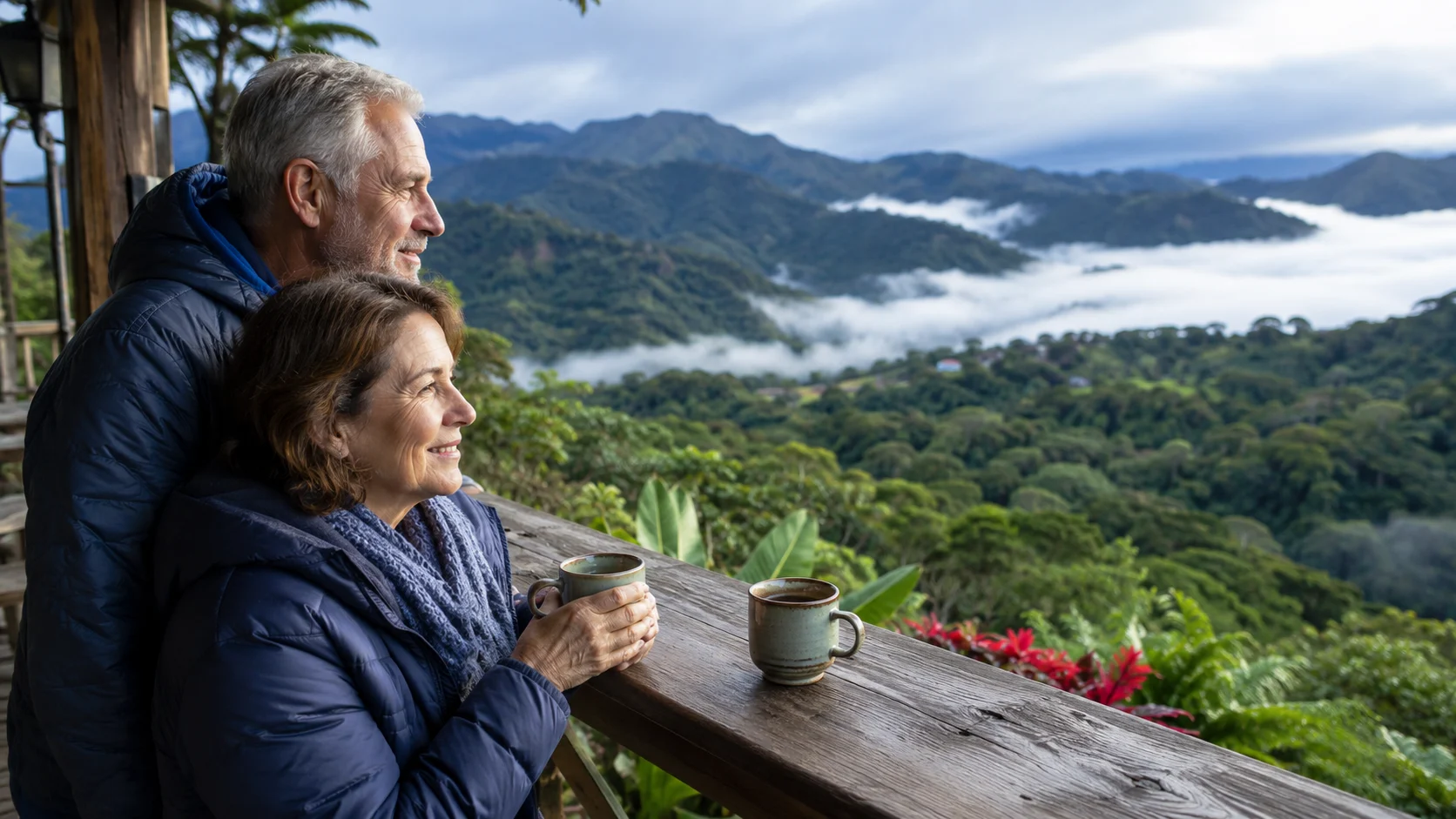
What is the Panama retirement visa?
The Panama Pensionado visa, formally known as the Jubilado/Pensionado residence permit, is a permanent residency program created by Law 6 of 1987 and substantially expanded over the decades since. It is specifically designed to attract foreign retirees with a guaranteed lifetime pension from a government or private source. Panama's immigration authority, the Servicio Nacional de Migración, administers the program, and it has become the benchmark against which every other retirement visa in the world is measured. The application process takes three to six months on average and must be handled by a licensed Panamanian attorney.
What makes the Pensionado program extraordinary is the combination of three things that rarely appear together: a low income threshold, an aggressive senior discount law, and territorial taxation. You can live comfortably in Panama on a relatively modest foreign pension, pay no local income tax on it, and simultaneously receive legally mandated price reductions at businesses across the country. No other country offers this exact combination at this income level. For a thorough comparison with every major program, visit the retirement visa hub to see how Panama stacks up against Portugal, Costa Rica, Mexico, and dozens of others.
One frequently overlooked advantage is the currency. Panama uses the US dollar as its sole currency (it mints its own coins called balboas at a 1:1 peg, but dollar bills circulate freely). For American retirees there is no exchange-rate exposure and no need to manage foreign accounts. For British, European, or Australian retirees the dollar is a known quantity with liquid global markets. The country is politically stable, sits outside the Caribbean hurricane belt, has direct flights to Miami, Houston, New York, and dozens of other cities, and operates one of the best-connected banking systems in Latin America.
Panama Pensionado visa requirements
The core requirement is elegantly simple: prove you receive a lifetime pension of at least $1,000 per month from a government or qualified private institution. The pension must be guaranteed for life - not a fixed-term annuity that expires. Social Security, civil service pensions, military pensions, and certain corporate defined-benefit pensions all qualify. If you purchase real estate in Panama worth $100,000 or more, the minimum pension income drops to $750 per month. There is no age requirement - a 35-year-old receiving a qualifying disability pension can apply.
| Requirement | Standard | With $100K+ Panama Property |
|---|---|---|
| Minimum monthly pension | $1,000 | $750 |
| Age minimum | None | None |
| Pension source | Government or qualified private | Government or qualified private |
| Pension duration | Lifetime guarantee | Lifetime guarantee |
| Health insurance | Recommended, not legally required | Recommended, not legally required |
| Criminal background check | Required (home country + Interpol) | Required (home country + Interpol) |
| Medical certificate | Required | Required |
| Panamanian attorney | Required by law | Required by law |
The pension letter is the most critical document. It must be issued by your pension provider on official letterhead, notarized, apostilled in your home country, and then authenticated again in Panama. The letter must state the monthly amount in writing and explicitly confirm the pension is for life. Some pension providers issue these letters routinely; others require a formal written request citing the purpose. Begin this process early - delays at the pension provider are the single most common cause of slow applications.
Additional documents typically required include: a valid passport with at least six months of validity remaining, a criminal background check from your home country and from any country where you have lived for five or more years in the past ten years, a medical certificate from a licensed Panamanian physician confirming you are free of contagious diseases, three passport-style photographs, proof of a Panamanian bank account or funds transfer, and a Panamanian attorney's power of attorney. Your attorney will compile these into a petition package submitted to the Servicio Nacional de Migración.
Tax treatment for Panama retirees
Panama operates a strict territorial tax system, codified in the Fiscal Code of Panama. This means only income earned from sources inside Panama is subject to Panamanian income tax. Foreign-source income - including foreign pensions, Social Security payments, dividends from overseas stocks, rental income from property abroad, interest from foreign bank accounts, and capital gains from overseas investments - is completely exempt from Panamanian income tax. For the vast majority of retirees living on a foreign pension, this means a Panamanian income tax bill of exactly zero. The Dirección General de Ingresos (DGI), Panama's tax authority, does not require most retirees to file an income tax return if all their income is foreign-source.
Panama also has no wealth tax and no inheritance tax for non-resident beneficiaries. Property taxes in Panama are low by international standards - residential properties below a certain valuation threshold can qualify for a 20-year property tax exemption under the Ley de Descuento Especial for new construction. All of these factors combine to create one of the most tax-friendly environments for foreign retirees in the Western Hemisphere. The only regular tax most Pensionado holders encounter is the ITBMS (Impuesto de Transferencia de Bienes Muebles y Servicios), Panama's 7% value-added tax on goods and services purchased in Panama.
For European, Canadian, Australian, and most other nationalities, the territorial tax system is a genuine benefit with few complications. Your home country may have a tax treaty with Panama, or it may tax only residents. Many retirees from these countries find that by establishing genuine non-resident status in their home country, they legally exit the home-country tax net and pay no income tax anywhere on their foreign pension. The mechanics differ by nationality, so cross-border tax advice is still worthwhile, but the starting position is dramatically more favorable than for US citizens.
Healthcare in Panama
Panama has one of the best healthcare systems in Latin America, and Panama City in particular is a genuine medical tourism destination. The flagship private hospitals - Hospital Punta Pacifica (affiliated with Johns Hopkins Medicine International), Hospital Nacional, and Clinica Hospital San Fernando - operate at a standard comparable to many US and European facilities. Physicians at these hospitals frequently trained in the United States, Spain, or Mexico, and a large proportion speak English. Waiting times for specialist appointments and elective procedures are measured in days or weeks, not months.
Panama does have a public healthcare system administered by the Caja de Seguro Social (CSS), and Pensionado visa holders may in principle access it by contributing to social security. In practice, most foreign retirees use private care and pay out of pocket or through private insurance, because private care is far faster and more comfortable. Costs are substantially lower than in the United States - a GP consultation typically runs $40 to $80, specialist visits $60 to $150, a comprehensive blood panel $30 to $60, and a hip replacement at a quality private hospital a fraction of the US price.
One of the most tangible benefits of the Pensionado discount card is the 20% discount on hospital services and medical procedures. This applies to private hospitals and clinics registered under the Pensionado program. Dental care in Panama is similarly excellent value - a crown that would cost $800 to $1,200 in the United States often runs $200 to $400 at a quality Panamanian dental clinic. Outside Panama City, the town of Boquete has a small but growing medical infrastructure catering to the large expat population, with good clinics and reliable referral routes to Panama City for complex cases.
Private health insurance for a healthy 60-year-old costs roughly $150 to $350 per month from providers such as MAPFRE, Cigna Global, or Blue Cross Blue Shield Panama. These plans typically cover hospitalisation, surgery, specialist consultations, and emergency care at the major private hospitals. Some retirees from countries with reciprocal agreements, notably certain EU nationals, may retain access to home-country insurance for visits back, but this provides no coverage while living in Panama and should not be relied upon as primary coverage.
How to apply for the Panama Pensionado visa
Unlike many other residency programs, the Panama Pensionado application is not a do-it-yourself process. Panamanian immigration law requires that a licensed Panamanian attorney sign and present the petition on your behalf. Budget $1,500 to $3,000 for attorney fees, though fees vary by firm and complexity. Reputable firms in Panama City include Morgan and Morgan, Galindo Arias and Lopez, and many boutique immigration firms that specialise exclusively in Pensionado applications. Expat forums such as Panama-based Facebook groups and the Boquete community boards carry many attorney reviews and referrals from people who have completed the process recently.
- Engage a licensed Panamanian attorney and sign a power of attorney authorizing them to act on your behalf throughout the process.
- Request your official pension letter from your pension provider - it must state the lifetime monthly amount, be notarized, and carry an apostille from your home country.
- Obtain a criminal background check from your home country's national police or federal bureau, notarized and apostilled, dated within six months.
- Obtain a medical certificate from a licensed Panamanian physician confirming you are free of contagious diseases - your attorney can refer you to a clinic that handles these routinely.
- Open a Panamanian bank account and make a minimum deposit (typically $1,000 or the amount your bank requires); your attorney will advise which banks are currently accepting new foreign accounts.
- Your attorney compiles the complete petition package and submits it to the Servicio Nacional de Migración in Panama City.
- Immigration issues a temporary residence permit (carnet provisional) within 60 to 90 days; this serves as your legal residence while the full application is processed.
- After full approval (typically three to six months total), you receive your permanent Pensionado carnet and then apply for the Pensionado discount card from the Ministerio de Comercio e Industrias (MICI).
You do not need to be physically present in Panama for the entire process. Many applicants handle the document preparation from abroad, visit Panama for the medical certificate and bank account opening (often combining this with a scouting trip), and then authorize their attorney to complete the submission. Processing times vary with workload at the immigration office, but 2026 applicants have generally reported three to five months from submission to final approval. Your attorney should provide status updates and handle any requests for additional documentation from the immigration office.
Cost of living in Panama
Panama offers a wide range of living costs depending on location and lifestyle. Panama City is the most expensive option but still substantially cheaper than most US or European cities. Boquete in the Chiriqui highlands is a favorite among budget-conscious retirees, with a cool climate and a large English-speaking expat community. Coronado on the Pacific coast sits between the two in price and offers a beach lifestyle within 90 minutes of Panama City. The Pensionado discounts reduce the effective cost of living further for cardholders - the real-world impact is significant for high-frequency spending like restaurants and utilities.
| Expense | Boquete (monthly) | Panama City (monthly) |
|---|---|---|
| 1-2BR apartment rent (furnished) | $500 to $900 | $900 to $2,000 |
| Groceries (2 people) | $300 to $450 | $400 to $600 |
| Dining out (2 people, sit-down) | $15 to $30 per meal | $25 to $50 per meal |
| Private health insurance (60yo) | $150 to $250 | $200 to $350 |
| Utilities (electric, water, internet) | $80 to $150 | $150 to $250 |
| Domestic help (part-time) | $200 to $350 | $300 to $500 |
| Total estimated monthly budget | $1,400 to $2,500 | $2,200 to $4,200 |
These figures assume that you are applying Pensionado discounts where applicable, which can reduce restaurant bills by 25%, utility bills by 25%, and hotel stays by 50%. A couple living modestly in Boquete can genuinely live on $1,800 to $2,200 per month including health insurance. Panama City allows for a more urban lifestyle at a higher price point but still represents substantial savings over equivalent living in the United States or northern Europe. Coronado and Pedasi attract retirees who want beach access without Panama City prices, with monthly budgets typically $1,600 to $2,800.
Buying property in Panama
Panama has some of the most favorable property ownership laws for foreigners in Latin America. Under the Panamanian Constitution and the Foreign Investment Promotion Law, foreign nationals have exactly the same property rights as Panamanian citizens with respect to titled real estate. There are no restrictions on the percentage of a property a foreigner may own, no requirement for a local partner or joint venture, and no minimum investment threshold (other than the $100,000 threshold if you want the reduced $750/month Pensionado income requirement). A foreign buyer can hold title in their own name, in a Panamanian corporation (Sociedad Anonima), or in a private interest foundation.
The most important distinction in Panamanian property is between titled land (registered with the Public Registry) and rights of possession land (derecho posesorio). Foreigners should buy only fully titled land - title provides clear legal protection and is financeable. Rights of possession land carries legal risk and is not recommended for foreign buyers. Real estate attorneys in Panama typically charge 1% to 1.5% of the purchase price for a conveyancing transaction, and transfer taxes are 2% of the registered value. Panama City's Punta Pacifica, Costa del Este, and Casco Viejo are popular among expats, while Boquete has a well-developed secondary market for homes suited to foreign retirees.
New residential constructions in Panama can benefit from property tax exemptions of up to 20 years, which significantly reduces the carrying cost of ownership. Rental yields in Panama City have historically ranged from 4% to 7% on well-located apartments, and the city's position as the financial hub of Latin America keeps demand relatively stable. For retirees who want to offset costs, purchasing a one-bedroom apartment in the Avenida Balboa corridor or the financial district and renting it through a property manager while traveling is a common strategy among Pensionado holders.
Permanent residency and citizenship pathway
The Pensionado visa is itself a permanent residency - it does not expire and does not require renewal as long as you continue to receive the qualifying pension. This distinguishes it from many other retirement visas that grant only temporary residency requiring periodic renewal. After holding permanent residency in Panama for five years, you become eligible to apply for Panamanian citizenship (naturalization). The citizenship application requires demonstrating continued residency, basic Spanish language ability, knowledge of Panamanian history and civics, and continued good character.
A Panamanian passport is a respectable travel document, granting visa-free or visa-on-arrival access to over 140 countries including the Schengen Area and the United Kingdom. However, there is a practical consideration that prospective citizenship applicants must understand clearly: while Panama's constitution does not categorically prohibit dual citizenship, the naturalization process in practice requires you to formally renounce your existing citizenship before a Panamanian notary. Many Pensionado holders who have lived happily in Panama for 10 or 15 years choose not to pursue naturalization specifically because of this complication.
Permanent residency holders in Panama can work legally (with a separate work permit), own property, access the public banking system, and renew their national identity card (carnet de residente) as needed. Children of Pensionado holders may apply for dependent residency. Spouses can apply for dependent residency under the primary applicant's Pensionado permit, provided the marriage is legally recognized. The five-year clock for citizenship begins from the date of permanent residency approval, not the date of the initial temporary permit, so it is worth requesting the formal permanent residency certificate promptly once approved.
Best cities and regions for retirement in Panama
Boquete is the undisputed favorite of the expat retirement community in Panama. Located in the Chiriqui highlands at 1,200 meters above sea level, Boquete enjoys a spring-like climate year-round - daytime highs of 21 to 24 degrees Celsius with cool evenings, no oppressive tropical humidity, and stunning views of Volcan Baru, Panama's highest peak. The town itself is small (around 20,000 people) but has a disproportionately large English-speaking infrastructure: a Boquete Community Players theater, multiple English-language churches, an active hiking club, farmers markets, and a deep network of Pensionado social groups. Monthly costs are significantly lower than Panama City, and the quality of life for outdoor-oriented retirees is exceptional.
Panama City is the opposite end of the spectrum - a genuine international metropolis of two million people with world-class restaurants, shopping malls, a vibrant arts scene, direct international flights, and the full range of medical specialists available at first-class private hospitals. The Casco Viejo historic district has been extensively restored and is now a UNESCO World Heritage Site with boutique hotels, trendy restaurants, and an emerging gallery district. Punta Pacifica and Costa del Este are modern high-rise residential neighborhoods favored by well-heeled expats. Panama City is the right choice for retirees who want urban amenities, do not mind the tropical heat, and value access to international travel.
Coronado is a Pacific coast beach community about 80 kilometers west of Panama City, accessible in 90 minutes on the Pan-American Highway. It has a full-service commercial strip, several golf courses, a large supermarket, good medical clinics, and a well-established expat community. Property prices are more affordable than Panama City, and the lifestyle is relaxed and beach-oriented. Pedasi, on the Azuero Peninsula, is a smaller and quieter beach alternative attracting retirees who want a truly local Panamanian experience with a slower pace. Bocas del Toro, the archipelago on the Caribbean coast, has a bohemian reputation, world-class diving and surfing, and lower prices, but requires a flight or long drive from Panama City and has more limited medical infrastructure than the other options.
Panama Pensionado pros and cons
The Pensionado program has genuine, substantive advantages that make it the leading retirement visa in the world for many applicants. The Pensionado discount law is the single most distinctive feature. By law, registered Pensionado cardholders are entitled to specific discounts that businesses across Panama are required to honor. These are not voluntary promotions - they are legally mandated under the Pensionado Law and enforced by the consumer protection authority.
- The Pensionado discount law mandates: 50% off hotel stays at all hotel categories. 30% off public and private bus fares. 25% off airline tickets on domestic flights. 25% off restaurant meals. 25% off utility bills (electricity, telephone, water). 20% off medical consultations, diagnostic tests, and hospital services at participating private facilities. 20% off professional medical services (dental, optometry). 15% off at fast food restaurants. 10% off prescription medications. These discounts are applied automatically on presentation of your Pensionado card - no coupons, no pre-booking, no negotiation required.
- [+] Lowest pension income requirement of any major retirement visa - $1,000 per month, reducible to $750 with property purchase.
- [+] Permanent residency from day one - no renewal, no re-application after five years.
- [+] No age limit whatsoever - any age with a qualifying lifetime pension can apply.
- [+] Zero Panamanian tax on all foreign-source income, including pensions, dividends, and overseas rental income.
- [+] Pensionado discount card providing 20% to 50% off across restaurants, hotels, flights, utilities, medical care, and entertainment - legally mandated and widely honored.
- [+] US dollar economy eliminates exchange-rate risk for American retirees and provides currency stability for all others.
- [+] World-class private hospitals in Panama City, including Johns Hopkins-affiliated Hospital Punta Pacifica.
- [+] Foreigners own titled real estate with the same rights as citizens - no restrictions.
- [+] 5-year path to citizenship with a strong passport (140+ countries visa-free).
- [+] Multiple lifestyle options - highland Boquete, urban Panama City, beach Coronado, remote Bocas del Toro.
- [+] High-quality banking and financial infrastructure by Latin American standards.
- [+] Relatively low crime in expat areas compared to regional averages.
- [-] Must use a licensed Panamanian attorney - cannot apply DIY, adding cost and complexity.
- [-] Processing can take three to six months with unpredictable delays at the immigration office.
- [-] Pension must be a guaranteed lifetime pension - investment income, savings withdrawals, or fixed-term annuities do not qualify.
- [-] Naturalization requires effective renunciation of prior citizenship, deterring many long-term residents from completing the citizenship step.
- [-] Panama City can be hot and humid year-round - not suitable for those who dislike tropical heat.
- [-] Public healthcare quality is inconsistent - private care is recommended and adds to monthly costs.
- [-] US citizens face ongoing US worldwide tax obligations that no amount of favorable Panamanian tax law can eliminate.
- [-] Some rural areas have limited English-language services and slower internet infrastructure.
Compared to the neighboring Costa Rica Pensionado, Panama's program has a slightly lower income threshold, a stronger discount law, and a US dollar economy, but Costa Rica has arguably better biodiversity, a stronger environmental ethos, and a more established expat legal framework for certain property types. Both are excellent programs, and the right choice depends heavily on lifestyle preference and where your pension income goes furthest after applying local discounts and tax rules.
lead.heading
lead.description
Sık sorulan sorular
Does the Panama Pensionado visa require a minimum age?
No. The Panama Pensionado program has no minimum age requirement. Any person of any age who receives a qualifying lifetime pension of at least $1,000 per month from a government or approved private institution can apply. In practice, most applicants are over 50, but younger recipients of disability pensions or early retirement pensions are equally eligible.
What types of income count as a qualifying pension for the Pensionado visa?
The pension must be a guaranteed lifetime payment from a government or qualified private institution. This includes national Social Security (such as US Social Security), civil service pensions, military pensions, and defined-benefit corporate pensions. Fixed-term annuities, investment account withdrawals, dividends, rental income, and freelance income do not qualify. The key tests are: (1) it is paid by an institution, not self-generated; (2) it is for life; (3) it meets the monthly minimum.
How does the Pensionado discount card work in practice?
Once your Pensionado residence is approved, you apply to the Ministerio de Comercio e Industrias (MICI) for the physical discount card. You present this card at participating businesses - restaurants, hotels, pharmacies, airlines, utilities, hospitals - and receive the legally mandated discount. Discounts range from 10% on medications up to 50% on hotel stays. Businesses are required by law to honor these discounts; if a business refuses, you can file a complaint with the consumer protection authority (ACODECO).
Can my spouse get residency under my Pensionado application?
Yes. A legally married spouse (or recognized domestic partner in some cases) can apply for dependent residency under the primary Pensionado applicant's permit. The dependent application is submitted alongside or shortly after the primary application. The spouse does not need to meet any income requirement independently. Dependent children under 18 (or older if full-time students or with disabilities) may also apply as dependents.
Do I need to live in Panama full-time to keep my Pensionado residency?
Panama's immigration law does not specify a strict minimum physical presence requirement for Pensionado permanent residency holders in the same way that some countries do for temporary residency. However, if you plan to apply for citizenship after five years, you will need to demonstrate genuine residency during that period. Most immigration attorneys recommend spending at least several months per year in Panama to maintain a defensible residency record and to keep your Panamanian bank account active.
How much does it cost to apply for the Panama Pensionado visa?
Total costs typically fall between $3,000 and $6,000, including attorney fees ($1,500 to $3,000), government filing fees (approximately $250 to $300), document authentication and apostille costs in your home country ($200 to $500), medical certificate fees ($100 to $150), and the initial bank deposit requirement. Ongoing costs include the annual carnet renewal fee and any travel costs for required in-person appearances. These one-time costs are low compared to most other retirement visa programs globally.
What is the path from Pensionado residency to Panamanian citizenship?
After holding permanent residency in Panama for five years, you can apply for naturalization. The process requires evidence of physical presence in Panama during the five-year period, basic Spanish language ability, knowledge of Panamanian history and civic structure, a clean criminal record, and continued receipt of your qualifying pension. However, the naturalization ceremony includes a formal renunciation of prior citizenship. Because Panama discourages dual nationality in practice, many long-term Pensionado residents choose to maintain permanent residency indefinitely rather than renounce their home-country citizenship.
Is Panama safe for retirees?
Panama City and the major expat areas (Boquete, Coronado, Pedasi) are considered relatively safe by Latin American standards. Expat neighborhoods in Panama City such as Punta Pacifica, Marbella, San Francisco, and Costa del Este have low crime rates by regional comparison. Like any city, petty theft and pickpocketing exist in crowded and touristy areas, and some neighborhoods in the city center require normal urban awareness. Boquete is widely regarded as one of the safest communities in Central America for foreign retirees. Standard precautions - not displaying expensive items, using licensed taxis or Uber, and being aware of surroundings - apply as they would anywhere.
İlgili makaleler
Ücretsiz araçlarımızı kullanın
Kanada CRS, Avustralya puanları, İngiltere skilled worker, Almanya Fırsat Kartı ve 34 ülke maaş eşikleri için ücretsiz hesaplayıcılar.
Tüm araçları gör