
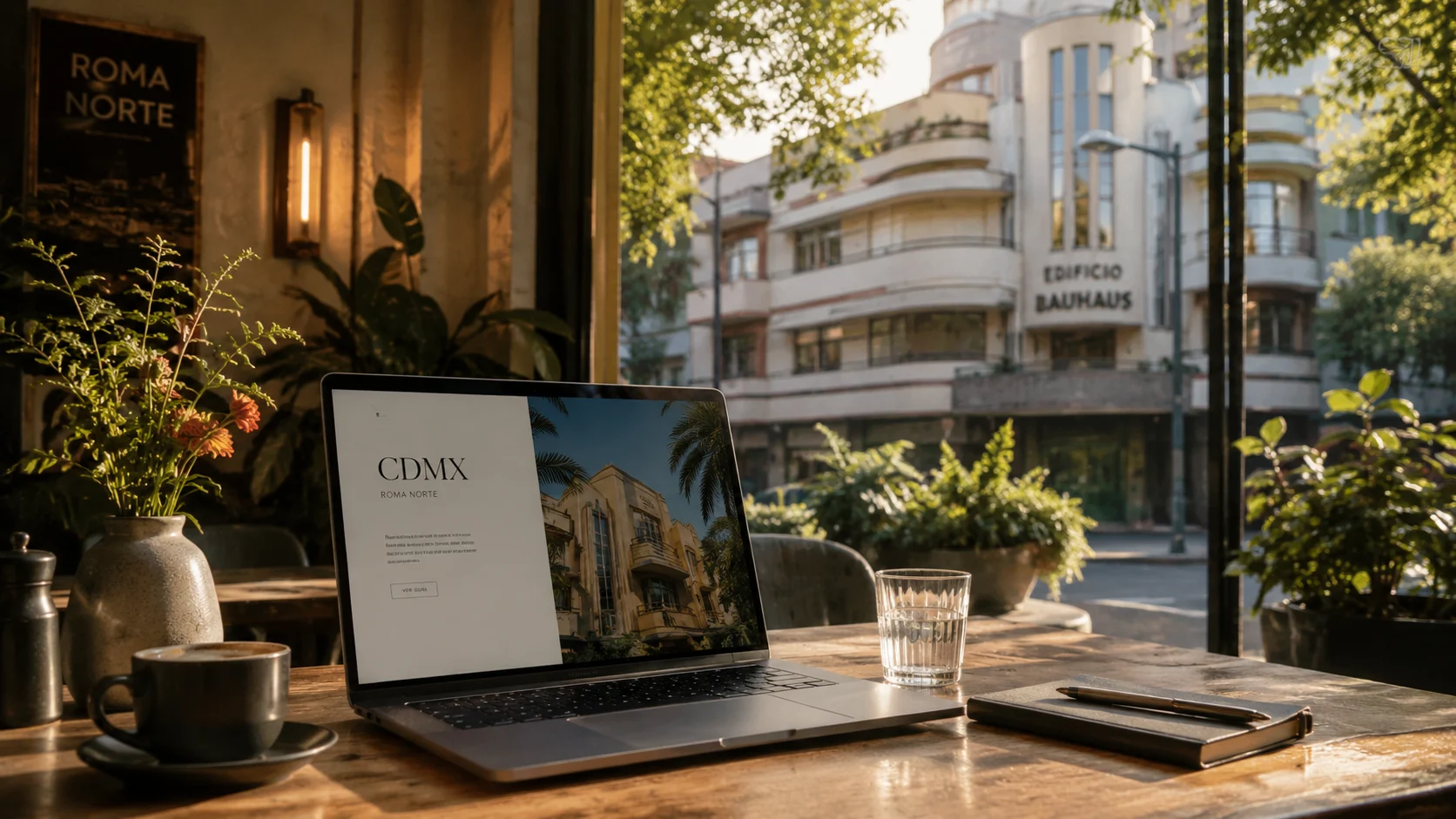
What is the Mexico digital nomad visa?
Mexico does not have a dedicated digital nomad visa. Instead, remote workers use the Temporary Resident Visa (Visa de Residente Temporal), an existing immigration category created in the 2011 Ley de Migracion that is designed for foreigners who want to live in Mexico without local employment. The visa is administered by the Instituto Nacional de Migracion (INM) and issued through Mexican consulates abroad. It cannot be obtained or converted from inside Mexico - you must apply at a consulate in your home country or another third country.
The Temporary Resident category is used by retirees, remote workers, investors, and other long-stay foreigners. For digital nomads it works particularly well because there is no requirement to have local employment, no in-country sponsor, and no need to enroll in Mexican tax or social security in year one. The initial visa is valid for 1 year, renewable for 1, 2, or 3 additional years, up to a maximum of 4 years total before converting to Permanent Resident status. See the global digital nomad visa hub for how Mexico compares with formal DN visas elsewhere.
What Mexico lacks in a formal DN visa label, it makes up for in nomad ecosystem density. Mexico City (specifically Roma Norte, Condesa, and Polanco) was ranked the world's number two digital nomad destination by Nomad List in 2024 and 2025, behind only Lisbon. Playa del Carmen, Tulum, Oaxaca, Merida, and Puerto Escondido all have substantial nomad scenes. Direct flights to the US and Canada are abundant and cheap, and the cost of living is among the lowest in the Americas outside Colombia.
Requirements and income threshold
The financial requirements are set as multiples of Mexico's general minimum wage (UMA), not as fixed dollar amounts, so they shift slightly each year. The exact threshold also varies between consulates - the New York and Madrid consulates are notoriously strict, while consulates in Houston, San Diego, or Buenos Aires are more lenient. Bring more documentation than the minimum.
| Requirement | Detail |
|---|---|
| Minimum income (last 6 months) | ~USD 2,500 to 4,300/mo (300x daily UMA, varies by consulate) |
| Savings alternative (last 12 months) | ~USD 42,000 to 70,000 (5,000x daily UMA in average balance) |
| Health insurance | Not formally required for the visa itself; recommended for in-country life |
| Criminal background | Not formally required at the visa stage |
| Proof of remote work | Not explicitly required, but useful to demonstrate income source |
| Other | Valid passport (6+ months), passport photo, completed FMM form, consular interview |
For income proof, you submit the last 6 months of payslips or bank statements showing the average monthly figure. For the savings alternative, you submit the last 12 months of investment or bank statements showing an average balance above the threshold. Most consulates are flexible about whether the income is from employment, self-employment, dividends, or rental - they care about the dollar number, not the source.
Tax treatment
Mexico has a territorial element to its tax system that benefits early-stage nomads. You become a Mexican tax resident if Mexico is your center of vital interests (most personal and economic ties) or if you have a home in Mexico available year-round. Simply spending 6 to 12 months in Mexico on a Temporary Resident visa does not automatically make you tax resident if your economic ties (employer, bank accounts, family) remain abroad. Most nomads in year one or two are not classified as tax resident and owe nothing to Mexico on foreign income.
If you do become Mexican tax resident, federal income tax (Impuesto Sobre la Renta, ISR) ranges from 1.92 percent on the first ~MXN 8,952 per year up to 35 percent on income above ~MXN 4 million per year. Most digital nomads earning USD 30,000 to 80,000 per year would fall in the 21 to 30 percent brackets. Mexico has double-tax treaties with the US, Canada, the UK, Germany, France, Spain, Japan, and over 60 other countries.
How to apply - step by step
Mexico's process has a mandatory in-person consular interview, which is unusual for DN-style visas in 2026 and is the biggest practical obstacle. Many nomads choose less strict consulates (Buenos Aires, Houston, Madrid) over the New York consulate.
- Gather documents: passport (6+ months validity), 6 months of payslips or bank statements (income route) OR 12 months of bank/investment statements (savings route), passport-style photo (3.9 x 3.1 cm white background), completed application form.
- Choose a Mexican consulate abroad and book an appointment via MEXITEL (mexitel.sre.gob.mx) or the consulate website. Some consulates have 2-3 week waits; others have multi-month backlogs.
- Attend the in-person consular interview. Bring all original documents plus copies. The consul reviews your income/savings proof and asks why you want to live in Mexico.
- If approved, pay the consular fee of USD 51 and have the visa sticker placed in your passport. This is a single-entry visa valid for 6 months to enter Mexico.
- Travel to Mexico within 180 days. On arrival, the immigration officer issues you a tourist permit with a note that you must convert it to Temporary Resident within 30 days at INM.
- Within 30 days, visit an INM office and file the canje (exchange) request to convert your entry stamp into your Temporary Resident card. Pay the in-country fee of approximately USD 230 (MXN 5,108).
- Provide biometrics (fingerprints, photo) at the INM office. Processing takes 2 to 6 weeks.
- Pick up your Temporary Resident card (TRV / Tarjeta de Residencia Temporal) and use it to open bank accounts, sign leases, get phone contracts, and renew the visa annually.
Cost breakdown
The visa is mid-range in cost. The consulate fee plus the in-country INM fees plus any travel to a non-local consulate can add up to USD 600 to 1,200 in year one.
| Item | Cost |
|---|---|
| Consular visa fee (abroad) | USD 51 |
| INM exchange fee (in Mexico, 1 year) | USD 230 (MXN 5,108) |
| INM exchange fee (in Mexico, 2 years) | USD 350 (MXN 7,640) |
| INM exchange fee (in Mexico, 3 years) | USD 450 (MXN 9,950) |
| Travel to consulate (round trip if needed) | USD 200 to 600 |
| Health insurance (annual, optional but recommended) | USD 500 to 1,500 |
| Translations and apostilles (if requested) | USD 50 to 200 |
| Total realistic budget (single, year 1) | USD 800 to 2,500 |
Cost of living
Mexico's cost of living varies wildly between Mexico City (more expensive) and provincial cities like Oaxaca, Merida, or Puerto Escondido. Tourist beach towns like Tulum and Playa del Carmen are surprisingly expensive due to dollar-pegged tourism pricing. Compare to Colombia or Costa Rica for the other major Latin American nomad options.
| Item | Mexico City | Oaxaca |
|---|---|---|
| 1 BR apartment (central, furnished) | USD 900 to 1,800/mo | USD 500 to 1,000/mo |
| 1 BR apartment (suburb) | USD 500 to 1,000/mo | USD 300 to 600/mo |
| Coworking hot desk | USD 120 to 280/mo | USD 90 to 180/mo |
| Meal at mid-range restaurant | USD 12 to 25 | USD 8 to 18 |
| Monthly transport pass | USD 25 (Metro + Metrobus) | USD 15 |
| Utilities (1 BR) | USD 60 to 120/mo | USD 40 to 80/mo |
| Gym membership | USD 35 to 100/mo | USD 25 to 70/mo |
| Total realistic monthly budget | USD 1,500 to 2,800 | USD 1,000 to 1,800 |
Family and dependents
Mexico's Temporary Resident visa allows the primary holder to bring a spouse and dependent children under 18 as Family Unity Temporary Residents. The family pathway requires the primary visa holder to first establish their own Temporary Resident status, then file a Family Unity petition at INM. Children over 18 can join only if they are economically dependent due to studies or disability.
For income uplift, the consulate generally adds approximately 50 percent on top of the primary income requirement for the first dependent (around USD 3,750 per month for a couple, depending on consulate) and 25 to 50 percent for each additional dependent. Dependents on the Family Unity TRV do not have automatic work rights in Mexico - they can request work permission separately. International schools in Mexico City cost USD 8,000 to 25,000 per child per year; bilingual private schools in Oaxaca or Merida are USD 3,000 to 8,000.
Path to residency
Mexico has one of the clearest paths from a nomad-style visa to permanent residency in the Americas. After 4 continuous years on Temporary Resident status (initial 1 year plus 3 year renewal), you can apply to convert to Permanent Resident (Residente Permanente). Permanent Resident status is granted indefinitely, includes the right to work for any Mexican employer, and does not need to be renewed.
From Permanent Resident, you can apply for Mexican citizenship after 5 years of residency in total (Temporary plus Permanent count together), or 2 years if you marry a Mexican citizen or have Mexican children. Mexican citizenship requires a basic Spanish language test and a Mexican history/civics exam. Mexico permits dual citizenship, and the Mexican passport gives visa-free access to most of Latin America, the Schengen Area, the UK, and Japan.
Best cities for digital nomads
Mexico offers more nomad city variety than any other Latin American country. Mexico City is the urban heavyweight, Playa del Carmen is the beach nomad capital, Oaxaca is the cultural and food destination, and Merida (Yucatan) is the up-and-coming safer alternative.
- Mexico City (Roma Norte, Condesa, Polanco): the world's #2 nomad destination per Nomad List 2024-25. Roma Norte and Condesa are the dense nomad zones with cafes, coworking (Selina, WeWork, Publico, Homework), and meetups every night. Polanco is the upscale finance/embassy zone. Altitude is 2,240m (cool year-round, 12-25°C), pollution can be an issue in winter, but the food, culture, and pace are world-class.
- Playa del Carmen and Tulum (Quintana Roo Riviera Maya): beach nomad belt with strong wifi infrastructure and dense expat communities. Playa is bigger and more established (Selina, Bunker, multiple coworking spots), Tulum is trendier but more expensive (USD 1,800 to 4,000 for a 1BR). Hot and humid year-round. Direct flights via Cancun to most of North America.
- Oaxaca and Merida: cultural alternatives. Oaxaca (Centro, Jalatlaco neighborhoods) is the food and arts capital of Mexico with a growing nomad scene and very low cost of living (USD 1,000 to 1,800/mo all-in). Merida (Yucatan, Centro and North Merida) is the safest major city in Mexico per recent crime stats, hot and flat, with growing colonial-house renovation scene popular with US and Canadian retirees and nomads.
Pros and cons
- Pro: Mexico City is the world's #2 nomad destination with unmatched ecosystem density in the Americas.
- Pro: Up to 4 years on Temporary Resident plus clean path to Permanent Resident and citizenship within 5 to 9 years total.
- Pro: Low cost of living (USD 1,000 to 2,800/mo depending on city) and excellent food culture.
- Pro: Direct flights everywhere in North America; close time zones to US/Canada employers.
- Pro: Territorial tax in early years means foreign income typically untaxed in year one.
- Con: No dedicated DN visa; you must use Temporary Resident which has a mandatory in-person consular interview abroad.
- Con: Income/savings thresholds vary by consulate; New York and Madrid are notoriously strict, with some applicants reporting USD 4,000+/month income requirements informally.
- Con: Bureaucracy is slow (INM appointments often booked weeks out, in-country canje takes 6 to 8 weeks).
- Con: Safety varies sharply by city and neighborhood. Stick to expat-friendly zones in CDMX, Merida, Oaxaca; avoid border-region cities.
- Con: Limited English outside CDMX tourist zones, Tulum, and Playa. Functional Spanish becomes essential.
الأسئلة الشائعة
Does Mexico have a dedicated digital nomad visa?
No. Mexico does not have a formal digital nomad visa. Remote workers use the existing Temporary Resident Visa (Residente Temporal), which is designed for any foreigner with sufficient income or savings who wants to live in Mexico without local employment. This works fine for nomads in practice but requires a consular interview abroad.
What is the income threshold for the Mexico Temporary Resident visa?
Approximately USD 2,500 to 4,300 per month over the last 6 months (set as 300x the daily UMA, which shifts annually). Alternatively, approximately USD 42,000 to 70,000 in average savings over the last 12 months (5,000x daily UMA). Exact thresholds vary by consulate.
Can I apply for the Mexico Temporary Resident visa from inside Mexico?
No. The Temporary Resident visa must be applied for at a Mexican consulate outside Mexico (typically in your home country or in a nearby third country like Belize, Guatemala, or the US). The interview is in person and cannot be substituted with an online application.
How long is the Mexico Temporary Resident visa valid?
Initially 1 year, renewable for 1, 2, or 3 additional years (up to 4 years total). After 4 years, you can convert to Permanent Resident status, which is indefinite.
Do I pay Mexican tax on my foreign income as a digital nomad?
Not automatically in year one. You become a Mexican tax resident only if Mexico becomes your center of vital interests or if you keep a home there available year-round and lack stronger ties elsewhere. Most nomads in year one or two avoid Mexican tax on foreign-source income. US citizens still owe US federal tax regardless.
Can I bring my family on the Mexico Temporary Resident visa?
Yes. After establishing your own Temporary Resident status, you can file a Family Unity petition for your spouse and dependent children under 18. Consulates typically expect approximately 50 percent higher income for the first dependent and 25 to 50 percent more for each additional dependent.
Does the Mexico Temporary Resident visa lead to citizenship?
Yes. After 4 years on Temporary Resident you can convert to Permanent Resident, and after 5 years of total Mexican residency (Temporary plus Permanent combined) you can apply for citizenship. The process requires a basic Spanish language test and a Mexican history exam. Mexico permits dual citizenship.
Which Mexican consulate should I apply at?
Consulate practices vary widely. New York and Madrid are reportedly the strictest on income proof. Houston, San Diego, Buenos Aires, and the consulates in Belize are reportedly more lenient. You do not have to apply at the consulate covering your country of citizenship, but you should be physically located in the consulate's district when you book and attend the appointment.
مقالات ذات صلة
استخدم أدواتنا المجانية
حاسبات مجانية لكندا CRS وأستراليا والمملكة المتحدة وألمانيا وحدود رواتب 34 دولة.
جميع الأدوات