
What is the EPS (Employment Permit System)?
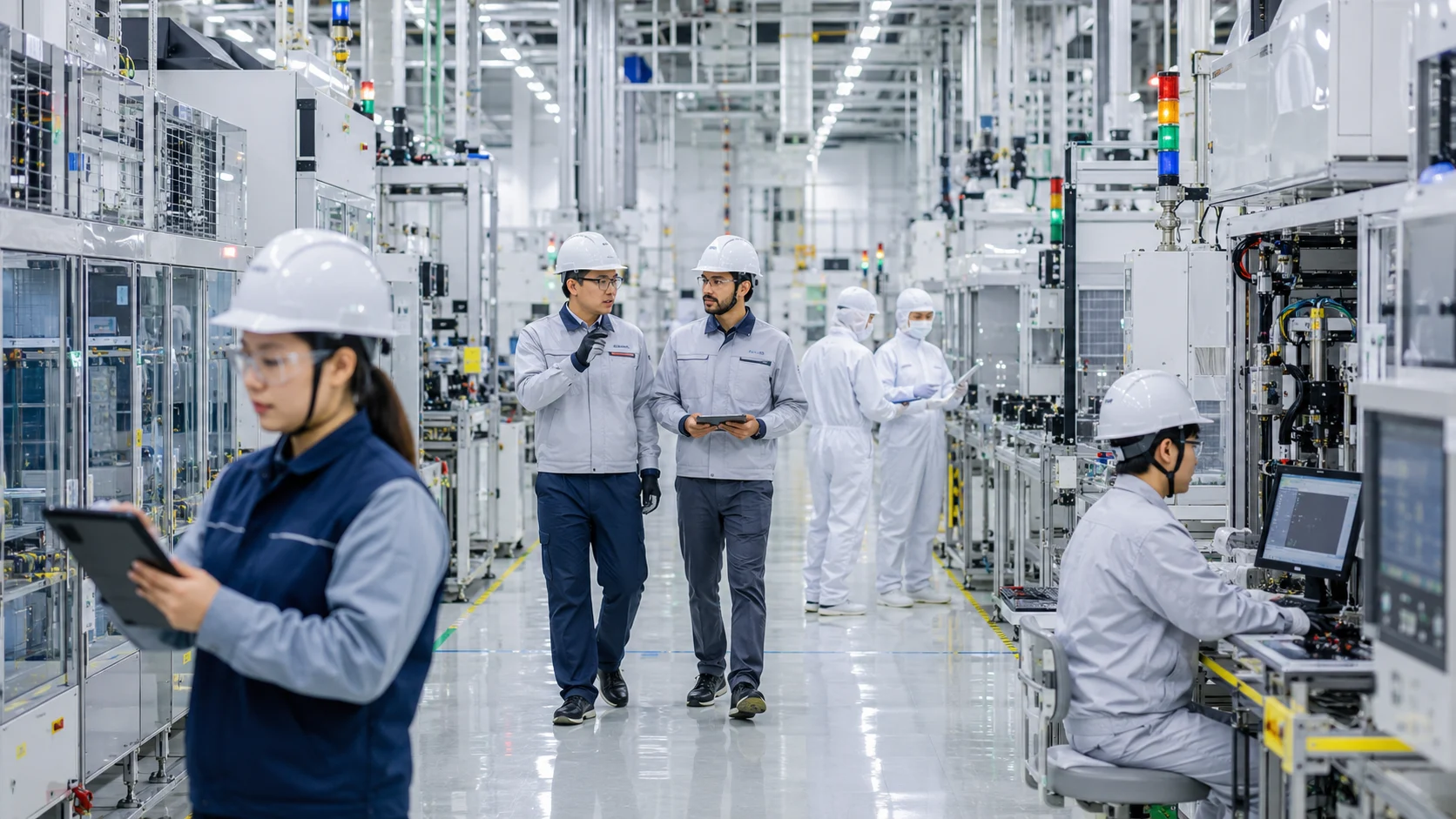
Korea's Employment Permit System is a government-run labor migration program - completely different from typical employer-sponsored work visas. The Ministry of Employment and Labor sets an annual quota each year (80,000 for 2026), and HRD Korea (Human Resources Development Korea) administers the program through bilateral Memoranda of Understanding with 17 sending countries.
How the system actually works, step by step:
- Korea's Ministry of Employment and Labor sets the annual quota for non-professional foreign workers.
- HRD Korea runs bilateral agreements with 17 sending countries and certifies the official sending agency in each.
- Workers in those countries take the EPS-TOPIK Korean language test at home.
- Workers who pass enter the "Job Seeker Roster" maintained by HRD Korea.
- Korean employers (factories, farms, fish processors, construction firms) browse the roster and pick candidates.
- The government matches workers to employers and facilitates the employment contract.
- The worker gets an E-9 visa from a Korean embassy in their home country and flies to Korea to start work.
The critical thing to understand: this is NOT a lottery in the traditional sense. You take a test, pass it, and wait to be matched with an employer. Higher test scores get matched faster and to better job offers. The Korean employer chooses you AFTER you pass the test - not before.
EPS has been running since 2004 and has placed more than 800,000 foreign workers in Korean factories, farms, and fisheries since launch. It replaced the discredited "Industrial Trainee" system that had drawn international criticism for treating workers as trainees (without labor-law protection) rather than employees. Under EPS, foreign workers have the same legal status as Korean workers in their sector.
The 17 eligible countries
Only 17 countries have signed bilateral MOUs with Korea for EPS. If your country is not on this list, you cannot apply through EPS - no exceptions, no workarounds. The table below shows each country, the year the MOU was signed, the approximate number of EPS workers in Korea today, and the primary sectors they work in.
| Country | MOU year | EPS workers in Korea (2025) | Primary sectors |
|---|---|---|---|
| 🇳🇵 Nepal | 2007 | 90,097 | Manufacturing, agriculture |
| 🇵🇭 Philippines | 2004 | 45,000+ | Manufacturing, fisheries |
| 🇻🇳 Vietnam | 2004 | 40,000+ | Manufacturing, construction |
| 🇧🇩 Bangladesh | 2008 | 25,000+ | Manufacturing |
| 🇮🇩 Indonesia | 2004 | 30,000+ | Manufacturing, fisheries |
| 🇰🇭 Cambodia | 2006 | 30,000+ | Manufacturing, agriculture |
| 🇲🇲 Myanmar | 2008 | 25,000+ | Manufacturing |
| 🇲🇳 Mongolia | 2005 | 15,000+ | Manufacturing, construction |
| 🇱🇰 Sri Lanka | 2004 | 20,000+ | Manufacturing |
| 🇵🇰 Pakistan | 2008 | 10,000+ | Manufacturing |
| 🇹🇭 Thailand | 2004 | 35,000+ | Agriculture, fisheries |
| 🇺🇿 Uzbekistan | 2010 | 8,000+ | Manufacturing |
| 🇰🇬 Kyrgyzstan | 2011 | 3,000+ | Manufacturing |
| 🇹🇯 Tajikistan | 2014 | 1,000+ | Manufacturing |
| 🇱🇦 Laos | 2006 | 5,000+ | Manufacturing |
| 🇹🇱 Timor-Leste | 2009 | 3,000+ | Manufacturing |
| 🇨🇳 China (ethnic Koreans) | 2004 | Separate H-2 program | Various |
Not sure which visa you qualify for? Run your profile through our Immigration Eligibility Checker - it will rank Korea and other destinations against your nationality, age, education, and work experience.
EPS-TOPIK - the Korean language test
The EPS-TOPIK (Test of Proficiency in Korean for the Employment Permit System) is the mandatory first step. No pass means no application - you cannot enter the Job Seeker Roster without a valid EPS-TOPIK certificate. Roughly 30–45% of test-takers pass on their first attempt depending on country.
Test format:
- 40 multiple-choice questions total
- 20 Listening + 20 Reading
- Scored out of 200 points
- Pass mark: 80/200 (40%)
- Duration: 70 minutes
- Language: Korean (questions in Korean, answers in Korean)
- Computer-based test (CBT) in most countries; some still paper-based
Test schedule and registration:
- Administered by HRD Korea
- 2–4 test sessions per year per country
- Register at epstopik.hrdkorea.or.kr or through your national sending agency
- Results released within 2–3 weeks of the test date
- Score validity: 2 years from the test date
Free study resources (HRD Korea publishes everything you need at no cost):
- HRD Korea official textbook (downloadable PDF, available in 16 source-country languages)
- epstopik.hrdkorea.or.kr - free practice tests with the actual question format
- EPS-TOPIK Study app (Android and iOS) - free, mobile-friendly drills
- YouTube: search "EPS-TOPIK preparation" - thousands of free videos in Nepali, Bangla, Tagalog, Vietnamese
- KBS World Korean language programs - free podcasts and short courses
Realistic preparation timelines:
- From zero Korean: 3–6 months of 2–3 hours daily study to reach a 80+ pass mark.
- With basic Korean (existing Hangul reading): 1–2 months of focused exam prep.
- The listening section is significantly harder than reading - prioritize Korean audio in your daily study.
- Score 130+/200 to get faster employer matching priority. Score 150+/200 to be in the top tier of applicants.
| Country | Applicants (2025 est.) | Pass rate | Competition level |
|---|---|---|---|
| Nepal | 50,000+ | ~30% | Very high |
| Philippines | 20,000+ | ~45% | High |
| Vietnam | 30,000+ | ~35% | Very high |
| Bangladesh | 25,000+ | ~25% | Very high |
| Indonesia | 15,000+ | ~40% | High |
| Cambodia | 10,000+ | ~35% | Medium |
| Myanmar | 8,000+ | ~35% | Medium |
| Sri Lanka | 8,000+ | ~40% | Medium |
Eligible jobs and sectors
EPS covers NON-PROFESSIONAL jobs only. If you have a university degree and want a professional or office role, EPS is not for you - look at the E-7 Skilled Worker visa instead, which has separate quotas and requirements. EPS is built around five sectors: manufacturing, agriculture, livestock, fisheries, and (since 2009) limited construction and service roles.
| Sector | Typical jobs | Salary (KRW/month) | Salary (USD) | Salary (NPR) |
|---|---|---|---|---|
| Manufacturing | Factory, assembly, packaging | 2,100,000–2,800,000 | $1,550–2,070 | NPR 200,000–265,000 |
| Agriculture & livestock | Farm, greenhouse, dairy, pig | 2,000,000–2,500,000 | $1,480–1,850 | NPR 190,000–237,000 |
| Fisheries | Fish processing, aquaculture, coastal vessels | 2,200,000–3,000,000 | $1,630–2,220 | NPR 210,000–285,000 |
| Construction | General labor, scaffolding, formwork | 2,500,000–3,500,000 | $1,850–2,590 | NPR 237,000–332,000 |
| Service (limited) | Restaurant, cleaning, elderly care | 2,100,000–2,600,000 | $1,550–1,920 | NPR 200,000–248,000 |
Manufacturing is the most common sector - more than 60% of all EPS workers are placed in small and medium factories (auto parts, electronics components, plastic injection, food processing). Construction and fisheries pay the most but are the hardest physically. Agriculture often comes with the best housing (employer-provided rural housing, no rent) but the longest hours during planting and harvest seasons.
You cannot freely choose your sector before applying. When you register for EPS-TOPIK you indicate sector preferences, but the final placement is made by HRD Korea based on employer demand at the time you're matched. Manufacturing has the most openings and the fastest matching; fisheries and construction have fewer openings but typically higher base pay.
Salary, deductions, and take-home pay
Korea's national minimum wage for 2026 is KRW 10,030 per hour. The standard work week is 40 hours, but EPS workers in manufacturing and construction routinely work 50–60 hours per week with overtime paid at 150% of base rate (200% on holidays). The numbers below assume a manufacturing role with moderate overtime - your real take-home will vary by sector and employer.
| Item | Monthly amount (KRW) | Notes |
|---|---|---|
| Gross wage (40 hr/week) | 2,096,270 | Minimum wage × 174 hours |
| National Pension | 94,000 | 4.5% of salary (returned on departure if eligible) |
| National Health Insurance | 75,000 | 3.545% (employer pays the same again) |
| Employment Insurance | 19,000 | 0.9% |
| Income Tax | 30,000 | Varies with income and dependants |
| Departure Guarantee Insurance | 25,000 | Paid back as lump sum when you leave Korea |
| Total deductions | 243,000 | |
| NET take-home (40-hour week) | 1,853,000 | ~$1,370 / NPR 176,000 |
| NET with overtime (52-hour week) | 2,400,000 | ~$1,775 / NPR 228,000 |
Most workers send the majority of their take-home wage to family back home. Typical monthly remittances and what they convert to in source-country currency:
| Source country | Monthly remittance (KRW) | Annual (KRW) | Local currency / year |
|---|---|---|---|
| 🇳🇵 Nepal | 1,500,000 | 18,000,000 | NPR 1,728,000 |
| 🇵🇭 Philippines | 1,500,000 | 18,000,000 | PHP 720,000 |
| 🇧🇩 Bangladesh | 1,500,000 | 18,000,000 | BDT 1,584,000 |
| 🇻🇳 Vietnam | 1,500,000 | 18,000,000 | VND 310,000,000 |
| 🇮🇩 Indonesia | 1,500,000 | 18,000,000 | IDR 17,500,000,000 |
Step-by-step application process
The full process from "I want to apply" to "I'm landing at Incheon" takes 12–18 months for most workers, 8–12 months in the best case, and 24+ months for those who pass with low scores. Here is the standard sequence.
- STUDY Korean for 3–6 months. Register for the next EPS-TOPIK test through your country's official sending agency (DoFE in Nepal, DMW in the Philippines, BOESL in Bangladesh, COLAB in Vietnam, BNP2TKI in Indonesia).
- TAKE the EPS-TOPIK test. Score 80+/200 to pass; aim for 130+/200 for faster employer matching.
- APPLY to the Job Seeker Roster within 1 year of passing. Submit: EPS-TOPIK score certificate, medical examination, skills evaluation (sector-specific), criminal background check, passport copy, and recent photos.
- WAIT for employer matching. HRD Korea shares your profile with Korean employers in your preferred sector. Employers review and select. Timeline: 1 month to 1 year+ depending on test score and sector demand.
- SIGN the employment contract. The contract specifies salary, accommodation, working hours, and job description. Your sending agency facilitates the signing - review every clause before signing, especially overtime and accommodation.
- PRE-DEPARTURE training. A mandatory 3–5 day course covering Korean labor law, workplace safety, cultural orientation, emergency contacts, and your legal rights as an EPS worker.
- GET your E-9 visa. Apply at the Korean embassy or consulate in your home country with your signed contract, EPS-TOPIK certificate, medical clearance, and passport. Visa fees are usually USD 30–50.
- FLY to Korea. Your employer or sending agency arranges pickup from the airport. You must report to your workplace within 3 days of arrival.
- REGISTER as a foreigner. Within 90 days of arrival, register at your local immigration office and collect your Alien Registration Card (ARC). The ARC is your main ID in Korea - keep it safe.
Once you're in Korea, you can also strengthen your application file with a strong professional cover letter for any future role change within the system. EPS allows up to three job changes during your 4-year, 10-month stay (with valid reason: wage non-payment, business closure, or mutual agreement).
Country-specific processes
Each of the 17 countries has its own designated sending agency and a slightly different process. Below are the five largest senders - Nepal, the Philippines, Bangladesh, Vietnam, and Indonesia - covering more than 80% of all EPS workers.
🇳🇵 NEPAL
- Sending agency: DoFE (Department of Foreign Employment), Ministry of Labour
- EPS-TOPIK centres: Kathmandu, Bhaktapur, Pokhara
- Shram Swikriti (foreign employment permit): MANDATORY before departure, applied via the FEIMS portal (feims.dofe.gov.np)
- Total cost: NPR 20,000–30,000 (registration, medical, skills test, pre-departure training, visa fee)
- Nepal-specific issue: extreme competition - 50,000+ applicants, only 15,000+ passes per cycle
- Score 140+/200 for realistic matching within 12 months
- Existing Nepali community in Korea: 90,097 (2025) - largest by far
For the full Nepal-specific EPS process - including the 2026 quota cut to 80,000, salary in NPR with all deductions, and how Korea compares to Japan SSW and the Gulf for Nepali workers - see our Korea EPS from Nepal guide and the DoFE Shram Swikriti walkthrough.
🇵🇭 PHILIPPINES
- Sending agency: DMW (Department of Migrant Workers, formerly POEA)
- EPS-TOPIK centres: Manila, Cebu
- OFW processing: through the DMW online portal
- Total cost: PHP 15,000–25,000
- Advantage: higher pass rate (~45%) and strong Filipino community networks inside Korean factories
- Existing Filipino community in Korea: 45,000+
🇧🇩 BANGLADESH
- Sending agency: BOESL (Bangladesh Overseas Employment Services Limited)
- EPS-TOPIK centre: Dhaka
- Total cost: BDT 25,000-35,000
- Challenge: lowest pass rate (~25%) and very high competition - Bangladeshi applicants need to be highly disciplined in their Korean study
For the full Bangladesh-specific EPS process - including BDT salary tables, the 2026 quota, and how Korea compares to Saudi, Malaysia, and Japan SSW for Bangladeshi workers - see our Korea EPS from Bangladesh guide.
🇻🇳 VIETNAM
- Sending agency: COLAB (Centre for Overseas Labour, Ministry of Labour-Invalids and Social Affairs)
- EPS-TOPIK centres: Hanoi, Ho Chi Minh City
- Total cost: VND 5,000,000–8,000,000
- Note: Vietnam also has the separate TITP (Technical Intern Training Program) with Japan - different from EPS, different visa, do not confuse the two
🇮🇩 INDONESIA
- Sending agency: BNP2TKI
- EPS-TOPIK centres: Jakarta, Surabaya
- Total cost: IDR 3,000,000–5,000,000
- Indonesian workers are concentrated in fisheries (especially boat-based) and manufacturing
Worker rights and protections
Korean labor law applies EQUALLY to EPS workers - this is one of the strongest features of the program and what distinguishes it from most Gulf-state guest worker schemes. Your legal rights as an E-9 worker include:
- Same national minimum wage as Korean workers (KRW 10,030/hour in 2026)
- Maximum 52 hours per week (40 regular + 12 overtime under the standard contract)
- Overtime paid at 150% of base rate on weekdays, 200% on public holidays
- 15 days paid annual leave after your first year of employment
- National Health Insurance coverage (employer pays 50% of the premium)
- Workplace injury insurance (100% employer-paid - no deduction from your wage)
- Departure Guarantee Insurance refund when you leave Korea
- Right to file complaints at the local labor board
- Employer MUST provide accommodation (free, subsidised, or counted as a small wage deduction capped by law)
- Employer CANNOT confiscate your passport - this is illegal and reportable
- Right to change employer up to 3 times in your 4-year-10-month stay (with valid reason: unpaid wages, business closure, mutual consent, etc.)
Where to get help if your rights are violated:
- EPS Counseling Center: 1577-0071 (multilingual - Nepali, Tagalog, Vietnamese, Bengali, Indonesian, Khmer, etc.)
- Migrant Worker Human Rights Centers (regional offices across Korea)
- Your country's embassy in Seoul (every sending country has a labor attaché)
- 1345 Immigration Helpline (visa-related issues, run by Korea Immigration Service)
Can you stay permanently? The EPS exit trap
This is the hardest truth about EPS, and the one most poorly explained by recruitment agencies: EPS is designed as TEMPORARY migration. It does not lead to permanent residency or citizenship, and you cannot bring your spouse or children.
- E-9 visa maximum stay: 4 years 10 months on the first contract
- After the maximum stay: you MUST leave Korea for at least 6 months
- You can re-enter for one additional 4-year-10-month term (total approximately 9 years 8 months across two terms)
- EPS does NOT lead to permanent residency
- EPS does NOT lead to citizenship
- You cannot bring spouse or children on the E-9 visa
Realistic alternatives if you want to stay in Korea long-term:
- E-7 (Skilled Worker) visa - if you gain enough industry skills and your Korean employer sponsors you. Generally requires a university degree OR exceptional skills certification plus several years of experience. A small percentage of EPS workers successfully transition to E-7.
- F-2 (Long-term Residence) visa - points-based. Requires TOPIK Level 4+ Korean (not EPS-TOPIK - the much harder general TOPIK), income proof, and integration points (tax records, no criminal record, recommended by your employer).
- Return home and apply for a different visa category later (study D-2, business D-8, marriage F-6 if you marry a Korean citizen).
- Some workers overstay illegally - this is extremely risky. Korea conducts regular crackdowns. Overstay = deportation + a 5-to-10-year re-entry ban + future visa applications anywhere in OECD become harder.
If your real goal is permanent settlement abroad rather than temporary high-wage work, EPS is not the right program for you. Look at Canada Express Entry (see our French test guide for Canada PR), Australia's points-based skilled visas, or Germany's Blue Card and Germany work-visa system - all of which have direct PR pathways.
EPS vs other Korea work visas
Korea has more than 20 visa categories. EPS is just one of them. If EPS doesn't fit (wrong country, degree-holder, want family) one of the alternatives below probably does. See the country profile for the full list of paths into South Korea.
| Feature | E-9 (EPS) | E-7 (Skilled) | H-2 (Working Visit) | D-10 (Job Seeking) |
|---|---|---|---|---|
| For whom | 17 countries | Any country | Ethnic Koreans (China, CIS) | Job seekers (any country) |
| Degree needed | ❌ No | ✅ Usually yes | ❌ No | ✅ Yes |
| Language test | EPS-TOPIK (mandatory) | TOPIK optional | — | — |
| Sectors | Manufacturing, agriculture, fisheries, construction | Professional / technical | Any | Any (while you search) |
| Family allowed | ❌ Cannot bring | ✅ Can bring | ⚠️ Limited | ❌ No |
| PR pathway | ❌ No | ✅ Yes (E-7 → F-2 → F-5) | ⚠️ Limited | ⚠️ Via E-7 after hire |
| Maximum stay | 4yr 10mo (renewable once) | 1–3 years renewable | 3 years renewable | 6 months |
| Salary range | KRW 2.1M+ | KRW 3M+ | Varies | — |
| Quota | 80,000/yr (2026) | No quota | Quota-based | Limited |
EPS vs Gulf countries - which pays more?
Nepali, Filipino, and Bangladeshi workers often choose between Korea EPS and the Gulf states (Qatar, Saudi Arabia, UAE). The decision has a real impact on lifetime savings. Here's an honest comparison.
| Factor | 🇰🇷 Korea (EPS) | 🇶🇦 Qatar | 🇸🇦 Saudi Arabia | 🇦🇪 UAE |
|---|---|---|---|---|
| Monthly salary | KRW 2.1–2.8M ($1,550–2,070) | QAR 1,500–2,500 ($412–687) | SAR 1,500–3,000 ($400–800) | AED 1,500–3,000 ($408–817) |
| Overtime | Mandatory 150–200% | Often unpaid | Variable | Variable |
| Housing | Employer provides (free / subsidised) | Employer provides | Employer provides | Variable |
| Food | Self (≈KRW 300K/mo) | Often employer-provided | Often employer-provided | Self |
| Climate | -15°C to +35°C | 25–50°C | 25–50°C | 25–50°C |
| Worker protections | ✅ Strong (Korean labour law) | ⚠️ Kafala reforms ongoing | ⚠️ Limited | ⚠️ Improving |
| Language needed | Korean (EPS-TOPIK) | Basic English/Arabic | Basic Arabic/English | Basic English |
| Time to arrive | 12–18 months | 2–4 months | 2–4 months | 2–4 months |
| NET monthly savings | $800–1,200 | $300–500 | $300–600 | $300–600 |
Korea pays 2–3× more than Gulf countries for comparable manual labor, with significantly stronger legal protections. The trade-off: Korea takes 12–18 months to get into (vs 2–4 months for Gulf), requires passing a real language test, and the cold winters are a genuine shock for workers from tropical climates. If you can wait, study Korean seriously, and tolerate cold weather, the financial return is significantly higher.
Scam warning - read this before paying anyone
EPS recruitment scams are common in Nepal, Bangladesh, and the Philippines because the program is desirable and the official process is slow. Tens of thousands of dollars are lost every year to fake "agents" promising fast-track placements. Internalize these rules:
- EPS is a GOVERNMENT program - NO private agent can guarantee you a place.
- NEVER pay more than the official government fees set by your sending agency.
- Official total fees: USD 100–300 (varies by country, all-in).
- If anyone asks for USD 1,000+ for "guaranteed selection" or a "fast-track," it's a SCAM.
- The EPS-TOPIK test is administered ONLY by HRD Korea through official sending agencies - there are no shortcuts and no one can sell you a passing score.
- Verify your sending agency on its government website: Nepal dofe.gov.np, Philippines dmw.gov.ph, Bangladesh boesl.gov.bd, Vietnam dolab.gov.vn, Indonesia bp2mi.go.id.
- Report scams to your country's labor ministry and your local police.
Sık sorulan sorular
How do I apply for Korea EPS?
Through your country's official sending agency: DoFE in Nepal, DMW in the Philippines, BOESL in Bangladesh, COLAB in Vietnam, BNP2TKI in Indonesia. The sequence is: register for EPS-TOPIK, pass the test (80/200 minimum), enter the Job Seeker Roster, wait for a Korean employer to select you, sign the contract, get your E-9 visa at the Korean embassy, and fly to Korea. Total time: 12–18 months for most applicants.
What is EPS-TOPIK and how hard is it?
EPS-TOPIK is the Korean-language test you must pass to apply for an E-9 visa. 40 multiple-choice questions (20 listening + 20 reading) over 70 minutes, scored out of 200. Pass mark is 80/200 (40%). From zero Korean it takes 3–6 months of 2–3 hours daily study to pass. Pass rates vary by country: 25% in Bangladesh, 30% in Nepal, 45% in the Philippines. Aim for 130+/200 to get matched with an employer faster.
Which countries are eligible for EPS?
Only 17 countries: Nepal, Philippines, Vietnam, Bangladesh, Indonesia, Cambodia, Myanmar, Mongolia, Sri Lanka, Pakistan, Thailand, Uzbekistan, Kyrgyzstan, Tajikistan, Laos, Timor-Leste, and China (for ethnic Koreans under a separate H-2 program). If your country is not on this list - including India, Nigeria, Ghana, and most African and Latin American countries - you cannot apply through EPS.
How much can I earn in Korea through EPS?
Minimum gross wage on a 40-hour week is KRW 2,096,270 per month (about $1,550 USD or NPR 200,000). With typical overtime (50–60 hours/week, common in manufacturing) take-home jumps to KRW 2.4M+ ($1,775+). Construction and fisheries can pay KRW 3M+ for hard physical work. After all deductions (pension, health, employment insurance, tax, departure guarantee), net take-home on overtime is roughly $1,400–$1,800 per month.
Can I bring my family on an E-9 visa?
No. The E-9 visa does not allow family reunification. You cannot bring your spouse or children to Korea on EPS. The only way to bring family is to transition to a different visa category later - typically E-7 (Skilled Worker) or F-2 (Long-term Residence), both of which have stricter requirements including a university degree and TOPIK Level 4+ Korean.
How long can I stay in Korea on EPS?
Maximum 4 years 10 months on your first contract. After that you must leave Korea for at least 6 months. You can then re-enter for one more 4-year-10-month term, for a total stay of roughly 9 years 8 months across two cycles. After that you must leave for good, unless you've transitioned to a different visa category (E-7 or F-2).
Can EPS lead to permanent residency?
No, not directly. EPS (E-9) is explicitly designed as temporary migration and does not include a PR pathway. To gain permanent residency in Korea you would need to transition to E-7 (Skilled Worker) and then to F-2 (Long-term Residence), eventually F-5 (Permanent Residency). This requires significant Korean language ability (TOPIK Level 4+), a degree or equivalent skills certification, employer sponsorship, and several more years of residence.
What happens if my employer mistreats me?
Korean labor law protects EPS workers the same as Korean workers. Call the EPS Counseling Center on 1577-0071 (multilingual - Nepali, Bangla, Tagalog, Vietnamese, Indonesian, and more). You can also contact your country's embassy in Seoul, the Migrant Worker Human Rights Center, or file a complaint at the local labor board. EPS workers have the legal right to change employer up to 3 times during their stay for valid reasons including unpaid wages, business closure, or mutual consent.
Can I change jobs on an E-9 visa?
Yes, but with restrictions. EPS workers can change employer up to 3 times during the 4-year-10-month stay, but only for valid reasons recognised by the Ministry of Employment and Labor: non-payment of wages, business closure, dangerous working conditions, mutual consent with the original employer, or sector reassignment by HRD Korea. You cannot freely jump employer simply for better pay - and you must request a transfer through your sending agency or the EPS Counseling Center.
Is Korea EPS better than working in Gulf countries?
Financially, yes - Korea pays 2–3× more than Qatar, Saudi Arabia, or the UAE for comparable manual work, with much stronger legal protections (full Korean labor law applies, including minimum wage, overtime at 150–200%, paid annual leave, and the right to file complaints). The trade-offs: Korea takes 12–18 months to enter (vs 2–4 months for Gulf), requires passing a real language test, and the winters are very cold. If you can study Korean and wait, Korea is significantly better for long-term savings.
İlgili makaleler
Ücretsiz araçlarımızı kullanın
Kanada CRS, Avustralya puanları, İngiltere skilled worker, Almanya Fırsat Kartı ve 34 ülke maaş eşikleri için ücretsiz hesaplayıcılar.
Tüm araçları gör