
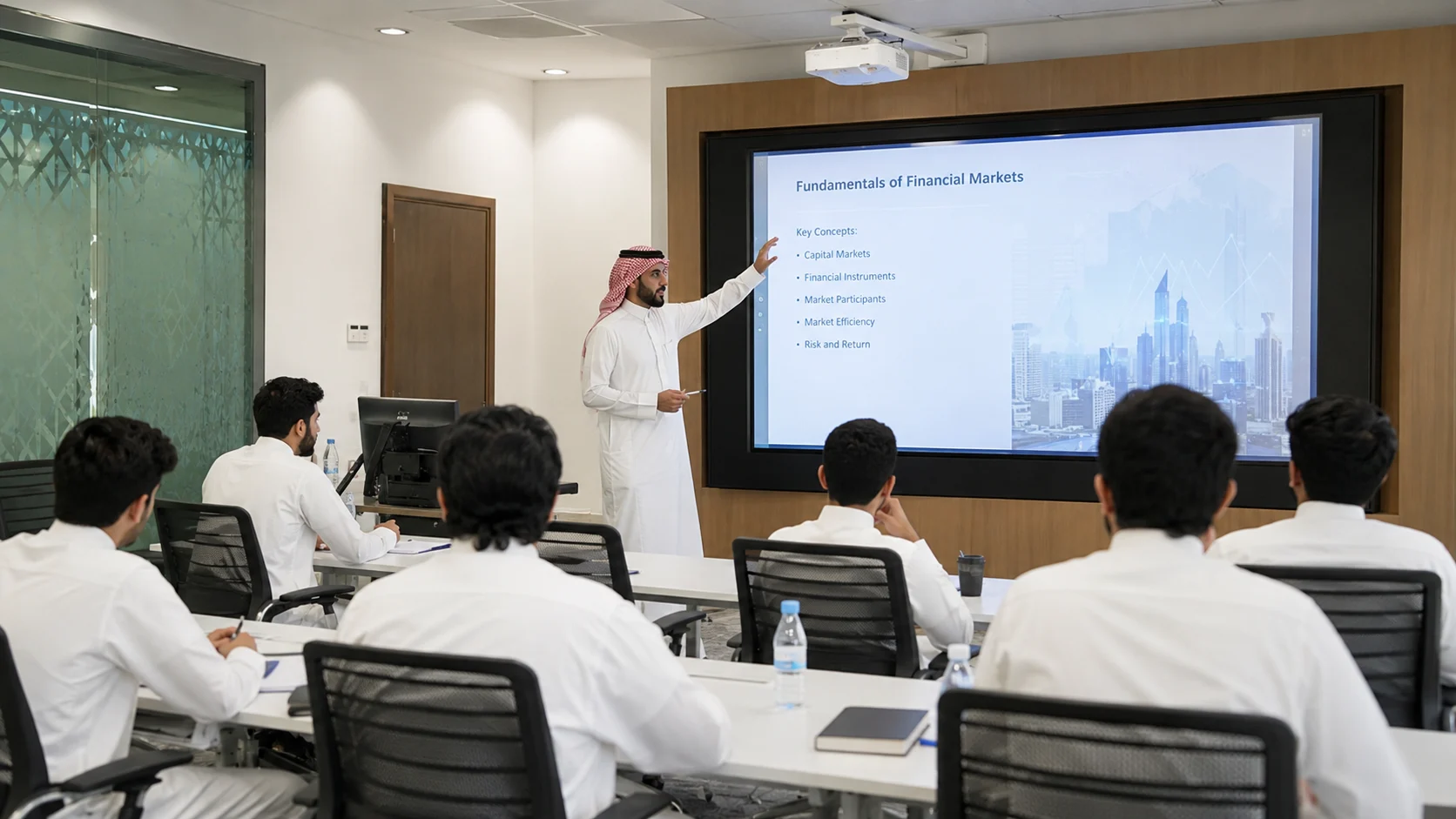
Iqama work visa explained
Iqama is Saudi Arabia's foreign worker residence permit, issued after you arrive on an employer-sponsored work visa. The Iqama is the document that proves your legal residence in the Kingdom, gives you access to banking, healthcare, mobile phone contracts, and the ability to enter and exit Saudi on exit-reentry visas. Every foreign teacher in Saudi works under an Iqama, including those in international schools, public universities, and corporate training programs.
The Iqama system is built on the kafala (sponsorship) framework. Your employer is your legal sponsor and your visa status is tied directly to them. Historically this meant you could not change employers without your sponsor's consent (a release letter or no-objection certificate). Vision 2030 labour reforms beginning in 2021 have loosened this significantly. Workers in the private sector can now transfer sponsors after one year without employer consent under certain conditions, and exit-reentry is now self-service through the Absher mobile app. Teachers at international schools and universities have meaningfully more mobility than the old kafala stories suggest.
Iqamas are issued for 1 or 2 year terms and renewed annually by your employer. The renewal fee is paid by your employer (around SAR 9,700 per year for the standard expat dependant tax). Your dependants (spouse, children) can join you on dependent Iqamas if your monthly salary exceeds SAR 7,000 (USD 1,870). Most qualified teaching roles clear this threshold easily. Saudi has no income tax for any worker, foreign or national.
Salary and benefits
Saudi teaching salaries depend heavily on sector. Government K-12 schools (Ministry of Education contract) pay the lower end at SAR 9,000 to SAR 13,000 per month (USD 2,400 to USD 3,470). International private schools pay SAR 11,000 to SAR 18,000 (USD 2,940 to USD 4,800). Saudi universities pay SAR 12,000 to SAR 22,000 (USD 3,200 to USD 5,870). Corporate training providers serving Aramco, SABIC, and other Saudi giants pay SAR 14,000 to SAR 25,000 (USD 3,740 to USD 6,670). The NEOM and Red Sea project schools currently pay at the top end of these bands plus signing bonuses.
| Benefit | Typical provision | USD equivalent value |
|---|---|---|
| Base salary monthly | SAR 9,000-18,000 | USD 2,400-4,800 |
| Income tax withheld | SAR 0 | USD 0 (no income tax) |
| Housing | Furnished compound apartment OR SAR 4,000-7,000/mo allowance | USD 1,070-1,870/mo |
| Transport | School bus OR SAR 800-1,200/mo allowance | USD 215-320/mo |
| Medical insurance | Fully covered (employee + family) | USD 200-400/mo equivalent |
| Annual return flight | Economy ticket home country | USD 800-1,500/yr |
| End-of-service gratuity | 15 days salary/yr for first 5 yrs, 30 days/yr after | Significant lump sum |
| School fees discount for own children (international schools) | 50-100 percent | USD 5,000-20,000/yr per child |
End-of-service benefit in Saudi is materially less generous than UAE for short stays (15 days per year for first 5 years vs UAE 21 days) but better for long stays (30 days per year after 5 years, same as UAE). A teacher who completes 5 years at SAR 14,000 monthly walks away with about SAR 52,500 (USD 14,000) end-of-service. Many teachers chain Saudi and UAE contracts: 3 years Saudi to bank significant savings, then 2 to 3 years UAE for the lifestyle.
Vision 2030 driving demand
Vision 2030 is Saudi Arabia's blueprint for transitioning the economy from oil dependence to a diversified mix of tourism, entertainment, finance, and technology. English is the working language of every sector being built under this plan. The Public Investment Fund (PIF), which oversees the Vision 2030 portfolio, has invested over USD 600 billion in projects that all require English-fluent workforces. This is the structural force behind the explosion in Saudi English education demand.
NEOM, the futuristic city being built on the Red Sea coast, will operate entirely in English. The Red Sea Project (luxury Red Sea tourism), Qiddiya (entertainment city), and Diriyah (heritage and tourism district) all require English-speaking staff at every level. To produce a Saudi workforce ready for these projects, the Ministry of Education has dramatically expanded English in public schools from Grade 1 (previously Grade 4), launched bilingual academies, and partnered with international curriculum providers to create entirely English-medium K-12 schools.
The university sector is similarly transformed. King Abdullah University of Science and Technology (KAUST) has operated entirely in English since 2009. King Saud University, King Fahd University of Petroleum and Minerals, and Princess Nourah bint Abdulrahman University all use English as the primary medium of STEM and business instruction. Demand for English Foundation Year (EFY) teachers - who prepare incoming Saudi students for English-medium degree programs - has risen by an estimated 40 percent since 2020 and continues to grow.
Step-by-step Iqama process
The Iqama process is sequential and the order matters. Trying to do steps out of order (like booking your flight before your visa is stamped) is the most common cause of delay and lost deposits. Below is the standard sequence for a US, UK, Canadian, Australian, South African, or Filipino teacher hired by a Saudi school or university.
- Secure a job offer through a Saudi-licensed recruiter (Footprints Recruiting, Teach Away, Saudi Aramco Education) or by applying directly to schools and universities. Sign the employment contract.
- Employer applies for visa quota at the Ministry of Human Resources and Social Development (HRSD). They use their commercial registration and quota of foreign worker permits to generate your visa block.
- Employer issues an Enjaaz (visa number) which you receive by email. This is the reference number you take to the Saudi embassy in your home country.
- You apply at the Saudi embassy with: passport with 6+ months validity, attested degree certificate, attested teaching qualification, attested marriage certificate (if bringing spouse), police clearance from your country (apostilled or attested), GAMCA medical certificate from approved clinic, contract copy, passport photos meeting Saudi specifications.
- Saudi embassy stamps single-entry work visa into your passport. Validity 90 days to enter Saudi.
- Fly to Saudi Arabia within 90 days. Employer collects you at airport (often) and begins Iqama process within 90 days of arrival.
- Within Saudi: fingerprinting, in-country medical, Iqama application submitted to Jawazat (passport office). Iqama card issued in 2 to 6 weeks.
- Once Iqama issued, open bank account, get SIM card, register on Absher app for government e-services.
Reputable schools cover all government fees, attestation reimbursement, GAMCA medical fees, and visa stamping fees. They also typically reimburse your one-way flight to Saudi on first arrival. If a recruiter asks for upfront fees from you, treat it as a scam and walk away. Saudi employer recruitment fees are paid by the employer, not the worker, under Saudi labour law.
GAMCA medical requirement
The Gulf Approved Medical Centers Association (GAMCA) operates the mandatory medical screening for all foreign workers entering the Gulf Cooperation Council countries from selected sending countries. For Saudi work visas, GAMCA medicals are required for citizens of Bangladesh, Pakistan, India, Sri Lanka, Nepal, Philippines, Indonesia, Egypt, and several African countries. US, UK, Canadian, and Australian citizens do not need GAMCA but do need an equivalent medical certificate from a licensed physician.
If GAMCA applies to you, you must use a GAMCA-approved clinic in your country - not just any clinic. The list is published on the GAMCA portal (wafid.com). Tests include: HIV screening, hepatitis B and C screening, syphilis screening, chest x-ray for tuberculosis, urine drug screen, complete blood count, blood pressure check, vision and hearing, and a physical exam. The medical certificate is valid 3 months from issue and is uploaded directly by the clinic to the Saudi visa system - you cannot carry a paper copy.
| Test | Reason for screening | Disqualifying result |
|---|---|---|
| HIV antibody | Saudi excludes HIV-positive workers | Positive = visa denied |
| Hepatitis B surface antigen | Workplace transmission risk | Positive = visa denied (some appeals possible) |
| Hepatitis C antibody | Workplace transmission risk | Positive may be reviewed case-by-case |
| Syphilis (VDRL) | Public health screening | Active untreated = denied |
| Chest x-ray for TB | Public health | Active TB = denied; latent TB OK |
| Urine drug screen | Saudi has zero-tolerance drug law | Any positive = denied |
| Pregnancy | Some employers refuse pregnant workers | Pregnancy may delay or cancel placement |
GAMCA cost varies by country: roughly USD 75 in Bangladesh, USD 100 in Pakistan, USD 120 to USD 200 in the Philippines and India. The clinic gives you a receipt and uploads results to GAMCA central database within 7 working days. For applicants from major sending countries our Bangladesh Gulf guide explains GAMCA logistics, recognised clinics, and what to do if a test result is unexpectedly positive. Always retest at a different GAMCA clinic if you believe a result is erroneous - false positives for syphilis screening in particular are common.
Male and female teachers - separate schools
Saudi Arabia's K-12 public school system is gender-segregated by law. Male teachers teach boys' schools (Grade 1 through 12) and male university classes. Female teachers teach girls' schools (Grade 1 through 12) and female university classes. International schools in Saudi (private compounds serving expat families) are mixed-gender and hire male and female teachers for all classes. Foundation Year programs at universities are typically segregated.
Female teachers in Saudi enjoy substantially more freedom than the stereotypes suggest, particularly since the 2018 to 2022 social reforms. Women can drive (driving licences for foreign women granted since 2018), live alone in apartments outside compounds, travel domestically without male guardian, and work in mixed-gender environments at international schools and private companies. Abaya (long black robe) is no longer legally required in public, though it is still widely worn and expected at school and in shopping areas outside major cities.
Expat compounds are the most common housing arrangement and they are mixed-gender, alcohol-free but otherwise Western in atmosphere. Compounds have swimming pools, gyms, restaurants, schools, and supermarkets. Women on compounds wear normal Western clothing, gym kit, swimwear at the pool. The compound vs city divide is significant: inside a compound, expat life looks much like Dubai. Outside, you follow the public dress code and the slower Saudi pace of life. Most teachers live in compounds connected to their school or university.
Ramadan, weekends, and pace of life
The Saudi work week is Sunday through Thursday. The weekend is Friday-Saturday, having been changed from Thursday-Friday in 2013 to better align with global business cycles. Friday morning is reserved for the main Jummah prayer; most businesses open after 1pm on Fridays. Saturday is a normal weekend day. Public schools generally start at 7am and finish at 2pm; international schools follow Western K-12 schedules running 8am to 3:30pm.
Ramadan (one month of fasting from sunrise to sunset) reshapes the school year for the four weeks it occupies. Working hours are reduced by 2 to 3 hours per day by law for all workers, Muslim and non-Muslim. Schools either shift to half-day or compress the day into morning-only sessions. Eating, drinking, or smoking in public during daylight hours during Ramadan is illegal for everyone (including non-Muslims). You can eat freely inside your home, hotel, or compound. Most expats find Ramadan a fascinating cultural experience after the first week of adjustment.
Alcohol is illegal nationwide and possession can lead to deportation, fines, and in serious cases imprisonment. Compounds and certain hotels serve non-alcoholic 'Saudi champagne' (sparkling fruit juice) at events but real alcohol is banned. Many teachers find this surprisingly easy to adapt to - the social culture revolves around dinner, dessert, coffee, shisha, and family gatherings rather than bars. Pork is also unavailable. Dress code outside compounds requires modesty: long trousers and sleeved tops for men, ankle-length skirts or trousers and covered shoulders for women. Hijab is no longer legally required for foreign women.
Sık sorulan sorular
How much can I save per month teaching in Saudi Arabia?
Most teachers save USD 1,500 to USD 3,000 per month. With employer-provided housing, no transport costs (school bus), free medical, and modest spending in Riyadh or Jeddah, monthly expenses can be as low as USD 600 to USD 1,000. A teacher on USD 3,500 monthly with provided housing can realistically save USD 2,500. Compound life encourages savings since most leisure happens on-compound.
How long does the Saudi teaching visa process take?
From signed contract to Iqama in hand, allow 10 to 16 weeks. Degree attestation and police clearance from your home country take 4 to 8 weeks. GAMCA medical takes 1 to 2 weeks for results. Embassy visa stamping takes 5 to 15 working days. Once in Saudi, fingerprinting and Iqama issuance take 2 to 6 weeks more.
Can female teachers really live alone in Saudi Arabia?
Yes, since 2019. Single female teachers can rent apartments outside compounds, drive themselves to work, travel domestically and internationally without male guardian permission, and live independently. Most still choose compound living for the social community and amenities. Female-only compounds also exist for those who prefer single-gender residences.
What are the biggest Saudi teaching scams?
The most common scam is fake recruiters charging upfront placement fees - Saudi employer fees are always paid by the employer, never the candidate. Second is contract bait-and-switch where the offer letter promises one salary or housing but the in-country employment contract differs. Always insist on seeing both the English and Arabic contracts before signing; the Arabic version is legally binding. Third is fake GAMCA clinics - use only the official wafid.com list.
Can I bring my spouse and children on a Saudi teaching visa?
Yes, if your monthly salary exceeds SAR 7,000 (USD 1,870), which essentially all qualified teaching roles do. You sponsor them on family Iqama and pay an annual dependant tax of SAR 400 per month per dependent (about USD 1,280 per year per person). Spouses can work in Saudi after obtaining their own work permit. Many international schools offer 50 to 100 percent fee discounts for teachers' own children.
How does Saudi compare to UAE for teaching?
Saudi pays roughly 70 to 85 percent of UAE salaries but has lower cost of living and almost universally provides direct housing rather than allowance. Net savings rates are often higher in Saudi. UAE is more liberal socially with legal alcohol, mixed-gender public life, and a larger expat ecosystem. Saudi has fewer applicants competing for roles, faster processing, and Vision 2030 means demand is growing rapidly. Many teachers do 2 to 3 years Saudi then 2 to 3 years UAE.
What happens to my Iqama and gratuity at end of contract?
Your employer cancels your Iqama at end of contract. You have 60 days exit grace period (extendable). End-of-service gratuity is 15 days of basic salary per year for first 5 years, rising to 30 days per year after 5 years, paid as a lump sum with your final salary. You also receive payout for unused annual leave and the value of your return flight if not used during the contract.
Can I teach in Saudi without prior teaching experience?
Most reputable Saudi schools and universities require 2+ years of post-graduate classroom experience. Foundation Year programs (preparing Saudi university students for English-medium degrees) are sometimes more flexible and hire teachers with strong TEFL but limited experience. Corporate English training (for Aramco, SABIC etc) sometimes hires for business English and technical English roles based on industry experience rather than classroom experience. Starting in another Asian market for 2 years and then moving to Saudi is a common path.
İlgili makaleler
Ücretsiz araçlarımızı kullanın
Kanada CRS, Avustralya puanları, İngiltere skilled worker, Almanya Fırsat Kartı ve 34 ülke maaş eşikleri için ücretsiz hesaplayıcılar.
Tüm araçları gör