
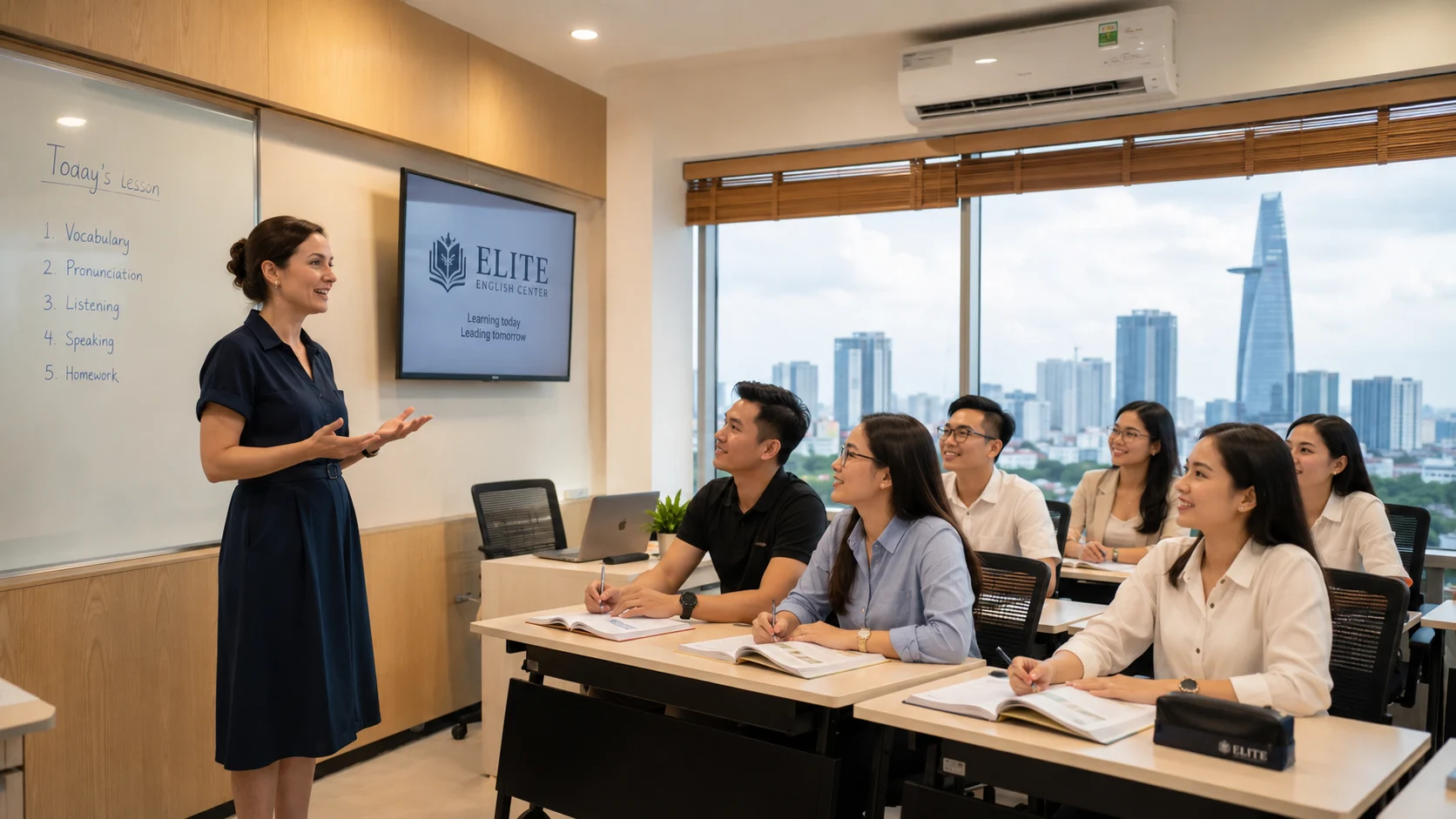
Vietnam teaching boom in 2025-2026
Vietnam has emerged as the fastest-growing English teaching market in Southeast Asia. The Ministry of Labour, Invalids and Social Affairs issued 22 percent more foreign teacher work permits in 2025 than in 2024. The growth is driven by Vietnam's economic boom (the country is now in the top three Southeast Asian economies by GDP growth rate), an explosion of language centres in Hanoi and Ho Chi Minh City, and English Education Foundation reforms that mandate more contact hours with native or near-native speakers in public schools.
The result: salaries are climbing, especially in HCMC where competition for credentialed teachers has pushed monthly pay above USD 2,000 at top language centres. International schools, which already paid Asia-competitive rates, are now adding sign-on bonuses and improved housing allowances. The job board on tieflandvietnam.com lists more than 1,500 active vacancies at any given week in early 2026.
The other side of the boom: DOLISA (the Vietnamese labour ministry's local offices) tightened document scrutiny in early 2026 in response to fraudulent degree submissions from a small number of applicants. What used to be a relaxed paperwork review now requires apostilled OR consular-authenticated diplomas, verifiable TEFL certificates from recognised providers, and clean background checks from every country you have lived in for 6+ months in the last 3 years.
Work permit + TRC (two-stage process)
Vietnam's legal-to-work framework parallels Thailand's two-document structure but with different acronyms. The DOLISA work permit (giay phep lao dong) is the labour-side document that says you may legally work in Vietnam. It is filed by your employer at the provincial Department of Labour, Invalids and Social Affairs (each province has its own DOLISA office). Once issued, the work permit is valid for the term of your contract, up to two years.
The Temporary Residence Card (TRC, the) is the immigration-side document that lets you live in Vietnam for the duration of your work permit, with multi-entry rights, no need for re-entry visas, and no 30-day stay limits. The TRC is applied for at the immigration department of the city where you live (usually concurrently with the work permit, or right after the work permit is granted). The TRC is the document you carry; the work permit lives in your employer's HR file.
Before either is issued, you typically enter Vietnam on a Business Visa (DN/LD category, sometimes shortened as the LD visa or labour-purpose visa) sponsored by your school. The school files for a visa approval letter from Vietnam Immigration, you take it to the Vietnamese embassy in your country (or to a Vietnam visa-on-arrival counter at Hanoi or HCMC airport, less commonly used now), you receive a 90-day single or multi-entry sticker, then convert to the work-permit + TRC stack after arrival.
DOLISA 2026 enforcement tightening
Through early 2025, Vietnamese authorities took a relatively relaxed view of foreign teacher credentials, with DOLISA approving the vast majority of applications inside 10 working days. That changed in late 2025 and crystallised into formal policy in early 2026 after several high-profile cases of teachers operating with fake degrees. The new tightened process requires:
- Degree certificate apostilled (if your country is an Apostille Convention signatory and Vietnam recognises your country's apostille - Vietnam joined the convention but implementation is partial) OR authenticated by the Vietnamese embassy in your country (consular legalisation).
- TEFL or CELTA from a recognised provider, at least 120 hours, with a unique certificate number that can be verified by DOLISA. Self-issued or unaccredited certificates are being rejected.
- 2+ years of post-degree teaching or relevant work experience, evidenced by reference letters or employment contracts, OR a Bachelor's in Education (B.Ed., BA Education, BSc Education) which substitutes for the experience requirement.
- Criminal background check from your country of citizenship AND any country you have lived in for 6+ months in the past 3 years. Each must be authenticated.
- Health certificate from an approved hospital, either in Vietnam after arrival or from your country pre-arrival (the in-Vietnam option is more common because it is cheaper and faster).
Processing time for work permits has lengthened from 10 working days to 12-15 working days in HCMC and 15-20 working days in Hanoi as DOLISA staff perform deeper verification. Plan for a full month between your school submitting paperwork and your work permit being in hand.
Step-by-step process
- Secure a job offer in Vietnam through ESL Cafe Vietnam forum, Vietnamteachingjobs.com, Teach Away Vietnam, or directly to language centres (Apollo English, ILA, VUS, Wall Street English Vietnam, Yola, Apax English).
- Send your authenticated documents to the school: degree (apostilled or consular-legalised), TEFL certificate, background check, reference letters, passport copy, photo, CV.
- School applies to DOLISA for the work permit. This now takes 12-20 working days under the 2026 tightened rules.
- School also applies to Vietnam Immigration for your visa approval letter, which lets you enter the country.
- Once the visa approval letter is issued, take it to the Vietnamese embassy or consulate in your country, plus passport, application form, photo (Vietnamese specs here), and visa fee. The LD visa (labour) sticker is issued in 3-7 working days.
- Fly to Vietnam on the LD visa. Visit your school's HR within 24-48 hours of arrival.
- School files for your Temporary Residence Card at the local immigration office. Submit: work permit, passport with LD visa, TRC application form, two photos, address registration, contract.
- TRC issued in 7-10 working days, typically valid for 2 years matching the work permit term.
- Annual or biennial renewal of the work permit + TRC at expiry. Renewal is usually simpler than initial issuance because your file is already on record.
Salary - Hanoi vs Ho Chi Minh City
| City | Monthly USD | Notes |
|---|---|---|
| Ho Chi Minh City (HCMC) | USD 1,500-2,500 | Highest pay, most jobs, higher cost of living |
| Hanoi | USD 1,300-2,200 | Lower cost, fewer top-end jobs, traditional capital |
| Da Nang | USD 1,200-1,800 | Growing scene, beach city, mid-cost |
| Hai Phong, Hue, Nha Trang | USD 1,000-1,500 | Smaller cities, fewer jobs, very low cost |
| International schools (any city) | USD 2,500-4,500 | Requires teaching license + 2 yr experience |
Take-home savings in Vietnam are noticeably better than Thailand for equivalent gross salaries because the cost of living is lower in absolute terms. A teacher on USD 1,800 monthly in HCMC typically saves USD 600-900 after rent (USD 400-600 for a one-bedroom in District 2 or District 7), food (USD 200-300), transport (USD 50-100 with a scooter), and modest entertainment. In Hanoi the same salary saves USD 700-1,000 because rent is lower.
International school teachers in Vietnam can save USD 1,800-3,000 monthly given the housing allowances and tax-efficient packages. The high-end international schools (UNIS Hanoi, ISHCMC, SSIS, the British Vietnamese International School) are competitive and recruit primarily through international circuits like Search Associates and ISS.
Types of employers
- International schools: USD 2,000-3,500 monthly base, plus housing allowance USD 800-1,500, plus health insurance and flights. Requires a teaching license from your country and 2+ years experience. Best for credentialed teachers seeking career stability.
- Private language centres (ILA, Apollo, VUS, Yola, Wall Street English): USD 1,500-2,500 monthly. The volume employer of Vietnam. Hours often include evenings and weekends because students come after school or work. TEFL + Bachelor's is the standard requirement.
- Public schools (state-funded primary, secondary): USD 1,200-1,800 monthly. Daytime hours Monday-Friday. Less pay but more stable schedule. Many work through Language Link, AEG, or similar agencies who staff public schools.
- Online + freelance combo: many teachers in HCMC and Hanoi work 20-25 hours at a language centre as their visa sponsor, then add 10-15 online hours through VIPKid, Cambly, iTalki, etc. for an extra USD 500-1,500 monthly. Strictly speaking the online income should be declared, but enforcement is light.
- Universities and colleges: USD 1,400-2,200 monthly. Daytime hours, long vacations (3-4 months combined), but recruitment is harder to access from outside Vietnam. Best to network in-country.
Required documents detailed
- Passport with at least 24 months validity and 4 blank pages.
- Bachelor's degree certificate: apostilled in your country (if Vietnam recognises the apostille from your country) OR notarised + state-authenticated + legalised at the Vietnamese embassy in your country (consular legalisation). HCMC DOLISA currently asks for full consular legalisation for US degrees; Hanoi accepts apostille from most countries.
- Official transcripts: sealed envelope, with a translation to Vietnamese if available (translation can also be done after arrival).
- 120-hour TEFL, TESOL, or CELTA from a recognised provider. Cambridge CELTA, Trinity CertTESOL, ITTT, i-to-i, and The TEFL Academy are all accepted. Avoid self-issued certificates.
- Criminal background check from your country of citizenship (FBI for US, DBS for UK, RCMP for Canada, etc.) AND from any country you lived in 6+ months in the past 3 years. Each must be authenticated.
- Health certificate: Vietnamese hospitals issue these in-country for about VND 800,000 (USD 33), takes a day. International equivalents from your home country are also accepted if dated within 6 months.
- Reference letters from previous employers showing 2+ years of relevant work experience (waived if you hold a B.Ed.).
- Photos: 4cm x 6cm, white background, taken in last 6 months. Full Vietnam photo specs here.
- CV / resume.
- Cover letter or motivation letter. See our cover letter writing guide for a Vietnam-suitable template.
- Passport-quality colour copies of all the above for the application file.
Tax, savings, and the realistic monthly budget
Vietnam taxes foreign teachers at a flat 20 percent withholding rate during the first 183 days of residency, after which you move to the progressive resident scale (5 to 35 percent based on income). For a teacher on USD 1,800 monthly, the effective tax rate after the first year settles to roughly 12-15 percent. Social insurance for foreign teachers is now mandatory in Vietnam (it was optional until 2022) and adds about 1.5 percent to the deduction. Annual tax filing is the employee's responsibility but most schools provide HR support.
| Item | HCMC (monthly USD) | Hanoi (monthly USD) |
|---|---|---|
| Rent (1BR central district) | USD 450-700 | USD 350-550 |
| Utilities + internet | USD 30-50 | USD 25-45 |
| Food (mix of local + Western) | USD 200-350 | USD 180-300 |
| Scooter rental and fuel | USD 60-100 | USD 50-80 |
| Entertainment + travel | USD 150-300 | USD 120-250 |
| Realistic savings on USD 1,800 salary | USD 500-900 | USD 700-1,050 |
The economics of Vietnam look notably better than Thailand for an equivalent salary level. A teacher earning USD 1,800 monthly in HCMC saves roughly the same as a teacher earning THB 50,000 (USD 1,400) in Bangkok, but the Vietnam ceiling is higher because top-tier centres pay USD 2,500+ versus Bangkok's THB 60,000 cap (~USD 1,680) at equivalent positions. International school packages in HCMC have recently hit USD 4,000-5,000 monthly with full housing and benefits, putting Vietnam on par with Korea for credentialed teachers.
Daily life: scooters, the rainy season, and learning Vietnamese
Daily life in Vietnam revolves around the scooter. With 60+ million scooters on the road, this is genuinely how the country moves. New teachers usually rent monthly (USD 50-70 for a basic Honda Wave) for the first six months while deciding whether to commit to buying (USD 800-1,500 for a used Wave, USD 1,500-3,000 for a new Air Blade or Vario). Driving in HCMC or Hanoi traffic is intimidating at first; almost every long-term teacher adapts within a month. Helmets are mandatory and the police actively fine for non-compliance.
The climate splits Vietnam into two distinct regions for teachers. HCMC and the south have two seasons: hot and dry (December to April) and hot and rainy (May to November). The rainy season brings dramatic afternoon downpours that flood streets but rarely cancel work. Hanoi and the north have four seasons including a genuinely cold winter (December to February, with temperatures occasionally near zero) and a brutally hot summer (June to August, often 40C with humidity). Da Nang sits in between with a milder version of both.
Learning Vietnamese is harder than you expect because of the tonal system (six tones in southern dialect, six in northern, with different inventories), but conversational ability significantly improves quality of life. Most expat teachers stick to taxi-and-restaurant Vietnamese (numbers, greetings, food names) and rely on Google Translate for the rest. Serious learners enrol in evening classes at the University of Social Sciences and Humanities (USSH HCMC) or VLS Vietnamese Language School for USD 200-400 per term.
Career progression: from language centre to international school
Most teachers enter Vietnam at a language centre like ILA, Apollo, or VUS. After 1-2 years and a TEFL upgrade or partial Master's, transitions are common into either: a bilingual day school (more daytime hours, less weekend work, slightly lower pay), a public school role through a staffing agency like Language Link Vietnam (lowest pay but most stable schedule), or directly to an international school if you have a B.Ed. or PGCE.
Universities are an underexplored option. Vietnam's larger universities (Vietnam National University, Foreign Trade University, Banking University) hire foreign English instructors for 12-15 contact hours per week at USD 1,400-2,200 monthly, with summer and tet (Lunar New Year) vacations totalling 3-4 months annually. Recruitment is usually word-of-mouth through current foreign faculty, so network with university teachers in your first year if this interests you.
For a comparison with Thailand's structure, see the Thailand teaching guide. Both markets reward credentials similarly, but Vietnam has higher absolute pay at the top and lower cost of living at the bottom, which is why it has overtaken Thailand as the preferred Southeast Asia destination for new teachers in 2026.
Renewal, TRC extension, and the long-stay options
Work permit renewal in Vietnam happens at the end of your 2-year cycle. The school files for renewal at DOLISA 30-45 days before expiry with updated documents (refreshed background check, updated medical, sometimes a fresh apostilled degree if the original is questioned). Renewal processing now takes 15-20 working days under the 2026 tightened rules, so plan ahead. The TRC renewal happens after the work permit is renewed and is typically faster (7-10 days).
Long-term residence in Vietnam is harder to achieve than in Thailand or Korea. Permanent residence requires either marriage to a Vietnamese citizen plus 3+ years of marriage with continuous residence, substantial investment in a Vietnamese enterprise (USD 1+ million), or exceptional contribution to Vietnamese society. Teachers rarely qualify on the investment or exceptional contribution routes. The marriage route is realistic for those who form genuine partnerships and willing to commit. The 5-year Investment Visa (DT category) is another option for teachers who eventually pivot to running their own language school or training company.
Switching employers in Vietnam is similar to switching in Thailand: new employer files for a fresh work permit, TRC is updated, no need to leave the country usually. The cleanest switch happens at end of contract. Mid-contract switches require your current employer's release letter and can be slow if the old employer is uncooperative.
Sık sorulan sorular
Do I need a degree to teach in Vietnam?
Officially yes since 2018, and DOLISA enforces it more strictly in 2026 than in earlier years. In practice, some smaller language centres in tier-2 cities still hire teachers without a degree on irregular paperwork or sponsor work permits under inflated job titles. This is increasingly risky as DOLISA verifies credentials.
How much can I save in a year?
USD 6,000-12,000 is realistic at a language centre job paying USD 1,500-2,000 monthly. International school teachers on USD 3,000+ packages can save USD 18,000-30,000/year. The combination of low cost of living and rising salaries makes Vietnam one of the better savings destinations in Southeast Asia.
Is TEFL required?
Yes, since DOLISA 2026 reforms. 120 hours minimum from a recognised provider. Self-issued or unaccredited certificates are being rejected at the work permit stage, so do not cheap out on the cert.
What is the timeline from offer to legal work?
About 6-10 weeks under 2026 rules. Document gathering + apostille/legalisation: 3-6 weeks (start early). DOLISA work permit: 2-4 weeks after submission. Visa approval letter: 1-2 weeks. Embassy LD visa: 1 week. TRC after arrival: 1-2 weeks. Total: 8-13 weeks worst case.
Hanoi or HCMC - which should I pick?
HCMC pays more, has more jobs, is hotter, more chaotic, more international-feeling. Hanoi is cheaper, calmer, has four distinct seasons, more traditional Vietnamese culture, fewer top-end jobs. Da Nang is the compromise: beach lifestyle, fewer jobs, lower pay, but rapid growth in international schools.
Can I switch employers?
Yes. Your TRC is tied to your specific work permit which is tied to your specific employer. To switch, the new employer applies for a fresh work permit (which takes 2-4 weeks), then your TRC is updated. Some teachers do this without leaving the country if the timing is clean.
What scams should I avoid?
Avoid 'work permit included' offers that ask you to enter Vietnam on a tourist visa and start work immediately - this means you are working illegally during the gap. Avoid schools refusing to share their business license number. Avoid recruiters who charge teachers upfront placement fees.
Can my partner join me?
Yes. Married spouses can apply for a Temporary Residence Card as a dependent. The dependent TRC does not include work rights; the spouse needs their own work permit if they want to work. Unmarried partners cannot get a dependent TRC and would need their own visa basis.
İlgili makaleler
Ücretsiz araçlarımızı kullanın
Kanada CRS, Avustralya puanları, İngiltere skilled worker, Almanya Fırsat Kartı ve 34 ülke maaş eşikleri için ücretsiz hesaplayıcılar.
Tüm araçları gör