
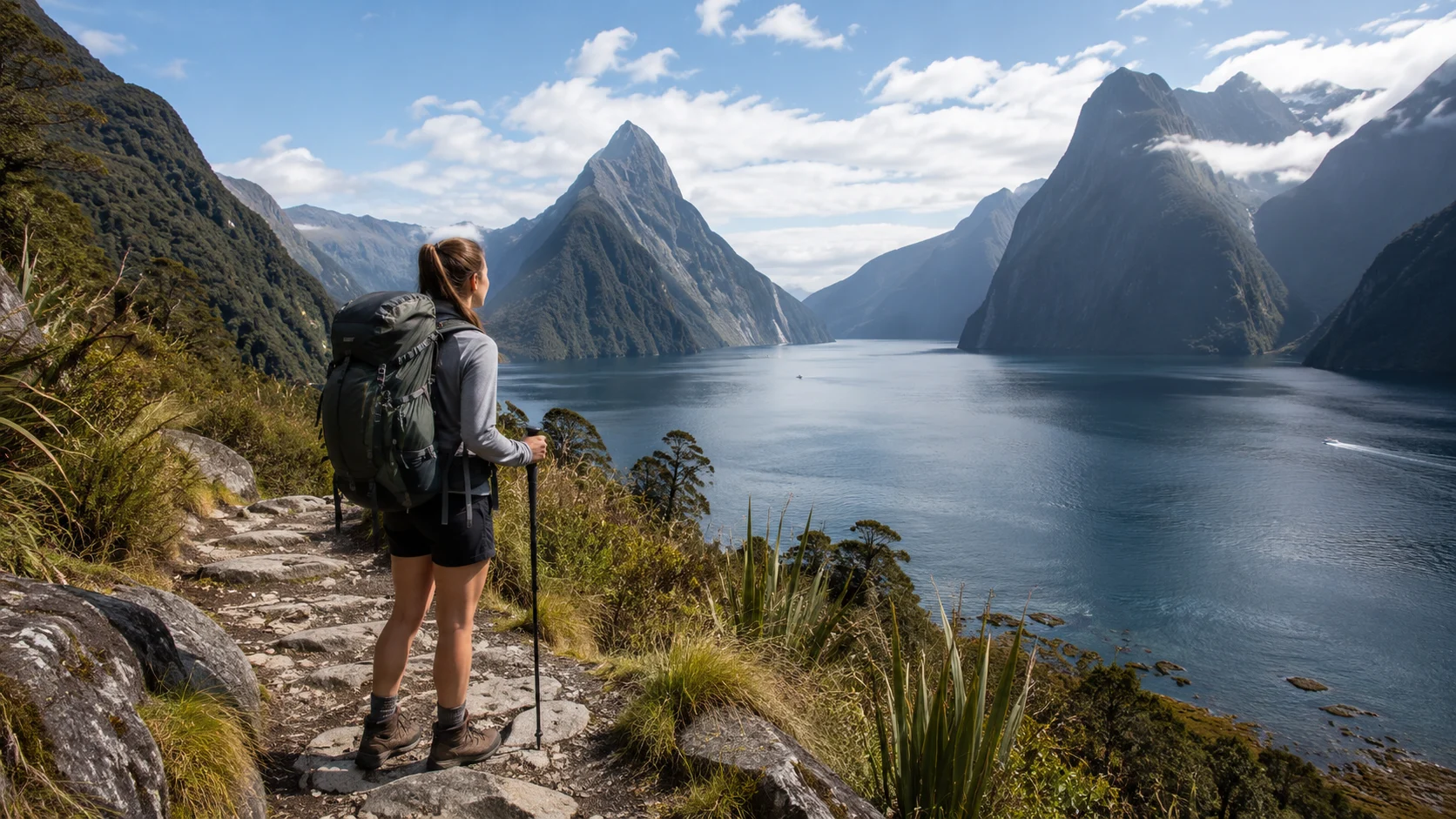
NZ Working Holiday Scheme - how it works
Immigration New Zealand runs separate bilateral Working Holiday Schemes with each of the 40+ eligible countries. The headline terms vary slightly between agreements but the default offer is a 12-month working holiday visa, age 18 to 30 inclusive, single entry or multiple entry, with full work rights and limited study rights (up to 6 months of study during the visa). Most travellers can then apply for a one-off 3-month Supplementary Seasonal Employment extension if they complete qualifying horticulture or viticulture work during their first visa, bringing the maximum stay to 15 months.
Two nationalities have a significantly upgraded deal. UK citizens (since 2023) and Canadian citizens (since 2024) can stay up to 23 months on a single visa, with an age limit raised to 35 inclusive. The UK 23-month visa replaced the previous 12-month standard as part of the post-Brexit free trade agreement, and Canada negotiated a matching deal under its IEC reciprocal arrangements. Argentina and Uruguay citizens also get 23 months but with stricter eligibility (tertiary qualifications required).
Work rights are essentially unrestricted: any employer, any role, any region, no per-employer cap. The only sectoral exception is permanent positions, which technically fall outside the visa's intent but are rarely enforced in practice. Visa holders can study for up to 6 months total during the visa, which makes it possible to add a short TESOL, hospitality, or trades certificate while you are there.
Eligible nationalities and quotas
Most schemes have annual quotas that reset on a country-specific date (usually 1 July). Some are uncapped or effectively uncapped because demand never reaches the cap. The most contested quotas tend to be Argentina, Chile, and Brazil, which fill within hours of the reset; the European, North American, and East Asian quotas typically remain available for most of the year.
| Country | Age | Annual quota |
|---|---|---|
| United Kingdom | 18-35 | Unlimited |
| Canada | 18-35 | Unlimited |
| Germany | 18-30 | 10,200 |
| France | 18-30 | 6,000 |
| Netherlands | 18-30 | Unlimited |
| Ireland | 18-30 | Unlimited |
| United States | 18-30 | 5,000 |
| Japan | 18-30 | 1,800 |
| South Korea | 18-30 | 3,000 |
| Argentina | 18-35 (tertiary) | 500 |
| Chile | 18-30 (tertiary) | 1,800 |
| Brazil | 18-35 (tertiary) | 1,200 |
| Hong Kong | 18-30 | 400 |
| Taiwan | 18-30 | 600 |
| Italy | 18-30 | Unlimited |
A few quotas have unusual rules worth flagging. The Argentinian and Brazilian schemes require completion or current enrolment in tertiary education plus a clean police certificate. The Korean scheme issues visas in two annual rounds. The Vietnam, Indonesia, Philippines, and Thailand schemes have stricter English-language requirements (usually IELTS 4.5 or equivalent) on top of tertiary education. Always check Immigration NZ's country-specific page for your nationality before assuming your spot is open.
Step-by-step application
Applications are filed online through Immigration New Zealand's RealMe portal. Decisions typically come back in 20 to 30 working days, though uncomplicated applications from low-risk nationalities (UK, Canada, EU) often arrive within two weeks. There is no offline route; everything from payment to grant letter is digital.
- Create a RealMe account at immigration.govt.nz and select your country's Working Holiday Scheme.
- Complete the online application form including passport details, employment history, and travel plans.
- Pay the NZD 350 application fee (broken down as NZD 280 application fee plus NZD 70 International Visitor Conservation and Tourism Levy).
- Upload supporting documents: passport bio page scan, evidence of NZD 4,200 in savings, return ticket or evidence of funds to buy one.
- Provide biometrics if required for your nationality (most non-EU countries).
- Wait for the decision. Immigration NZ targets 20-30 working days but lower-risk nationalities often hear back within 2 weeks.
- Receive the eVisa by email. Print or save a copy; airlines may check on departure.
- Enter New Zealand within 12 months of the grant date. Your work rights and visa clock start on the date of first entry.
Best seasonal work
New Zealand's working holiday economy runs on horticulture, viticulture, hospitality, and tourism. Seasonal demand is highly predictable and follows the southern-hemisphere calendar, which lets you plan a year of work around the harvest cycle. The minimum wage was lifted to NZD 23.15 per hour in April 2024 and most seasonal work pays at or slightly above that rate, with experienced fruit pickers on piece rates often earning NZD 28-35 per hour during peak harvest.
- Kiwifruit picking and packing: Bay of Plenty (Te Puke, Tauranga), March to June. NZD 23-30/hr. The most reliable seasonal work in the country and the easiest path to the 3-month visa extension.
- Wine harvest: Marlborough (Blenheim), March to May. NZD 23-28/hr for cellar hands, more for forklift drivers. Hawke's Bay (Napier) and Central Otago run slightly later seasons.
- Ski season: Queenstown, Wanaka, Methven, Ohau, June to October. NZD 23-30/hr at lifts and hospitality. Many resorts include subsidised staff accommodation.
- Apple harvest: Hawke's Bay and Nelson, February to May. NZD 23-28/hr or piece rate. Backbreaking work but consistent hours.
- Hospitality and tourism: Auckland, Wellington, Queenstown year-round. NZD 23-28/hr for cafes and bars; higher with weekend loadings.
- Cherry picking: Central Otago, December to February. Premium piece rates - experienced pickers can earn NZD 35-45/hr during peak weeks.
The 3-month Supplementary Seasonal Employment extension specifically requires either horticulture (orchards, vegetable growing, nurseries) or viticulture (vineyards) work during your first visa. You must have completed at least three months of the qualifying work to apply, and the extension is a separate visa application with its own NZD 280 fee.
NZ vs Australia WHV
Most travellers seriously consider both Australia and New Zealand because the visa, language, and culture overlap so much. The differences come down to scale, salary, and seasons.
| Factor | New Zealand | Australia |
|---|---|---|
| Visa fee | NZD 350 | AUD 650 |
| Duration | 12 + 3 months (23 mo for UK/CA) | 12 months (up to 3 years) |
| Minimum wage | NZD 23.15/hr | AUD 23.23/hr |
| Tax rate | 10.5% to NZD 14K, then 17.5% | 15% flat to AUD 45K |
| Climate | Temperate, wet west coast | Hot summers, mild winters |
| Population | 5.2M (small towns easy) | 26M (big city focus) |
| PR pathway | Skilled Migrant Category | Skilled 189/190/491 |
New Zealand wins on visa fee, ease of application, and small-country vibe. The mountains, fjords, and outdoor lifestyle are unmatched, and Queenstown alone is reason enough for many travellers. Australia wins on scale, salary, duration, and PR pathway. Many travellers do both back-to-back: a year in Australia banking savings, followed by a year in New Zealand spending them. See our Australia WHV guide for the full comparison.
Required documents and funds
The document list is short and the fund threshold is modest. You need a passport valid for at least three months beyond your intended departure date from New Zealand, evidence of NZD 4,200 in accessible savings (about USD 2,500), a return ticket or evidence you can buy one (typically NZD 1,500-3,000 depending on origin), and a clean record. Some nationalities also need a police certificate and a chest X-ray for TB.
- Passport: valid for at least 3 months beyond your planned departure from NZ.
- Proof of funds: NZD 4,200 minimum in your name. Recent bank statement (last 28 days) showing balance.
- Return ticket: or evidence of additional funds to buy one (treat this as another NZD 1,500-3,000 in the account).
- Character declaration: short questionnaire on the application form. Honest answers required - lying is grounds for revocation.
- Health insurance: strongly recommended, not legally required for the visa grant. Travel insurance starts around NZD 700-1,200 for 12 months.
- Police certificate: required for some nationalities and for stays over 24 months.
- Chest X-ray: required for stays over 12 months from some nationalities (TB screening).
Can NZ WHV lead to residency?
The Working Holiday visa is explicitly temporary and has no direct conversion to residency. However, New Zealand's main skilled-migration channel - the Skilled Migrant Category - rewards New Zealand work experience and New Zealand qualifications, so a year on a WHV can substantially strengthen a future residency application. The Green List, which lists occupations in high demand, offers a fast-tracked residency route for roles like registered nurses, doctors, software engineers, civil engineers, ICT professionals, teachers, and certain trades.
If your occupation is on Tier 1 of the Green List you can apply for Straight to Residence (residency from day one of the work offer). Tier 2 occupations qualify for Work to Residence, which requires 24 months of work in New Zealand before residency. Many WHV holders use their 12 months to find a Green List employer, switch to an Accredited Employer Work Visa, and then transition to residency under one of the two Green List pathways. The Accredited Employer Work Visa itself is a separate application with its own fees (NZD 750+) and requires the employer to hold valid accreditation, which most large NZ employers now do.
The Long-Term Skill Shortage List has been replaced by the Green List but still influences employer-led recruitment in trades, healthcare, and engineering. For travellers without a Green List occupation, the standard Skilled Migrant Category (now points-based with a 6-point threshold) is the main route. Points come from qualifications (Bachelor's = 3, Master's = 4, PhD = 5), New Zealand work experience, and a skilled occupation offer. Time spent on the WHV doing skilled work counts toward the New Zealand experience component, so a year working as a nurse, software engineer, or registered teacher on a WHV can be transformative for a later residency application.
Practical sequencing for travellers serious about staying long-term: start the WHV with a clear target occupation in mind, line up interviews before arrival or in the first 4-6 weeks, secure a Green List or skilled role by month 6, then start the Accredited Employer Work Visa application by month 9 so the transition is seamless when the WHV expires. Many migrants find that a WHV followed by 24 months on an AEWV gets them to residency in roughly 3.5 years from first arrival, which compares favourably with any other developed-country pathway.
Read our working holiday hub for a comparison of how the NZ pathway stacks up against Canada, Australia, and the UK, and the WHV overview page for a side-by-side of all 10+ destination programmes.
Arrival essentials - first two weeks in NZ
Most WHV holders arrive in Auckland or Christchurch with a vague plan and need to do five things in the first fortnight: get an IRD number (tax number), open a New Zealand bank account, get a local SIM card, find short-term then medium-term accommodation, and start applying for jobs. The good news is that the entire onboarding can be done online or in person within two weeks if you arrive prepared.
- IRD number: free, applied for online through the Inland Revenue website. Takes 8-10 working days. You cannot start work without one (your employer will tax you at the non-declaration rate of 45% until you provide it).
- Bank account: ANZ, ASB, BNZ, Westpac, and Kiwibank all offer migrant accounts. Bring passport, proof of NZ address (a hostel booking is usually accepted for the first account), and your IRD number once you have it.
- SIM card: Spark, One NZ, and 2degrees all offer prepaid plans from NZD 19-39 per month with 5-10GB data. Spark has the best rural coverage; 2degrees is the cheapest in cities.
- Accommodation: most arrivers spend 7-14 nights in a hostel (NZD 35-55 per night) while looking for a sharehouse room on Trade Me Property or Flatmates.co.nz. Sharehouse rooms run NZD 200-350 per week in Auckland/Wellington/Queenstown, NZD 150-250 elsewhere.
- Job search: Seek.co.nz is the largest jobs board. Trade Me Jobs is the second. For seasonal and farm work, check PickNZ, BackpackerBoard, and the noticeboards at every major hostel. Many ski resorts hire directly through their websites from May onwards.
One quirk of arriving in New Zealand: most landlords ask for 2 weeks rent in advance plus a 3-week bond, so first-month accommodation costs are typically 5 weeks of rent paid upfront. Budget NZD 1,500-2,500 for the move-in costs of a sharehouse room in a major city. Many WHV holders work hostel reception (which often includes free or subsidised accommodation) for the first 4-6 weeks while they save the bond for a proper sharehouse.
Sık sorulan sorular
How long can I stay in New Zealand on a Working Holiday Visa?
Most nationalities get 12 months from the date of first entry, with a 3-month Supplementary Seasonal Employment extension available if you complete qualifying horticulture or viticulture work. UK citizens (since 2023) and Canadian citizens (since 2024) can stay up to 23 months on a single visa. Argentinian and Uruguayan citizens also get 23 months but must meet stricter tertiary-education requirements.
What is the age limit for the NZ Working Holiday Visa?
The default is 18-30 inclusive. UK and Canadian citizens get a raised limit of 18-35 inclusive. Age is assessed at the time of application, so you can apply at 30 and arrive at 31, or apply at 35 (for UK/CA) and arrive at 36.
How much does the NZ Working Holiday Visa cost?
NZD 350 total, broken down as a NZD 280 application fee plus the NZD 70 International Visitor Conservation and Tourism Levy (IVL). The 3-month seasonal extension is a separate NZD 280. Total upfront cost (visa plus proof of funds you must show but keep) is around NZD 4,550 plus your flight.
How much money do I need to show?
NZD 4,200 in your own name, in an account you control, plus a return ticket or enough additional funds to buy one (treat this as another NZD 1,500-3,000). The funds must be accessible (savings account or current account, not stocks or restricted accounts) and shown via a recent bank statement covering the last 28 days.
Can I work in any job on the NZ WHV?
Almost any job, but the visa is intended for temporary or seasonal work, not permanent positions. You can change employers freely with no per-employer cap. You can study for up to 6 months total during the visa. You cannot work in adult entertainment (sex work is legal in NZ but not for WHV holders) or take a permanent role that would normally require a skilled visa.
What is the best seasonal work in New Zealand?
Kiwifruit picking and packing in the Bay of Plenty (March-June) is the most reliable and the easiest way to qualify for the 3-month seasonal extension. Wine harvest in Marlborough (March-May) and ski season in Queenstown or Wanaka (June-October) are the other classic options. Minimum wage is NZD 23.15/hr and experienced piece-rate pickers can earn NZD 30-45/hr during peak harvest weeks.
How long does the NZ WHV take to process?
Immigration NZ targets 20-30 working days, though uncomplicated applications from low-risk nationalities (UK, Canada, EU, US, Japan, Korea) often come back within two weeks. Apply at least 6 weeks before your planned departure to be safe. The visa is valid for 12 months from grant, so do not apply too early either.
Can the NZ WHV lead to permanent residency?
Not directly, but it is a strong stepping stone. The Green List for skilled occupations offers fast-track residency (Tier 1 = residence from day one, Tier 2 = residence after 24 months work). Other travellers use the points-based Skilled Migrant Category, which rewards New Zealand work experience and qualifications gained during the WHV. A year on a WHV substantially improves your skilled-migration profile compared with applying cold from overseas.
İlgili makaleler
Ücretsiz araçlarımızı kullanın
Kanada CRS, Avustralya puanları, İngiltere skilled worker, Almanya Fırsat Kartı ve 34 ülke maaş eşikleri için ücretsiz hesaplayıcılar.
Tüm araçları gör