
Mexico at the 2026 World Cup
Mexico is one of three co-hosts of the 2026 FIFA World Cup, alongside the United States and Canada, and it carries the symbolic honour of staging the tournament's opening match. Across the 39-day event from 11 June to 19 July 2026, Mexico will host 13 of the 104 total matches in three cities: Mexico City, Guadalajara, and Monterrey. This makes Mexico the only nation in football history to host games at three different World Cups, having previously hosted in 1970 and 1986.
For visiting fans, Mexico is widely regarded as the most accessible of the three host countries from an immigration standpoint. The country has long maintained an open, tourism-friendly entry policy, and that policy includes a generous shortcut that lets travellers piggyback on visas they already hold for the United States or Europe. If you are travelling to the US for matches there, you may find that the same B1/B2 visa in your passport opens the door to Mexico as well. For the full picture of US entry, see our US World Cup visa guide, and for Canada see the Canada World Cup visa guide.
It is important to understand that each of the three host countries runs its own immigration system. Entering Mexico does not grant you entry to the United States or Canada, and vice versa. Fans planning a multi-country itinerary must satisfy the entry requirements of every country they visit. The good news for Mexico is that, for a large share of the world's football fans, those requirements amount to little more than a valid passport and a tourist card.
The three Mexican host cities and stadiums
Mexico's matches are spread across three of its largest metropolitan areas. The headline venue is the Estadio Azteca in Mexico City, the most storied stadium in the country and the host of the opening match on 11 June 2026. Guadalajara and Monterrey round out the trio, each offering modern stadiums and strong domestic football cultures. The table below summarises the venues, cities, and the nearest international airports fans will most commonly fly into.
| City | Stadium | Notable for | Main airport |
|---|---|---|---|
| Mexico City | Estadio Azteca | Opening match, 11 June 2026 | Mexico City Int'l (MEX) / Felipe Angeles (NLU) |
| Guadalajara | Estadio Akron | Group-stage matches | Guadalajara Int'l (GDL) |
| Monterrey | Estadio BBVA | Group-stage matches | Monterrey Int'l (MTY) |
Estadio Azteca, perched at roughly 2,200 metres above sea level in Mexico City, is one of football's most famous arenas. It is the only stadium to have hosted matches at three World Cups, and in 2026 it adds the opening fixture to its history. Fans should plan for the altitude, the size of Mexico City's sprawling metropolitan area, and heavy match-day traffic. Arrive early and use the city's metro and dedicated event transport where available.
Estadio Akron in Guadalajara and Estadio BBVA in Monterrey are both modern, purpose-built venues with excellent sightlines. Guadalajara is the capital of Jalisco and a cultural hub famous for tequila and mariachi, while Monterrey is a major industrial and business centre in the north, only a few hours' drive from the Texas border. That northern proximity makes Monterrey a natural stop for fans crossing between US and Mexican matches, though, as noted, each border crossing is a separate immigration event.
Do you need a visa for the World Cup in Mexico?
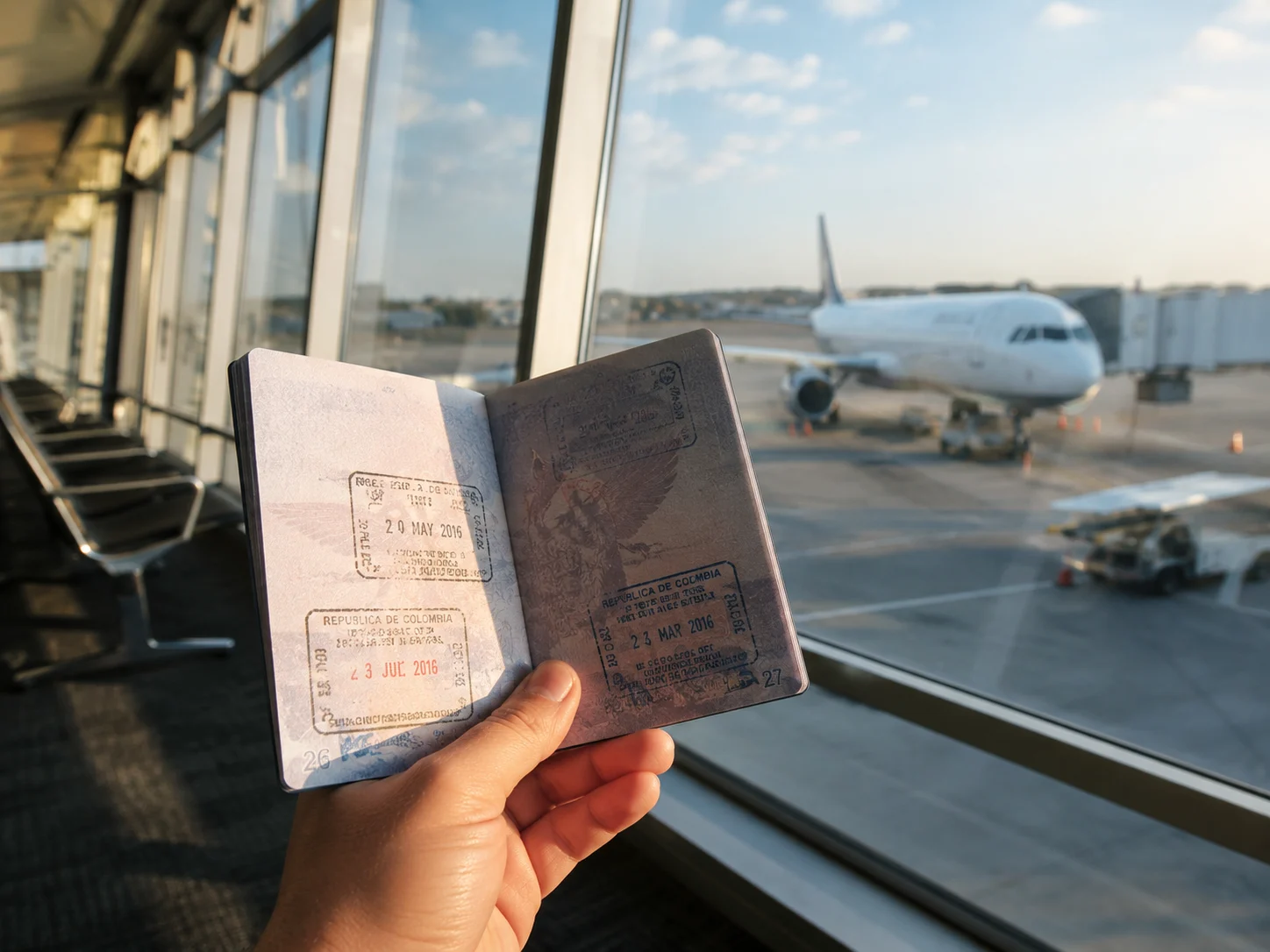
For a very large share of fans, the answer is no. Mexico grants visa-free tourist entry to nationals of dozens of countries, including the entire European Union, the United Kingdom, the United States, Canada, Japan, and most of Latin America. If you hold a passport from one of these countries, you do not need to apply for any visa in advance; you simply arrive, complete the tourist card formalities, and are admitted as a tourist for up to 180 days.
If your nationality is not on the visa-free list, there is a second path that helps an enormous number of African, Asian, and other fans: the document shortcut. Mexico allows travellers who hold certain documents from third countries to enter without a Mexican visa, regardless of their nationality. The most important of these is a valid US visa. We cover this prominently below because it is the single most useful fact in this guide for fans who already secured a US B1/B2 visa for the American matches.
Only fans who are not visa-free AND do not hold one of the qualifying shortcut documents need to apply for a Mexican visa at a consulate before travelling. Even then, the Mexican tourist visa process is generally straightforward compared with many other countries. To check whether your specific nationality is visa-free or visa-required, consult the official list published by Mexico's National Migration Institute (INM) and the Ministry of Foreign Affairs, and confirm with your nearest Mexican consulate well before you travel.
The key shortcut: enter Mexico with a US visa, Canadian PR, or Schengen visa
This is the most important section for fans whose passports would normally require a Mexican visa. Mexico operates a policy under which holders of certain valid third-country documents may enter Mexico without first obtaining a Mexican visa. In practice, this means that a fan from a country that is not visa-free for Mexico can still skip the Mexican consulate entirely if they already hold one of the qualifying documents. The qualifying documents most relevant to World Cup travellers are listed below.
- A valid US visa (such as a B1/B2 visitor visa obtained for the US World Cup matches). The visa must be valid, not expired.
- Canadian permanent residency (a valid PR card), or in many cases a valid Canadian visa.
- A valid Schengen (European) visa.
- A valid permanent residency document from the United States, Canada, Japan, the United Kingdom, or a Schengen country.
Why does this matter so much? Consider a fan from Nigeria, Ghana, or India who has already gone through the effort of securing a US B1/B2 visitor visa to attend matches in the United States. Under this policy, that same fan can typically fly into Mexico City for the opening match without applying for any Mexican visa at all - the valid US visa in their passport is sufficient. This turns what might have looked like two separate visa applications into one. See our Nigeria, Ghana, and India nationality pages for country-specific notes.
A few honest caveats apply. The shortcut requires the third-country document to be genuinely valid at the time of travel; an expired US visa does not count. The final decision always rests with the Mexican immigration officer (INM) at the port of entry, who may still ask for proof of funds, onward travel, and accommodation. And critically, using a US visa to enter Mexico does NOT give you any right to enter the United States; it merely satisfies Mexico's entry rule. Always confirm the current list of qualifying documents directly with INM or a Mexican consulate before you fly, as policies can change.
Visa-free vs visa-required vs shortcut-eligible
The table below sorts fans into three groups so you can quickly find which path applies to you. Most readers will fall into the first or third group and will not need a Mexican consulate at all. The examples are illustrative; always confirm your exact nationality and document status with the official INM list.
| Your situation | What you do for Mexico | Examples |
|---|---|---|
| Visa-free nationality | No visa needed; complete the tourist card (FMM) on entry | EU, UK, US, Canada, Japan, most of Latin America (e.g. Brazil, Argentina, Colombia, Chile) |
| Visa-required nationality, BUT you hold a qualifying document | No Mexican visa needed; enter on the shortcut, complete the tourist card | A fan from Nigeria, Ghana, India, or Egypt holding a valid US visa, Canadian PR, or Schengen visa |
| Visa-required nationality with NO qualifying document | Apply for a Mexican tourist visa at a consulate before travel | Nationals needing a visa who do not hold a US/Canadian/Schengen document |
Notice how the middle row collapses what would otherwise be a difficult visa application into a simple border formality. For African and Asian fans in particular, the practical strategy is often to secure the US visa first (because the US hosts 78 of the 104 matches, including the final), then rely on that same visa to clear Mexico. For the Canadian leg, you would still need to check the eTA or TRV rules separately in the Canada guide.
One nuance worth flagging honestly: US immigration policy in 2026 includes a 75-country immigrant-visa freeze and a separate travel ban. The immigrant-visa freeze does NOT affect tourists or B1/B2 visitors, so it does not stop fans from obtaining a US visitor visa. The travel ban, however, does affect nationals of certain fully-banned and partially-restricted countries trying to enter the US. If a US visa is hard for you to obtain because of those US rules, you may still be able to enter Mexico directly through Mexico's own visa-free list or by applying for a Mexican visa - Mexico's rules are independent of the US ban. See our visa-by-nationality breakdown for details.
The FMM tourist card and how long you can stay
Whether you are visa-free or entering on the shortcut, your tourist admission to Mexico is recorded through the FMM (Forma Migratoria Multiple), commonly called the tourist card. Historically this was a paper form handed out on flights or at the border, but Mexico has moved towards an electronic and on-arrival system at most major airports. In practice, many air travellers now have their entry recorded digitally when an INM officer stamps or processes their passport, rather than filling out a separate paper slip.
The FMM authorises a tourist stay of up to 180 days, although the exact number of days you receive is at the discretion of the INM officer and may be shorter. For World Cup fans, even a long itinerary spanning the entire 11 June to 19 July tournament sits comfortably within the maximum tourist window. If you enter by land at a northern border crossing (for example, driving down to Monterrey from Texas), make sure you obtain the proper tourist card; simply driving across without registering can leave you without valid immigration status.
Keep proof of your tourist card and entry stamp until you leave Mexico, as you may be asked to show it on departure. If you arrive by air, the cost of the tourist card is typically bundled into your airline ticket. If you arrive by land or sea, you may need to pay a fee. Check the current FMM procedure on the official INM website before you travel, because the format and any fees can change.
Document checklist for entering Mexico
Even visa-free travellers should arrive prepared. Mexican immigration officers can ask any visitor to demonstrate that they are a genuine tourist with the means to support themselves and a plan to leave. Carrying the documents below in your hand luggage, ready to show, makes for a smooth entry and reduces the risk of secondary questioning.
- A passport valid for the duration of your stay (six months' validity is a safe rule of thumb, though Mexico's strict requirement is validity for your trip).
- Your qualifying shortcut document if you are relying on one (valid US visa, Canadian PR card, or Schengen visa).
- Proof of onward or return travel, such as a flight ticket out of Mexico.
- Evidence of accommodation (hotel bookings) and an itinerary.
- Proof of sufficient funds for your stay (bank statements or cards).
- Your World Cup match tickets or FIFA ticket confirmation, which help demonstrate the purpose of your visit.
- Travel and medical insurance covering your trip (strongly recommended).
Be honest and concise with the immigration officer about the purpose and length of your visit. Mentioning that you are attending the World Cup, naming the matches and cities, and showing your tickets all reinforce that you are a short-term tourist. If anything in your documents is inconsistent (for example a return flight far beyond a plausible holiday), expect follow-up questions. For a deeper look at why travellers get turned away and how to avoid it, read our guide to common visa rejection reasons.
How to prepare your Mexico entry step by step
Follow this sequence to make sure nothing falls through the cracks. The order matters because your nationality and existing documents determine which path you take, and because securing a US visa (if you need one) is often the slowest step in a multi-country trip.
- Check your nationality against the official INM visa-free list to see whether you need a Mexican visa at all.
- If you are visa-required, check whether you hold a qualifying shortcut document (a valid US visa, Canadian PR, or Schengen visa); if so, you can skip the Mexican visa.
- Secure your US visa first if you need one, since it doubles as your Mexico shortcut and the US hosts most matches.
- If you have neither a visa-free passport nor a qualifying document, book an appointment at the nearest Mexican consulate and apply for a tourist visa early.
- Book your flights into Mexico City (MEX/NLU), Guadalajara (GDL), or Monterrey (MTY), along with accommodation, and keep the confirmations.
- Assemble your document pack: passport, shortcut document, onward ticket, hotel bookings, proof of funds, and match tickets.
- On arrival, complete the FMM tourist card process and answer the INM officer's questions clearly; keep your entry record until you leave.
Crossing between Mexico, the US, and Canada
Many fans will want to follow their team or simply soak up the atmosphere across more than one host nation. This is entirely possible, but you must treat each country as a separate immigration jurisdiction. A Mexican tourist entry gives you no right to enter the United States or Canada; each crossing is judged on its own merits by that country's border officers. Plan your visas and authorisations for every country on your route before you leave home.
A practical example: a fan watches the opening match at Estadio Azteca, then wants to head north for US group-stage games. To enter the US they need either ESTA (if they are from a Visa Waiver Program country) or a B1/B2 visa, processed entirely separately from their Mexican entry. If they then continue to Toronto or Vancouver for Canadian matches, they need an eTA or a TRV. Our Canada guide explains that an eTA is required even for air transit through Canada.
Land crossings between Mexico and the US (for example near Monterrey and Texas) are popular but can involve long queues on match days, and US Customs and Border Protection officers make their own admissibility decision regardless of your Mexican status. Build in generous time, carry all your documents, and never assume that being admitted to one host country guarantees admission to the next. When in doubt, verify each leg with the relevant government source and consult the full tournament visa guide for the complete cross-border picture.
व्यक्तिगत वीज़ा मार्गदर्शन प्राप्त करें
हर वीज़ा स्थिति अलग होती है। हमें अपनी स्थिति बताएं और हमारे प्रमाणित सलाहकार 24 घंटे के भीतर आपके मामले की समीक्षा करेंगे।
अक्सर पूछे जाने वाले प्रश्न
Do I need a visa for the World Cup in Mexico?
Often not. Many nationalities, including the EU, UK, US, Canada, Japan, and most of Latin America, are visa-free for tourism in Mexico and simply complete a tourist card (FMM) on arrival. If your nationality is not visa-free but you hold a valid US visa, Canadian permanent residency, or a Schengen visa, you can usually still enter without a separate Mexican visa. Only fans who are neither visa-free nor holders of a qualifying document need to apply for a Mexican tourist visa at a consulate.
Can I enter Mexico with a US visa?
Yes. This is the key shortcut for World Cup fans. Travellers holding a valid US visa (such as a B1/B2 visitor visa obtained for the US matches) can generally enter Mexico without applying for a separate Mexican visa, even if their nationality would normally require one. The US visa must be valid and unexpired, and the final decision rests with the Mexican INM officer at the port of entry. Note that this only helps you enter Mexico; it does not, by itself, grant you any right to enter the United States beyond what the visa already allows.
Which nationalities are visa-free for Mexico?
Mexico grants visa-free tourist entry to a long list of countries, including the entire European Union, the United Kingdom, the United States, Canada, Japan, and most of Latin America (such as Brazil, Argentina, Colombia, and Chile). These travellers do not apply for a visa in advance; they complete the FMM tourist card on entry and may stay for up to 180 days. Because the list changes from time to time, always confirm your specific nationality against the official INM and Ministry of Foreign Affairs list before booking.
Where is the opening match of the 2026 World Cup?
The opening match is at the Estadio Azteca in Mexico City on 11 June 2026. Estadio Azteca is one of football's most famous venues and the only stadium to host matches at three different World Cups (1970, 1986, and 2026). Mexico City sits at high altitude, so plan for the elevation, the size of the metropolitan area, and heavy match-day traffic by arriving early and using public and event transport.
What is the FMM tourist card?
The FMM (Forma Migratoria Multiple) is Mexico's tourist card, the document that records your tourist admission to the country. It was traditionally a paper form, but Mexico has largely moved to an electronic and on-arrival process at major airports, where your entry is recorded digitally when an INM officer processes your passport. It authorises a stay of up to 180 days, with the exact number of days at the officer's discretion. If you arrive by air, its cost is usually included in your airline ticket; by land or sea you may pay a fee.
Does Canadian PR or a Schengen visa work the same way as a US visa for Mexico?
Yes. In addition to a valid US visa, Mexico's shortcut policy generally accepts valid Canadian permanent residency (a PR card) and a valid Schengen visa as documents that allow entry without a separate Mexican visa. Valid permanent residency from countries such as Japan and the United Kingdom may also qualify. Because the precise list of accepted documents can change, confirm with INM or a Mexican consulate before you travel.
Does entering Mexico let me into the US or Canada for other matches?
No. Each host country runs its own immigration system, and entering Mexico gives you no right to enter the United States or Canada. To attend US matches you need ESTA (Visa Waiver Program countries) or a B1/B2 visa; for Canada you need an eTA or a TRV. Sort out the entry requirements for every country on your itinerary before you travel, because border officers in each country make their own decision regardless of your Mexican status.
What should I carry when entering Mexico for the World Cup?
Carry your valid passport, any qualifying shortcut document (valid US visa, Canadian PR card, or Schengen visa), proof of onward or return travel, accommodation bookings, proof of sufficient funds, and your World Cup match tickets or FIFA confirmation. Travel and medical insurance is strongly recommended. A match ticket does not guarantee entry; the INM officer decides at the port of entry, so being prepared and answering questions clearly makes for the smoothest admission. As of 2026, always verify current requirements with Mexico's official INM source.
संबंधित लेख
हमारे मुफ्त टूल्स का उपयोग करें
कनाडा CRS, ऑस्ट्रेलिया पॉइंट्स, यूके Skilled Worker, जर्मनी Opportunity Card और 34 देशों की वेतन सीमा के लिए मुफ्त कैलकुलेटर।
सभी टूल्स देखें