
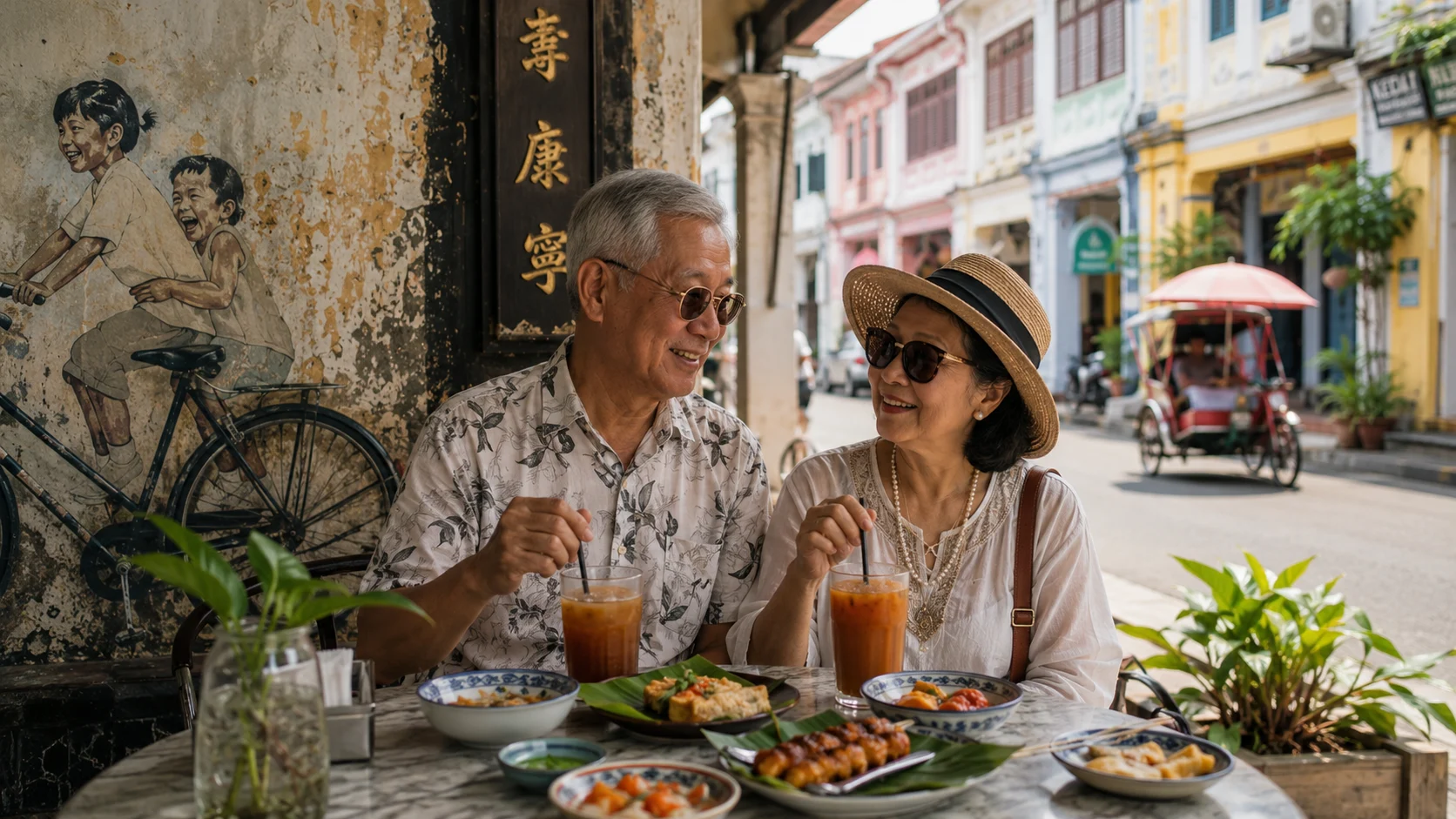
What is the Malaysia retirement visa?
Malaysia My Second Home (MM2H) is a government-run long-stay visa program that allows foreign nationals to live in Malaysia on a renewable 10-year multiple-entry visa. Launched in 2002, it was originally one of the most accessible and affordable retirement visa programs in the world, attracting tens of thousands of applicants mainly from China, the United Kingdom, Japan, and Bangladesh. It was never a permanent residency scheme - it is effectively a long-stay renewable permit - but its 10-year validity made it the longest single-grant retirement visa in this comparison group.
In August 2021, the Malaysian government suspended and then relaunched MM2H with dramatically tightened criteria. The Ministry of Tourism, Arts and Culture (MOTAC) now administers the program. Income thresholds, fixed-deposit minimums, and asset requirements all increased sharply, and a minimum-stay obligation was introduced for the first time. Then in 2024, authorities introduced a formal tiered structure with three categories: Silver, Gold, and Platinum. Each tier has its own fixed-deposit requirement, income floor, and minimum-stay condition, giving applicants a pathway to select the level that best matches their financial profile.
For those who find the standard national MM2H too demanding, the state of Sarawak on the island of Borneo offers an independent program called Sarawak MM2H (S-MM2H), which has notably lower deposit and income requirements and a lower minimum age. Sarawak is a semi-autonomous state with its own immigration authority, so S-MM2H is a genuine alternative rather than a loophole. Holders of S-MM2H can reside in Sarawak freely but must obtain a separate pass to visit Peninsular Malaysia for extended periods. We cover both programs in this guide.
Malaysia offers a compelling lifestyle package: tropical climate, multicultural cities, English widely spoken, a well-developed road and rail network, excellent private healthcare at a fraction of Western prices, and food that is routinely cited as among the best in Asia. The currency - the Malaysian Ringgit (RM) - has generally remained affordable for those earning in USD, EUR, or GBP, though exchange-rate awareness is important for long-term planning. For an in-depth comparison against other Southeast Asian options, see our retirement visa hub.
Requirements - deposits, income, and age
The 2024 tiered structure divides MM2H into Silver, Gold, and Platinum categories. Each tier has distinct financial thresholds. The figures below reflect MOTAC guidelines as published after the 2024 revision. Because thresholds have changed multiple times, always verify current figures directly with MOTAC or an authorized MM2H agent before submitting an application.
| Tier | Minimum age | Offshore monthly income | Fixed deposit (RM) | Minimum stay per year |
|---|---|---|---|---|
| Silver | 35+ | RM 10,000 (~$2,400) | RM 500,000 (~$115,000) | 60 days |
| Gold | 35+ | RM 15,000 (~$3,600) | RM 1,000,000 (~$230,000) | 90 days |
| Platinum | 35+ | RM 40,000 (~$9,500) | RM 1,500,000 (~$345,000) | 90 days |
The fixed deposit must be placed in a Malaysian bank within six months of conditional approval. A portion of it is withdrawable after one year for approved purposes: purchasing a property in Malaysia, paying for approved medical treatment, or funding education fees for dependent children. The withdrawable portion is capped (commonly up to 50% of the deposit depending on the purpose), and the remaining balance must be maintained throughout the visa period. Applicants must demonstrate proof of offshore income - this means income earned or received outside Malaysia, such as a pension, annuity, rental income, dividends, or employment income from a foreign entity.
Additional requirements include a valid passport (at least 18 months remaining), a clean criminal record certificate, a medical report from an approved Malaysian clinic or from a clinic in your home country, and compulsory private health insurance covering Malaysia with a minimum sum insured (typically at least RM 100,000). Dependants - spouse, unmarried children under 21, and in some cases unmarried disabled children - may be included on the same application at extra cost. A dependent parent aged 60 or over may also be included under the Platinum tier.
The Sarawak S-MM2H program is run by the Sarawak Tourism Board rather than MOTAC and has more accessible thresholds. It sets a fixed deposit of around RM 150,000 for applicants aged 50 and above, or RM 300,000 for those aged 30 to 49. The required offshore income is roughly RM 7,000 to RM 10,000 per month depending on age bracket. There is no formal national-tier structure: S-MM2H grants a 10-year visa (renewable) specifically tied to residence in Sarawak. The trade-off is that holders wishing to spend significant time in Peninsular Malaysia or Sabah need to manage their movements under normal tourist entry rules, though short visits are freely permitted.
Tax treatment for foreign retirees
Malaysia operates a territorial tax system for individuals. Foreign-source income - meaning money earned or received from outside Malaysia - is fully exempt from Malaysian income tax, regardless of whether it is remitted into the country. This covers pensions, government retirement payments, Social Security from other countries, annuities, dividends from overseas investments, interest from foreign bank accounts, and rental income from properties abroad. For most retirees this means an effective zero income-tax rate on their retirement income, which is one of the most powerful financial arguments for the MM2H program.
Malaysia levies no capital gains tax on the disposal of foreign assets. There is a Real Property Gains Tax (RPGT) on the sale of Malaysian property, but this does not affect income from abroad. Dividends paid by Malaysian companies are also generally exempt under a single-tier tax system. MM2H holders who wish to take on part-time or consultancy work in Malaysia face a more complicated picture - local income is taxable - but most retirees living on foreign pensions or investment income will not encounter this issue.
Estate planning is also relatively straightforward for MM2H holders. Malaysia has no inheritance tax or gift tax. Assets held in Malaysia pass to beneficiaries subject to probate proceedings, which can be complex for foreigners, so it is worth drafting a Malaysian will to cover locally held assets including the fixed deposit and any property.
Healthcare for retirees in Malaysia
Malaysia has one of the most developed private healthcare systems in Southeast Asia. Major private hospital groups such as Pantai, Gleneagles, KPJ, and Prince Court operate state-of-the-art facilities with internationally trained physicians, English-language services, and modern diagnostic equipment. Costs are typically 50 to 80 percent lower than in Western Europe or the United States for equivalent procedures. A hip replacement that might cost $40,000 in the US can often be done at a top Kuala Lumpur private hospital for $8,000 to $14,000, inclusive of surgeon, anaesthesiologist, and hospital stay.
Private health insurance is mandatory for MM2H holders. MOTAC requires proof of a policy covering Malaysia with a minimum sum insured - historically set at RM 100,000 - from an approved insurer. Premiums for a healthy retiree in their 60s typically range from $1,200 to $3,500 per year depending on coverage level, age, and insurer. Several international health insurance providers (Cigna, Allianz Care, AXA) offer plans specifically calibrated for Malaysia-based expatriates. It is important to note that MM2H holders cannot access the Malaysian public healthcare system at subsidised rates - public hospitals do charge foreigners, though fees remain low by global standards.
Penang is particularly well regarded for medical tourism and has a concentration of private hospitals serving both locals and foreign residents. Kuala Lumpur's Bangsar South, Damansara, and Bangsar areas also have clusters of private specialist clinics and hospitals. Dental and optical care are widely available and very affordable. Pharmacies stock a broad range of international medications, and most common prescriptions can be filled at competitive prices. Retirees with chronic conditions should investigate in advance whether their specific medications are locally available and whether any specialist consultants in their field practice in their preferred city.
How to apply for MM2H
The MM2H application process runs through MOTAC and must be handled via an authorized MM2H agent. The steps below reflect current procedure; minor administrative steps may differ by agent or by your country of origin.
- Select your tier (Silver, Gold, or Platinum) and confirm you meet all financial thresholds.
- Engage an authorized MM2H agent (a list is maintained on the MOTAC website) and pay the initial agent retainer fee.
- Gather documents: valid passport (18+ months), birth certificate, marriage certificate if applicable, bank statements for the past 3 to 6 months showing offshore income, criminal background check from your home country, medical certificate from an approved clinic, and passport-size photos.
- Submit your application package through the agent to MOTAC. The government application fee is RM 5,000 for the principal applicant and RM 2,500 per dependant (fees subject to change; confirm at time of application).
- Receive a Conditional Approval Letter (CAL), typically issued within 3 to 6 months. The CAL gives you 6 months to complete remaining requirements.
- Open a fixed-term deposit account at an approved Malaysian bank in the required amount for your tier. Obtain a bank letter confirming the placement.
- Obtain mandatory private health insurance covering Malaysia with at least the minimum sum insured.
- Submit the fixed-deposit confirmation and insurance documents to your agent for final MOTAC endorsement.
- Receive your MM2H visa sticker. Your 10-year Social Visit Pass is endorsed in your passport, typically valid from the date of endorsement.
- Register and comply with the annual reporting requirements, including evidence of the minimum-stay days and maintenance of the fixed deposit balance.
For the Sarawak S-MM2H, the process is similar but applications go through the Sarawak Tourism Board (STB) rather than MOTAC, and the authorized agent network is separate. S-MM2H processing times can be faster - sometimes 2 to 4 months - and the overall document set is comparable though some specific forms differ. If you plan to base yourself in Sarawak (Kuching, Kota Kinabalu is Sabah not Sarawak - note: Kota Kinabalu falls under Sabah and would require Sabah entry), the S-MM2H is a legitimate and cost-effective route.
Cost of living - Penang vs Kuala Lumpur
Malaysia is considerably more affordable than Western countries and broadly similar in cost to Thailand for comfortable retiree living. The figures below are indicative monthly budgets for a single retiree renting a comfortable but not extravagant apartment, not including the fixed-deposit requirement or health insurance premium.
| Category | Penang (Georgetown) | Kuala Lumpur (mid-range area) |
|---|---|---|
| 1-bedroom apartment (rent) | RM 1,500 to RM 2,500 | RM 2,000 to RM 4,000 |
| Utilities + internet | RM 300 to RM 500 | RM 350 to RM 600 |
| Groceries (local markets + supermarket) | RM 600 to RM 900 | RM 700 to RM 1,100 |
| Eating out (mix local + western) | RM 800 to RM 1,400 | RM 900 to RM 1,800 |
| Transport (Grab + occasional taxis) | RM 300 to RM 500 | RM 400 to RM 700 |
| Entertainment + leisure | RM 400 to RM 700 | RM 500 to RM 1,000 |
| Estimated monthly total | RM 3,900 to RM 6,500 (~$900 to $1,500) | RM 4,850 to RM 9,200 (~$1,100 to $2,100) |
These figures exclude health insurance (budget separately, approximately $1,200 to $3,500 per year), the annual fixed-deposit maintenance, and any travel back to your home country. Langkawi and Ipoh are notably cheaper than both Penang and KL, with rent for a comfortable apartment sometimes available from RM 800 to RM 1,500 per month. Malacca falls between Ipoh and Penang in cost. Retirees who enjoy a simpler lifestyle in secondary cities can live comfortably on the equivalent of $800 to $1,200 per month.
Malaysia has good road infrastructure and a domestic flight network connecting the peninsula with East Malaysia. Long-distance coach services are reliable and inexpensive. Owning a car is practical and relatively affordable by Asian standards: a basic Perodua or Proton national-brand car can be purchased new for RM 35,000 to RM 55,000. International-brand cars carry steep import duties and cost significantly more. For city living, Grab (the regional ride-hailing app) and e-hailing services are convenient, and Kuala Lumpur has a growing metro rail network.
Buying property as an MM2H holder
MM2H holders are permitted to purchase property in Malaysia, but foreigners (including MM2H holders) are subject to a minimum purchase price threshold that varies by state. The national baseline is RM 600,000 for most residential properties, though several states set higher floors: Kuala Lumpur commonly applies RM 1,000,000 for non-Bumiputera foreigners, while Penang applies RM 1,000,000 for condominiums on the island (Penang Island) though lower in Seberang Perai. Johor Bahru has different rules in its designated economic zones. Leasehold and freehold titles are both available for foreigners, though freehold is less common for high-rise condominiums.
MM2H holders may use a portion of their fixed deposit to fund a property purchase, subject to approval. Typically up to 50% of the deposit can be withdrawn for this purpose, provided the remainder meets the minimum maintenance balance. Foreigners cannot purchase Bumiputera-reserved properties (a category of low-cost and affordable housing set aside for ethnic Malays and indigenous groups). Agricultural land is also restricted. In practice, most retirees focus on condominiums and serviced apartments, which are the dominant property type targeted at foreign buyers and are generally freehold or long leasehold.
Stamp duty applies on property purchases: typically 1% on the first RM 100,000, 2% on the next RM 400,000, and 3% above RM 500,000, with an additional foreign buyer levy in some states. Real estate agent fees are negotiable but commonly 2 to 3% of the purchase price, paid by the seller. Legal fees are also incurred on the sale and purchase agreement. Many retirees choose to rent rather than buy, given the flexibility it offers and the relatively low rental costs, especially outside Kuala Lumpur. If you do purchase, strong expat-oriented condo developments exist in Mont Kiara (KL), Penang Island, Iskandar Malaysia (Johor), and Kota Kinabalu.
Path to permanent residency and citizenship
MM2H does not offer any pathway to Malaysian permanent residency (PR) or citizenship. This is a firm policy position and one of the key distinctions between MM2H and programs in countries like Panama (Pensionado leads to PR) or Portugal (D7 leads to PR and citizenship). The MM2H visa is a long-stay permit, not a residency or immigration route. At the end of the 10-year term, holders must renew the visa by reapplying and demonstrating that they continue to meet the current financial requirements. There is no maximum number of renewals, so in theory a holder could remain in Malaysia indefinitely through successive renewals.
Malaysian permanent residency (officially called the Permanent Resident status) exists but is notoriously difficult to obtain through most channels. Long-term foreign spouses of Malaysian citizens can apply after a lengthy period of marriage and continuous residence, but the process is slow and outcomes are uncertain. There is no investor or retirement route to PR. Citizenship requires a minimum of 10 to 12 years of continuous permanent residence and is extremely rarely granted to non-ethnic Malays. For practical purposes, retirees on MM2H should plan on the assumption that Malaysia will always be a long-term temporary residence rather than a permanent home.
The minimum-stay requirement introduced in 2021 (60 to 90 days per year depending on tier) means MM2H holders must visit Malaysia regularly, but this is generally not a hardship for genuine retirees. Holders can exit and re-enter freely on their multiple-entry pass and can spend the majority of the year elsewhere as long as the minimum days are logged. The days need not be consecutive. This flexibility makes MM2H compatible with a split-lifestyle approach - spending summers in Europe or North America and winters in Malaysia, for instance.
Best cities and regions for MM2H retirees
Penang, specifically the UNESCO-listed George Town on Penang Island, is the top-ranked expat destination in Malaysia by most surveys and has been for many years. It combines a walkable historic city center, a vibrant food culture (George Town is internationally famous for its street food), a strong arts and heritage scene, excellent private hospitals, and a moderate cost of living. The island has a more manageable scale than Kuala Lumpur and a well-established expat community with active clubs, English-language social events, and a range of international cuisine. Property prices have risen significantly but remain below Kuala Lumpur levels in most segments.
Kuala Lumpur is the obvious choice for retirees who want big-city amenities: world-class shopping malls, a large international airport with direct flights to most major cities, a broad range of specialist medical services, a cosmopolitan dining and arts scene, and a thriving expat social scene centred around neighbourhoods such as Mont Kiara, Bangsar, Damansara, and the Golden Triangle. The city is large and car-dependent outside the central areas, which can be a drawback for older retirees who prefer walkability. Air quality can suffer during haze season (typically July to October), and traffic congestion is significant.
Langkawi is an archipelago of 99 islands off the northwest coast of Peninsular Malaysia and has duty-free status, making alcohol, electronics, and imported goods notably cheaper than on the mainland. It offers a quiet island lifestyle, beautiful beaches, and a small but friendly expat community. Infrastructure is more limited than Penang or KL - the hospital network is thin and serious medical issues require evacuation to the mainland - but for healthy retirees who value tranquillity, Langkawi is very appealing. Ipoh, the capital of Perak state, has emerged as a favourite among budget-conscious retirees: it has a relaxed pace, excellent food, a growing arts scene, and low rents. Malacca (Melaka) is another popular choice, with a rich colonial history, compact town centre, and proximity to Kuala Lumpur (about 90 minutes by bus or car).
In East Malaysia, Kuching (the capital of Sarawak) is particularly relevant for S-MM2H holders. Kuching is a genuinely charming mid-size city with exceptional biodiversity, national parks, and a very low cost of living by Malaysian standards. Rents are cheap, traffic is manageable, and the city has a strong sense of community. The main drawback is the indirect flight connectivity to Europe and North America compared to Kuala Lumpur, though Singapore is under two hours away by air. For those drawn to nature and a slower pace, Kuching and the Sarawak S-MM2H combination is one of the best-value retirement options in all of Southeast Asia.
Pros and cons of retiring in Malaysia on MM2H
Malaysia on MM2H offers a compelling mix of lifestyle and financial advantages, but the revamped program is no longer as accessible as it once was and has some structural limitations worth considering. The Malaysia DE Rantau nomad pass is a separate option for those who are still working remotely and want a different type of long-stay arrangement.
- [+] 10-year renewable visa - the longest single-grant retirement visa in this comparison.
- [+] Zero tax on all foreign-source income, including pensions, dividends, and rental income from abroad.
- [+] Excellent affordable private hospitals in Penang, Kuala Lumpur, and major cities.
- [+] Low cost of living - comfortable retirement budget of $1,000 to $2,000 per month in most cities.
- [+] English widely spoken in cities; multicultural, tolerant society with Malay, Chinese, and Indian cultural influences.
- [+] Sarawak S-MM2H option with lower financial thresholds for those who qualify.
- [+] Partial fixed-deposit withdrawal permitted for property, healthcare, and education.
- [+] Strategic location for travel around Southeast Asia, with excellent low-cost airline connections.
- [-] High fixed-deposit requirement (RM 500,000 to RM 1,500,000) locks up substantial capital with modest interest returns.
- [-] No PR or citizenship pathway - always a temporary status requiring renewal.
- [-] Requirements have changed multiple times; policy uncertainty creates risk for long-term planning.
- [-] Minimum-stay obligation (60 to 90 days/year) limits total time elsewhere if you maintain MM2H status.
- [-] S-MM2H holders face restrictions on extended stays in Peninsular Malaysia.
- [-] Haze season from Indonesian forest fires can significantly reduce air quality, particularly July to October.
- [-] Property purchase minimum thresholds are high (RM 600,000 to RM 1,000,000+), limiting affordable buy-to-live options.
lead.heading
lead.description
Frequently asked questions
What is the minimum age for Malaysia MM2H?
The minimum age for the standard national MM2H program is 35 years for all tiers (Silver, Gold, and Platinum). There is no upper age limit. The Sarawak S-MM2H has a slightly different age structure: the lower deposit tier applies to applicants aged 50 and above, while applicants aged 30 to 49 qualify but face higher deposit requirements.
How much fixed deposit is required for MM2H?
Under the 2024 tiered structure, the fixed-deposit requirement ranges from RM 500,000 (Silver tier, approximately $115,000 USD) to RM 1,000,000 (Gold tier) to RM 1,500,000 (Platinum tier). The deposit must be placed in an approved Malaysian bank within six months of conditional approval. A portion - typically up to 50% - can later be withdrawn for approved purposes such as purchasing Malaysian property, covering major medical expenses, or paying education fees for dependent children.
Is there any tax on my pension or investments in Malaysia as an MM2H holder?
No. Malaysia does not tax foreign-source income of any kind, including pensions, annuities, dividends from overseas investments, rental income from properties abroad, or interest from foreign bank accounts. This exemption applies regardless of whether the income is remitted into Malaysia. The only caveat is that US citizens and other nationals with worldwide tax obligations in their home country must continue filing in their home country regardless of Malaysian tax treatment.
What is the Sarawak S-MM2H and how does it differ from national MM2H?
Sarawak S-MM2H is a separate long-stay visa program run by the Sarawak state government (Sarawak Tourism Board) rather than the federal MOTAC. It has significantly lower financial thresholds: roughly RM 150,000 fixed deposit for applicants aged 50 and above, or RM 300,000 for those aged 30 to 49, with a monthly offshore income requirement of approximately RM 7,000 to RM 10,000. It is a 10-year renewable visa, but it is tied to residence in Sarawak (on the island of Borneo). Holders can visit Peninsular Malaysia as tourists but cannot reside there long-term on the S-MM2H pass alone. It is an excellent option for those attracted to Sarawak's natural environment and the city of Kuching.
Can I buy property in Malaysia on MM2H?
Yes. MM2H holders can purchase residential property, subject to minimum purchase price thresholds that vary by state. The national floor is generally RM 600,000, but Kuala Lumpur and Penang Island commonly set the threshold at RM 1,000,000 for foreign buyers. You cannot purchase Bumiputera-reserved housing or most agricultural land. Up to 50% of the MM2H fixed deposit may be withdrawn to fund a property purchase after approval from MOTAC.
Does MM2H lead to permanent residency or Malaysian citizenship?
No. MM2H is strictly a long-stay permit and confers no pathway to permanent residency or citizenship. At the end of the 10-year term, you must renew by reapplying and demonstrating that you still meet the current requirements. Malaysian PR is available through other channels (principally long-term foreign spouses of citizens) but is notoriously difficult and slow to obtain. Citizenship requires at least 10 to 12 years of continuous PR and is rarely granted. Retirees should treat MM2H as an indefinitely renewable temporary arrangement, not as a step toward permanent status.
How long does the MM2H application take and what does it cost?
Processing currently takes approximately 3 to 6 months from submission of a complete application to receipt of a Conditional Approval Letter. The government application fee is RM 5,000 for the principal applicant and RM 2,500 per dependant (subject to change). Agent fees add RM 3,000 to RM 8,000 depending on the agency. Additional costs include the criminal background check, medical examination, and health insurance premium. Once the fixed deposit is placed and insurance confirmed, the final visa endorsement typically takes a few weeks.
What are the best cities in Malaysia for MM2H retirees?
Penang (Georgetown) is the most popular choice, known for its expat community, UNESCO heritage town, superb food scene, and good private hospitals. Kuala Lumpur suits retirees who want big-city amenities, excellent medical specialists, and direct international flights. Langkawi offers a quiet duty-free island lifestyle at lower cost. Ipoh is a rising favourite for budget-conscious retirees valuing a relaxed lifestyle and low rents. Malacca appeals to history enthusiasts. For Sarawak S-MM2H holders, Kuching is the standout city - charming, affordable, and surrounded by extraordinary nature including Bako National Park and the Sarawak River.
Related articles
Use our free tools
Free calculators for Canada CRS, Australia points, UK skilled worker, Germany Opportunity Card, and 34-country salary thresholds.
See all tools