Blue Card Austria
Skilled Worker visa - 3 countries

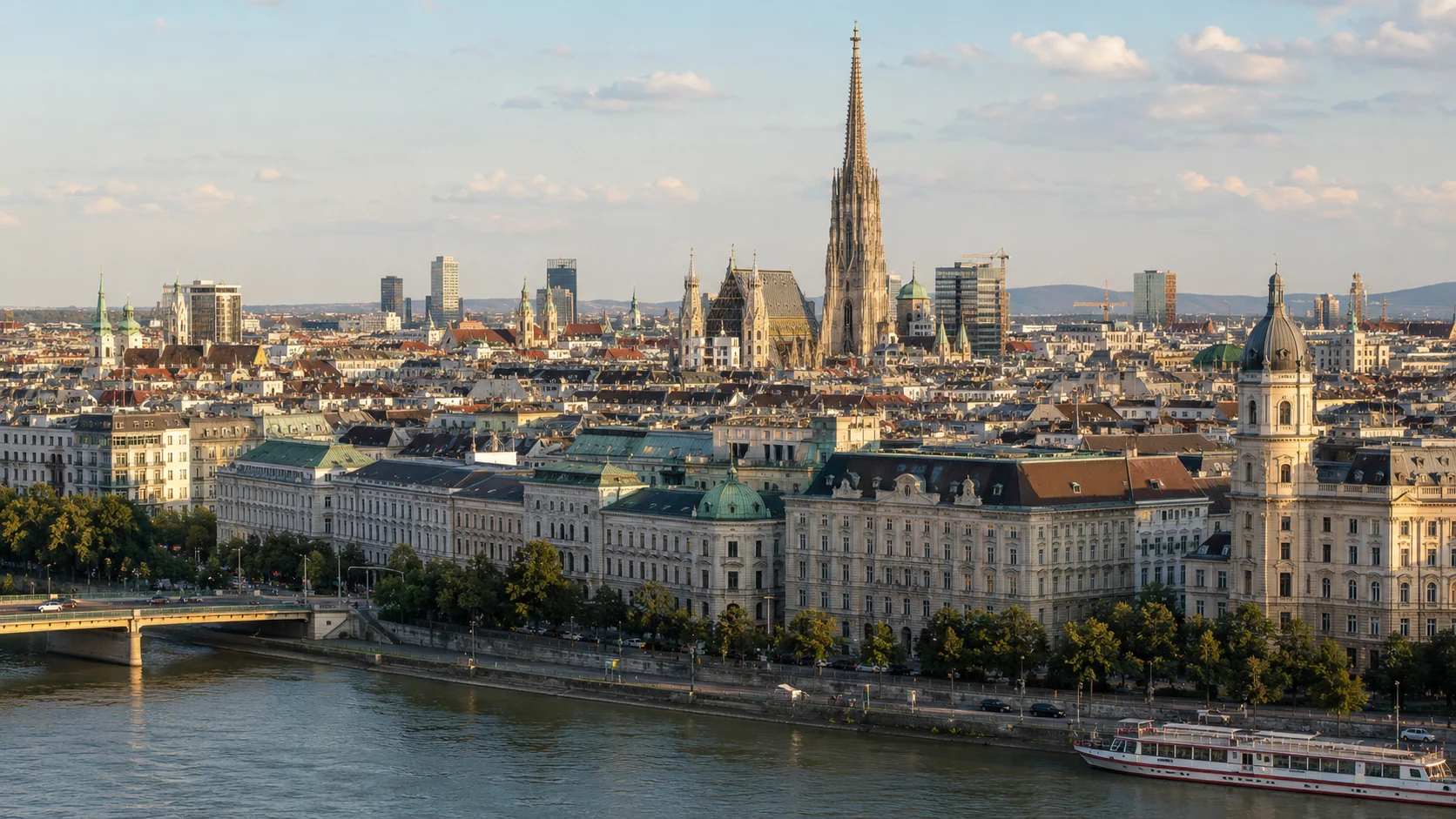
The Austrian Blue Card is the local implementation of the EU Blue Card directive for highly qualified workers. It requires a university degree (or equivalent higher education) and a job offer with an annual gross salary of at least EUR 55,678 for 2026. This threshold is set at a higher level than the RWR Key Workers minimum, positioning the Blue Card as the premium employer-sponsored route for senior professionals and specialists.
The Blue Card offers significant advantages for professionals planning a career across the European Union. After 18 months of legal residence in Austria on a Blue Card, holders can apply to transfer to another EU member state under simplified procedures. Periods of Blue Card residence in multiple EU countries can be combined toward the five-year EU long-term residence requirement, providing genuine pan-European mobility. The card is issued for 24 months and is renewable.
Common requirements
Job offer required
Must have an employment contract or binding offer from an employer in the destination country.
University degree required
A recognized university degree or equivalent qualification is required.
Country-specific variations
Compare Blue Card Austria across countries
| Country | Min salary | Processing | Duration | PR pathway | Fee |
|---|---|---|---|---|---|
| 🇦🇹AustriaBest value | €55,678/yr | 4-8 weeks | 2 years | Yes | €160 |
| 🇨🇿Czech Republic | Kč 828,000/yr | 8-12 weeks | 27 months | Yes | €198 |
| 🇫🇮Finland | Varies | 4-12 weeks | 2 years | Yes | €740 |
Apply from your country
Select your nationality to see full requirements and processing times.
visaEditorial.about
This page covers the EU Blue Card as implemented in three specific countries - Austria, the Czech Republic and Finland - and not the pan-EU overview (see /visa/eu-blue-card) or the France-specific page. Austria is the lead.
The EU Blue Card is a residence and work permit for highly qualified non-EU nationals, created by an EU directive but transposed into national law, so the details differ country by country. In Austria, the Blue Card requires a university degree and a job offer with a gross salary meeting the national threshold; it is one of several skilled routes alongside the Red-White-Red Card. In the Czech Republic, the Blue Card targets graduates with a contract for at least one year and pay above 1.5 times the average Czech gross salary, processed by the Ministry of the Interior. In Finland, the Blue Card requires higher-education qualifications and a salary set against the national reference, processed by Migri.
All three versions share the directive's benefits - family reunification, eventual EU long-term residence and intra-EU mobility after a qualifying period - but salary thresholds, contract lengths and processing differ in each country.
visaEditorial.eligibility
Across all three countries the EU Blue Card requires higher professional qualifications - normally a completed university degree of at least three years, or in some cases comparable higher vocational experience - plus a binding job offer or contract in a matching highly qualified role.
In Austria, you need a job offer whose gross salary meets the annually adjusted Blue Card threshold and a degree relevant to the post. In the Czech Republic, the contract must run for at least one year and pay at least 1.5 times the average Czech gross annual salary. In Finland, the role must require higher-education qualifications and the salary must meet the Finnish Blue Card reference level. In each case the qualification may need formal recognition, and regulated professions require national authorisation. The job must genuinely be highly qualified employment.
visaEditorial.applicationProcess
Step one: confirm which country applies and check that country's current Blue Card salary threshold and minimum contract length - these differ between Austria, the Czech Republic and Finland.
Step two: secure a qualifying job offer or contract and, if required, have your university degree formally recognised.
Step three: lodge the application with the competent authority - the Austrian immigration authority (often via the embassy or, for in-country cases, the regional office), the Czech Ministry of the Interior, or Migri through Enter Finland.
Step four: submit documents - passport, degree certificate and recognition, the employment contract showing the qualifying salary, proof of accommodation and health insurance.
Step five: provide biometrics at an embassy or service point and pay the fee.
Step six: the authority assesses the application; Finland's high-salary specialist fast-track can apply where criteria are met, while Austria and the Czech Republic follow their standard timelines.
Step seven: once granted, enter the country, complete local registration and collect the Blue Card. Family members may apply alongside you.
visaEditorial.costs
Fees differ by country. Austria's Blue Card application and card issuance fees together come to roughly EUR 160. The Czech Republic's Blue Card fees are modest, generally under EUR 100 in total, though additional administrative charges apply. Finland's Migri fee for a Blue Card applied online is in the region of EUR 480. In all three, budget for certified translations, the cost of academic-degree recognition (which can be the largest single item), biometric-appointment travel and private health insurance until public cover begins. After arrival, housing deposits and living costs in Vienna, Prague or Helsinki are the main practical expenses.
visaEditorial.processing
Processing varies by country. Austria typically decides Blue Card applications within around eight weeks of a complete submission. The Czech Republic's Ministry of the Interior generally takes two to three months. Finland's Migri can be markedly faster where the application meets fast-track specialist criteria, sometimes around two weeks, though standard cases take longer. In every country, the most common delays come from pending degree recognition, incomplete contracts or missing proof of the qualifying salary. Family applications filed together are usually processed in parallel with the main applicant's case.
visaEditorial.afterArrival
Registration steps depend on the country. In Austria, register your residence (Meldezettel) with the local authority within three days and collect your Blue Card; obtain social-insurance registration through your employer. In the Czech Republic, report to the Ministry of the Interior's foreign-police or immigration office and register your address. In Finland, register your municipality and obtain a personal identity code from the Digital and Population Data Services Agency.
In each country, open a local bank account, arrange tax registration so income tax is withheld correctly, and confirm health-insurance coverage. Accompanying family members complete their own registration, and children should be enrolled in school. Blue Card holders benefit from intra-EU mobility after a qualifying period and can progress toward EU long-term resident status, so keep continuous, well-documented residence.
💡 visaEditorial.proTip Start degree recognition before anything else - in Austria and the Czech Republic in particular, an unrecognised foreign qualification can hold up the whole Blue Card application, and recognition often takes longer than the visa decision itself.
visaEditorial.relatedTools
lead.heading
lead.description