
What is the H-2B visa?
The H-2B is a non-immigrant visa category created by the Immigration and Nationality Act for temporary, non-agricultural workers. Unlike the H-1B, which demands a bachelor's degree and a specialty occupation, the H-2B has no degree requirement and is designed precisely for skilled and semi-skilled trade roles that US employers cannot fill domestically during a defined temporary period. It is administered jointly by the Department of Labor (DOL) and US Citizenship and Immigration Services (USCIS), and workers enter as non-immigrants with a fixed end date on their authorized stay.
Federal regulations allow H-2B use only when the employer can demonstrate that its need for workers is genuinely temporary. The law recognizes four distinct categories of temporary need, and every approved petition must fit into one of them. These are not interchangeable labels; a petition that mislabels its need category can be denied, so employers and their attorneys choose carefully.
- Seasonal need - work that is tied to a season of the year by an event or pattern, such as resort construction that begins each spring, or insulation installation that ramps up before winter in northern states.
- Peakload need - the employer regularly employs permanent workers but needs supplemental labor to handle a temporary, extraordinary peak in business that it cannot staff with its existing workforce.
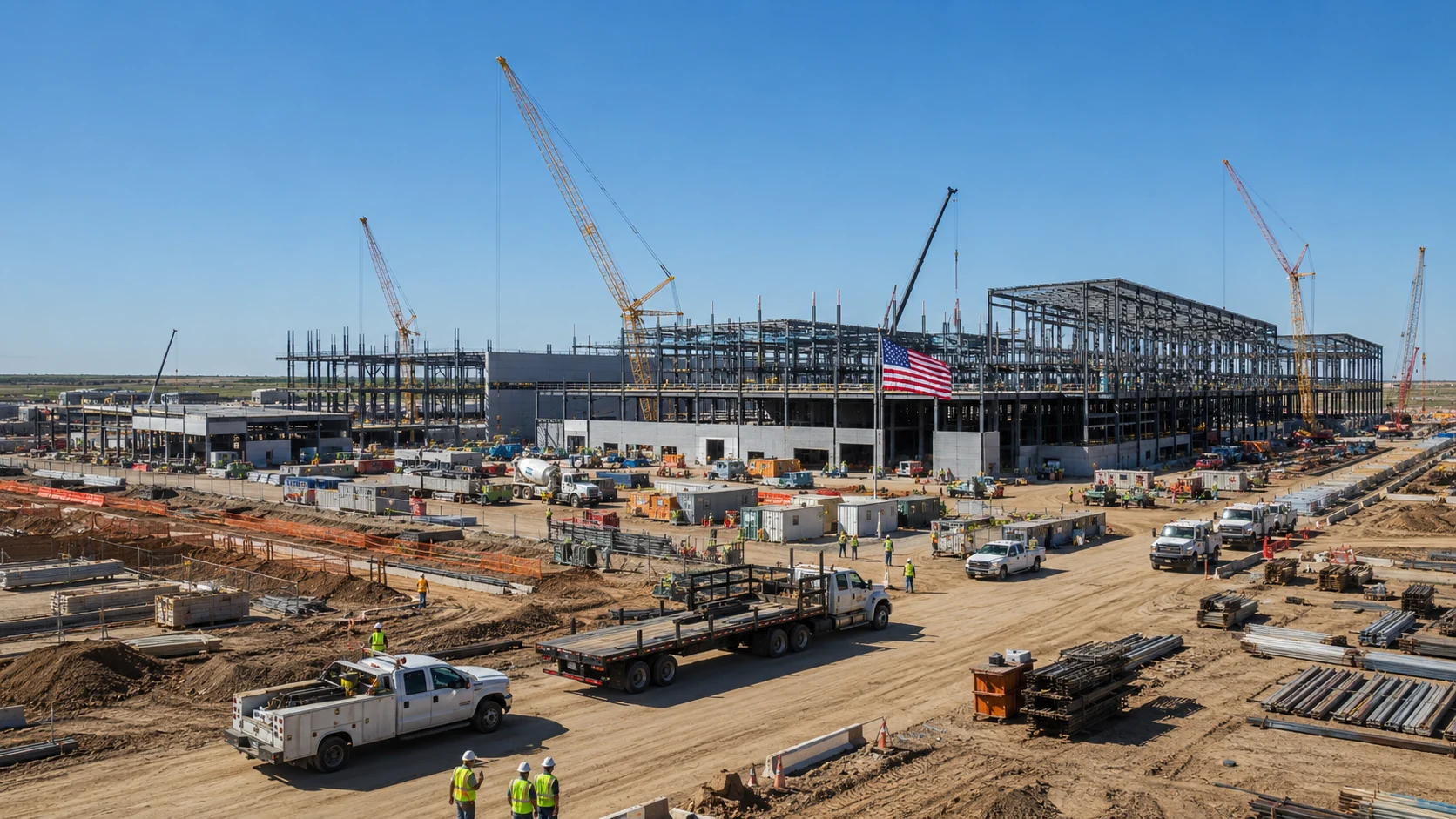
- One-time occurrence - a situation that has not occurred before and will not recur, such as a single large construction contract for a new manufacturing plant or data center campus.
- Intermittent need - the employer does not need workers on a full-time or year-round basis but needs them periodically or on a recurring basis for short periods, such as a specialty rigger called in for equipment installations a few times a year.
In practice, most H-2B petitions in skilled trades fall under seasonal, peakload, or one-time occurrence. The construction surge around AI data centers, semiconductor fabrication plants, and large-scale energy projects has driven a significant increase in one-time and peakload filings since 2023. Employers must show that the temporary need will end by a specific date and that they have a genuine plan to stop requiring those workers at that point.
Which trades and workers qualify
H-2B covers any non-agricultural occupation, which is an enormous range. The critical qualifier is not the occupation itself but the employer's ability to prove temporary need. That said, certain trade categories appear repeatedly in DOL approvals because they align naturally with project-based or seasonal construction and industrial work. If you hold certifications like NCCER credentials, EPA 608 certification, or OSHA 30, you are a stronger candidate because employers can demonstrate that you have verifiable, standardized skills.
- Structural and pipe welders (SMAW, MIG, TIG, orbital welding for pipelines and pressure vessels)
- Electricians and wiremen (commercial and industrial installation, conduit, panel work)
- CNC machine operators and precision machinists
- Ironworkers and structural steel erectors
- Riggers and crane operators
- Insulation installers (mechanical insulation for industrial piping and HVAC systems)
- Construction laborers and concrete finishers
- Scaffolders and tower erectors
- Millwrights and industrial mechanics
- HVAC installation technicians (installation-phase work on large commercial projects)
- Carpenters and form setters for industrial concrete work
- Electrical helpers and apprentice-level tradespeople supervised by a licensed journeyman
Employers must prove that qualified US workers are not available, willing, and able to perform the work at the offered prevailing wage. This is not merely a formality. The DOL requires documented recruitment steps, including advertising in local newspapers, job postings on state workforce agency boards, and outreach through union hiring halls where applicable. If the recruitment period turns up qualified, interested US workers, the employer must hire them before any H-2B slot is approved. The temporary labor certification process is the DOL's mechanism for verifying this test has been genuinely conducted.
Workers must be nationals of a country designated by the Secretary of Homeland Security as eligible for H-2B participation. DHS publishes an updated eligible-country list annually. As of recent years, this list includes Mexico, Jamaica, Guatemala, El Salvador, the Philippines, South Africa, and dozens of other nations. Notably, it does not include all countries, and workers from ineligible countries face additional barriers. Nigerian skilled workers should verify their country's current H-2B eligibility status directly with DHS before pursuing this route, as eligibility can shift year to year.
The 66,000 cap and supplemental visas
Congress set the H-2B statutory cap at 66,000 visas per fiscal year, split into two equal allotments: 33,000 for workers beginning work in the first half of the fiscal year (October 1 through March 31) and 33,000 for the second half (April 1 through September 30). This cap is reached quickly. In high-demand years, USCIS stops accepting first-half petitions by early January and second-half petitions within weeks of the April window opening. Once the cap is hit, no new H-2B visas are issued until the next allocation period, regardless of how urgent the employer's need is.
Because the statutory cap is inadequate relative to demonstrated employer demand, Congress has authorized DHS to release supplemental H-2B visas in most recent fiscal years. These supplements are issued by regulatory action, not by changing the statute, so they require annual legislative authorization. Supplements in recent years have ranged from 20,000 to more than 64,000 additional visas, and DHS has sometimes reserved a portion specifically for returning workers (individuals who held H-2B status in one of the three preceding fiscal years). The returning-worker exemption, when active, is particularly valuable: those workers are not counted against the regular cap and effectively have a faster, lower-competition path back to H-2B status.
Timing strategy matters enormously under a capped system. Employers and their immigration counsel file petitions as early as possible, typically the moment the filing window opens. Petitions can be filed up to 120 days before the start date of work. Workers who have held H-2B status before should confirm with their employer that the returning-worker supplement is being requested. Country-specific allocations also appear in some supplemental rules, so a worker from a country with a dedicated allocation may face a shorter wait than workers competing in the general pool. Talk to an immigration attorney or a licensed reputable recruiter about the current year's supplemental allocations before committing to a timeline.
How the H-2B process works
The H-2B process is employer-driven at every stage. A foreign worker cannot self-petition for an H-2B visa. The entire chain begins with a US employer who has a documented temporary need, is willing to pay prevailing wages, and is prepared to navigate a multi-agency process that typically takes three to five months from start to visa issuance. Workers who understand this sequence can have more productive conversations with prospective employers.
- Prevailing wage determination - the employer requests a prevailing wage determination from the DOL's National Prevailing Wage Center (NPWC). This sets the minimum hourly rate the employer must offer and pay to both H-2B workers and any US workers in the same role. For skilled trades in high-cost markets like Northern Virginia or Phoenix AZ, prevailing wages can be substantial: commercial electricians in some metro areas exceed $40 per hour under DOL wage levels.
- Temporary labor certification (TLC) from DOL - the employer submits a TLC application to the Chicago National Processing Center demonstrating the temporary nature of the need, the recruitment steps taken to find US workers, and the job terms. DOL must certify that there are not sufficient qualified, willing, and able US workers available. Processing typically takes 30 to 60 days if the application is complete.
- I-129 petition filed with USCIS - after receiving the certified TLC, the employer files Form I-129 (Petition for a Nonimmigrant Worker) with USCIS. This is where the H-2B cap slot is consumed. Premium processing is available for an additional fee and can reduce USCIS adjudication to 15 business days. The I-129 must list specific workers or, for unnamed beneficiaries, must be followed by individual applications.
- Consular visa application - once the I-129 is approved, each named worker applies at a US embassy or consulate in their home country for the H-2B visa stamp. This requires DS-160 form completion, a visa fee, a biometric appointment, and a consular interview. Processing times at individual consulates vary widely; popular origin countries like Mexico and the Philippines have high-volume consulates that can schedule interviews within weeks.
- Port of entry - the worker presents the H-2B visa stamp and I-797 approval notice at a US port of entry. A Customs and Border Protection officer will issue the Form I-94 authorizing the period of stay, which is tied to the approved period of employment in the I-129 petition.
Extensions are possible if the temporary need continues but must be filed before the current authorized stay expires. Each extension requires demonstrating that the need remains temporary. The maximum continuous period on H-2B is generally 3 years (an initial period plus two extensions), after which the worker must depart and spend a minimum of 3 months outside the US before a new H-2B petition can be approved in their favor.
H-2B vs EB-3 - temporary vs permanent
The fundamental difference between H-2B and EB-3 is permanence. H-2B is a non-immigrant visa: you are authorized to work for a specific employer for a specific temporary period, and when that period ends, you must leave unless you have obtained a different status. EB-3 is an immigrant visa category: it is the pathway to a green card and permanent resident status, with the legal right to live and work in the US indefinitely. Both serve skilled trade workers, but they are not alternatives to each other in the way that two competing job offers might be. They occupy different points on a career trajectory.
| Feature | H-2B | EB-3 |
|---|---|---|
| Status type | Non-immigrant (temporary) | Immigrant (permanent resident) |
| Green card | No | Yes - the end result |
| Duration | Up to ~1 year, extendable to 3 years max | Permanent once approved |
| Degree required | No | No (Skilled Worker sub-category) |
| Experience required | Not formally, but employer skill needs apply | At least 2 years of training or experience |
| PERM labor certification | Temporary labor cert from DOL | Full PERM from DOL (more complex) |
| Processing time | 3 to 5 months typical | 1 to 10+ years (depends on nationality and backlog) |
| Self-petition | No - employer-only | No - employer-only (except EB-2 NIW) |
| Change employer | Employer-specific; transfer possible but complex | Possible with job portability after 180 days |
| Best for | Proven temporary project work; first US entry | Workers seeking permanent US residence |
One critical nuance: EB-3 processing times are heavily dependent on your country of birth, not citizenship. Workers born in India and China face backlogs that can exceed 10 years for EB-3 due to per-country caps under the Immigration and Nationality Act. Workers born in most African, European, Latin American, and Southeast Asian countries face much shorter waits, often under 2 years. The EB-3 skilled trades guide covers current priority dates, PERM requirements, and employer obligations in depth.
Do not confuse the two timelines. A worker who enters on H-2B in 2026 and wants a green card cannot simply stay beyond their authorized period. They must either find an employer willing to file an EB-3 PERM petition and wait through the immigrant visa queue, or leave when H-2B expires while the EB-3 petition moves through the system. Overstaying an H-2B visa creates unlawful presence, triggers bars to admission, and can derail an otherwise viable EB-3 petition permanently.
Using H-2B as a bridge to a green card
Many successful EB-3 green card holders began their US work history on H-2B. The visa itself carries no immigrant intent provision, meaning you are not making any commitment to pursue permanent residency by holding it. However, the practical value is real: you build a documented employment history in the US, demonstrate your trade skills to an American employer under real job site conditions, and establish the human relationship that makes an employer willing to invest in a multi-year EB-3 sponsorship process.
EB-3 sponsorship is a significant commitment for an employer. The PERM process requires advertising, documentation, DOL review, and typically $3,000 to $10,000 in legal and filing fees before a single immigrant visa petition is even filed. Employers are much more likely to take on that cost for a worker they know, have worked with, and trust. An H-2B placement of even one season can be the differentiating factor. After working under H-2B, approach your employer before your departure with a direct conversation: express your interest in long-term employment, ask whether they have experience sponsoring workers for green cards, and ask whether they would be open to discussing EB-3 sponsorship if you return on a future H-2B or if you apply from abroad while the petition moves forward.
Tactically, the sequencing requires care. Filing an EB-3 PERM petition on behalf of a worker who is currently in H-2B status does not automatically extend the H-2B period. The worker may need to depart at the end of their H-2B period, return to their home country, and wait for an immigrant visa to become available and their I-140 (Immigrant Petition for Alien Workers) to be approved. In some cases, workers renew H-2B status for additional seasons while the EB-3 queue advances. The returning-worker supplement makes this strategy viable for workers from countries with shorter EB-3 backlogs: they may complete two or three H-2B seasons and see their EB-3 priority date become current within that window.
One important legal note: filing an I-140 immigrant petition while on H-2B status is legally permissible. USCIS does not treat an I-140 filing as evidence of immigrant intent that disqualifies H-2B status, because Congress has created dual-intent rules for certain nonimmigrant statuses. However, H-2B is not formally a dual-intent visa like H-1B. Consular officers retain discretion to deny H-2B renewal if they believe the worker intends to abandon their foreign residence. An immigration attorney can advise on how to structure this carefully.
H-2B and the AI infrastructure boom
The single largest driver of H-2B peakload and one-time-occurrence petitions in the construction sector right now is the AI infrastructure buildout. Meta's 2 gigawatt data center campus in Abilene TX, Microsoft's announced $80 billion in US data center investment, Amazon Web Services expansions in Northern Virginia and Columbus OH, and TSMC's semiconductor fab complex in Phoenix AZ have all created sudden, massive spikes in local construction labor demand that permanent US workforces cannot absorb fast enough. This is precisely the scenario the peakload and one-time-occurrence H-2B categories were designed for.
Data center construction is trade-intensive in a specific way. A hyperscale facility at the 500-megawatt scale requires tens of thousands of labor-hours of electrical work alone: medium-voltage switchgear installation, miles of cable tray and conduit, busway installation, UPS and battery room buildouts, and generator tie-ins. On top of electrical, there are structural steel erectors for the raised-floor systems and server hall frames, insulation installers for chilled water piping, riggers for precision equipment placement, and millwrights for raised floor panel systems. None of these require a college degree. All of them qualify for H-2B if the employer can document the peakload or one-time nature of the project.
Semiconductor fab construction is even more labor-intensive. Intel's Ohio fab, Samsung's Taylor TX facility, and Micron's planned Syracuse NY complex each involve billions of dollars in construction that stretches over multiple years and requires thousands of specialized tradespeople. Fab construction uses process piping welders, cleanroom HVAC installers, electrical rough-in crews, and ultra-pure water system installers. These roles fall into one-time occurrence H-2B because the construction project itself is a single, defined event. Once the fab is built, the peakload ends - though the facility then creates permanent operations jobs that may support EB-3 sponsorships.
Workers interested in this sector should explore the AI infrastructure jobs hub for a comprehensive breakdown of which visa categories apply to which roles across data centers, fabs, and energy infrastructure. Understanding whether your target employer is in a construction phase (more likely H-2B) or operations phase (more likely EB-3) is essential to knowing which visa pathway to pursue.
How to apply - step by step
Workers cannot initiate the H-2B process themselves, but they can position themselves to be found and selected by employers and recruiters. The practical path from interest to US entry looks like this:
- Build a documented trade profile - assemble proof of your trade skills: employer reference letters, pay stubs showing your trade role, any certifications (NCCER, AWS welding certifications, EPA 608, NFPA 70E, local licensing), and photographs or project descriptions of work you have completed. US employers and their agents want to verify your skills before investing in a petition.
- Find a legitimate employer or licensed recruiter - H-2B workers are most commonly placed through staffing firms with established US employer relationships, or directly recruited by large general contractors running major projects. Legitimate recruiters should be registered with relevant state authorities, should not charge you upfront fees for visa placement (this is a red flag for trafficking), and should be able to name the specific employer and project. Research the employer independently.
- Confirm country eligibility - verify that your country of birth or citizenship is on DHS's current H-2B eligible-country list. If it is not, a legitimate employer can petition for a waiver but this adds time and uncertainty.
- Employer files the prevailing wage request - once an employer selects you (or anticipates needing workers in your trade), they file a prevailing wage request with the NPWC. This step can take 30 to 90 days and is entirely the employer's responsibility. Stay in contact but do not pay anything at this stage.
- Employer completes DOL recruitment and files the TLC - the employer advertises for US workers as required, documents the results, and submits the temporary labor certification application. If DOL certifies the application (meaning no sufficient US workers were found), the employer proceeds to the next step.
- Employer files Form I-129 with USCIS - after DOL certification, the employer files the H-2B petition with USCIS. If premium processing is used, approval can come in 15 business days. The employer should provide you a copy of the I-797 approval notice. Without this, you cannot proceed to the consulate.
- Schedule and attend your consular interview - apply for your H-2B visa at the US embassy or consulate in your home country. You will need your passport, the DS-160 confirmation, the MRV visa fee receipt, your I-797 approval notice copy, employment offer letter, evidence of your intent to depart the US at the end of the authorized period (property ownership, family ties, bank accounts), and any trade certifications. Dress professionally and answer questions directly.
- Enter the US and report to work - upon entry, the CBP officer will stamp your passport and issue your I-94 record. Confirm your authorized stay period. Report to the employer on the agreed start date. Keep a copy of all your immigration documents and your I-94. Do not overstay your authorized period under any circumstances.
Once working, keep records of your hours, pay stubs, and project accomplishments. If you are considering the EB-3 path, begin that conversation with your employer well before your H-2B period ends. The PERM process has no fast track; the earlier the employer initiates it, the better. Legal costs for H-2B are typically borne by the employer (and in fact, the employer cannot pass most DOL-required fees to the worker), but EB-3 legal costs are a mix of employer-required and optional worker-paid elements. Clarify this early.
Obtenez des conseils visa personnalisés
Chaque situation de visa est unique. Parlez-nous de la vôtre et nos consultants agréés examineront votre dossier sous 24 heures.
Questions fréquemment posées
Can I apply for an H-2B visa on my own, without an employer?
No. H-2B is an employer-sponsored visa category. There is no self-petition option. A US employer must file the temporary labor certification with the Department of Labor and then submit the I-129 petition to USCIS. You cannot begin the process yourself; you need a qualifying employer to initiate it on your behalf.
How long can I stay in the US on H-2B?
The initial H-2B period is tied to the certified period of employment in the I-129 petition, which cannot exceed 1 year. Extensions are available in increments of up to 1 year each, for a maximum continuous stay of 3 years. After 3 consecutive years in H-2B status, you must depart and remain outside the US for at least 3 months before a new H-2B petition can be filed on your behalf.
Does H-2B lead to a green card?
Not directly. H-2B is a temporary, non-immigrant visa with no built-in path to permanent residency. However, working on H-2B can help you build an employer relationship that leads to EB-3 green card sponsorship. The employer must separately file a PERM labor certification and I-140 petition for your EB-3 case. Many skilled trade workers follow this exact route: H-2B first, then EB-3 after building trust with the employer.
What is the 66,000 H-2B cap and when does it run out?
Congress set a statutory cap of 66,000 H-2B visas per fiscal year, divided into two allotments of 33,000 each for the first and second halves of the fiscal year. In high-demand years, both allotments are exhausted within weeks of the filing window opening. DHS has the authority to issue supplemental visas above this cap, which it has done in most recent years. Workers with prior H-2B status may qualify for returning-worker exemptions that do not count against the cap.
What is the difference between H-2B and H-2A?
H-2A covers temporary agricultural workers (farm labor, crop harvesting, livestock work), while H-2B covers all other temporary non-agricultural work including construction, manufacturing, hospitality, and landscaping. H-2A has no statutory numerical cap, while H-2B is capped at 66,000 per year. Both require employer sponsorship and a temporary labor certification showing US workers are unavailable.
Can my family come with me on H-2B?
Yes. Your spouse and unmarried children under 21 may accompany you or follow to join you on H-4 dependent visas. H-4 status allows your family to live in the US for the duration of your authorized H-2B stay. However, H-4 dependents do not receive work authorization automatically; they cannot legally work in the US under H-4 status, unlike H-4 EAD holders in the H-1B context.
Can my employer change after I enter the US on H-2B?
H-2B is employer-specific and job-specific. If your employer changes or your job duties change significantly, a new H-2B petition is generally required. You cannot simply transfer to a new H-2B employer the way some other visa categories allow. If you change employers without authorization, you fall out of status. Any job change should be discussed with an immigration attorney before acting.
Which countries are eligible for H-2B?
DHS publishes and updates an eligible-country list annually. As of recent years, it includes Mexico, Jamaica, Guatemala, El Salvador, Honduras, Costa Rica, the Philippines, South Africa, and many other nations. Countries not on the list are ineligible unless DHS grants a waiver. Eligibility can change from year to year, so workers should check the current DHS notice before pursuing H-2B, especially nationals of countries not historically associated with large H-2B flows.
Articles connexes
Utilisez nos outils gratuits
Calculateurs gratuits pour CRS Canada, points Australie, Skilled Worker UK, Carte Opportunité Allemagne et seuils salariaux de 34 pays.
Voir tous les outils