
Can you appeal? Quick reference by country
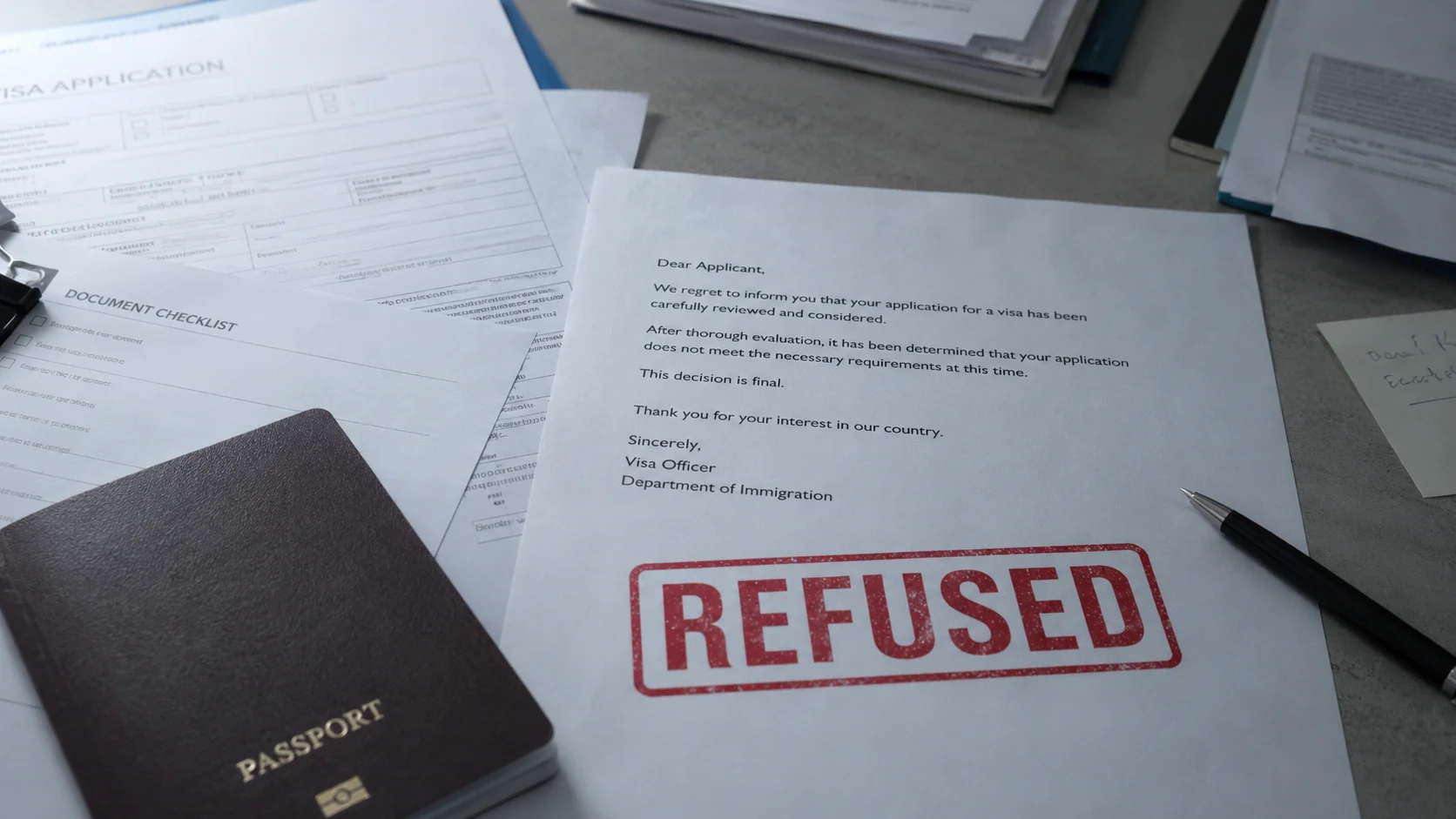
Appeal rights vary enormously across jurisdictions. The Schengen Area has a harmonised right to appeal under the Visa Code but leaves the actual procedure to each member state, which means a French Schengen refusal and a German Schengen refusal follow completely different appeal paths even though the underlying refusal grounds are identical. The UK offers Administrative Review for some visa categories but not others. The US offers no appeal at all for the most common refusal category (INA 214(b)). Canada offers judicial review at the Federal Court, but the bar is high and the remedy is a re-determination rather than a visa. The table below summarises the landscape.
| Country | Appeal? | Type | Deadline | Cost | Success Rate |
|---|---|---|---|---|---|
| Schengen | Yes | Administrative or Court | 15-60 days (varies) | EUR 50-500 | 10-20% |
| UK | AR only for most visas | Administrative Review | 28 days | GBP 80 | ~15% |
| US (214b) | No appeal | Reapply only | - | USD 185 new app | N/A |
| Canada | Judicial review | Federal Court | 15 days for leave | CAD 3,000-8,000 | <10% |
| Australia | AAT/ART | Administrative Appeals Tribunal | 21 days | AUD 1,956 | ~20% |
| New Zealand | IPT | Immigration and Protection Tribunal | 42 days | NZD 700 | ~15% |
Two patterns stand out. Appeal deadlines are short (15 to 60 days from receipt of the refusal letter, often calculated from the postmark rather than receipt date), and success rates are low (rarely above 20 percent). The combination means that appealing without a clear procedural argument is usually a losing bet on both time and money.
Appeal vs reapply - which is better?
Reapply when the refusal was driven by something you can fix. Incomplete documents are the most common reason for refusal, and they are also the easiest to remedy. A bank statement that did not show enough balance, an employer letter that lacked a specific return clause, a missing travel insurance certificate, or a weak cover letter can all be corrected in a few days. Reapplying with a fixed file lets the new officer assess the corrected version on its merits, free of the baggage of the previous refusal.
Appeal when the refusal letter contains a factual error, when the officer ignored evidence you actually submitted, when there was a procedural failure such as a required interview that did not happen, or when you have new evidence that was available at the time but not considered. These are narrow grounds. Appeal is also the right answer when reapplying would not help because the underlying refusal reason cannot be fixed (for example, a previous overstay or a fraud finding that you need to formally overturn rather than work around).
| Factor | Reapply | Appeal |
|---|---|---|
| Time to outcome | 2-8 weeks | 3-18 months |
| Cost | Visa fee only (USD 100-300) | Often 5-50x visa fee |
| Lawyer recommended | No | Usually yes for court appeals |
| Success probability | Often 60-80% with fixes | 10-20% baseline |
| Effect of failure | Another refusal, no formal record beyond visa file | Confirmed refusal of record |
| When to choose | Fixable documentary issue | Procedural error or factual mistake |
Schengen appeal - Article 32(3) explained
Article 32(3) of the EU Visa Code (Regulation 810/2009) creates a binding right to appeal for every refused Schengen short-stay visa. The exact procedure is left to each member state, which means there is no single Schengen appeal path. The general pattern is: the refusal letter must tell you the appeal authority and the deadline, you submit a written appeal addressing each refusal ground, and you receive a decision within 30 to 90 days. Appeals in France go through the Commission de recours contre les decisions de refus de visa (CRRV) within 30 days. Appeals in Germany go through Remonstration to the consulate, then to the Administrative Court of Berlin if denied. Appeals in Italy go to the TAR Lazio administrative court within 60 days.
A Schengen appeal letter should follow a standard structure: reference the refusal decision number in the subject line, identify yourself with passport number, address the refusal grounds one by one with specific evidence, attach new supporting documents where applicable (some jurisdictions allow this, others restrict the appeal to the original file), and request the specific remedy (overturn the refusal and issue the visa). Keep the tone formal and factual. Avoid emotional appeals to the officer's discretion.
Lawyer involvement is optional for simple cases but recommended for complex ones, particularly where the refusal cites Article 32(1)(a)(vi) (threat to public policy) or Article 32(1)(b) (doubts about intent to leave). In France, an immigration lawyer typically charges EUR 800 to 2,000 for a CRRV appeal. The success rate at CRRV is around 15 to 20 percent, rising to 30 to 40 percent if the appeal then progresses to the Conseil d'Etat. See our Schengen rejection deep dive for grounds-by-grounds appeal strategies.
UK Administrative Review - what it can and can't do
UK Administrative Review (AR) was introduced in 2014 as a replacement for the previous full immigration appeal right for most visa categories. AR is available for refused points-based system applications (Skilled Worker, Global Talent, Student) and for refused entry clearance in some categories, but is NOT available for refused visitor visas. The fee is GBP 80, refundable if the AR succeeds, payable when you submit. The deadline is 28 days from the date the refusal decision is sent to you, which is usually the date stamped on the decision letter rather than the date you received it.
The critical limitation of AR is that it reviews only caseworking errors by the original decision-maker. It does NOT allow you to submit new evidence, and it does NOT re-weigh the evidence that was already in front of the officer. The grounds are narrow: the officer applied the wrong immigration rule, the officer made a factual mistake about evidence you submitted, the officer ignored evidence in the file, or the officer's reasoning was procedurally improper. If you simply disagree with the officer's assessment of your evidence, AR will not help and you should reapply instead.
The AR success rate hovers around 15 percent and processing times run 28 to 90 days, sometimes longer. If your AR succeeds, the original refusal is overturned and the visa is issued or the application re-decided. If your AR fails, the only remaining route is judicial review in the High Court, which is expensive (GBP 5,000 to 30,000 in legal fees) and even harder to win. For most visitor visa refusals that have no AR right, the answer is to reapply with corrected documents. See our UK refusal reasons deep dive for guidance on what to fix.
US 214(b) - why there's no appeal
INA section 214(b) creates a statutory presumption that every non-immigrant visa applicant intends to immigrate to the US permanently. The burden is on the applicant to overcome that presumption to the satisfaction of the consular officer. If the officer is not satisfied, the visa is refused under 214(b). The doctrine of consular nonreviewability, established by the Supreme Court in Kleindienst v Mandel (1972) and reaffirmed in Trump v Hawaii (2018), holds that federal courts have no jurisdiction to review a consular officer's discretionary decision on a visa application.
The practical consequence is that you cannot appeal a 214(b) refusal in court, you cannot file a mandamus action to compel reconsideration (mandamus is reserved for delayed administrative processing, not refusals), and you cannot petition USCIS or the State Department to overturn the officer's decision. The only path forward is to reapply with stronger evidence demonstrating non-immigrant intent. The new application is treated independently of the previous refusal, although the previous refusal will be visible to the officer reviewing the new application.
The exceptions are narrow. Section 221(g) refusals (administrative processing) are not technically denials and can be resolved by submitting requested documents. Section 212(a) refusals for inadmissibility (criminal record, fraud, public charge) can sometimes be overcome by filing a Form I-601 waiver, although the waiver process is separate and not an appeal of the original refusal. See our US 214(b) deep dive for the full reapplication strategy.
Canada judicial review at Federal Court
Canada has no statutory appeal right for refused TRVs, study permits, or work permits filed from outside Canada. The only legal recourse is judicial review at the Federal Court of Canada. The process starts with an application for leave to commence judicial review, filed within 15 days of receiving the refusal for in-Canada applications or 60 days for overseas applications. The Federal Court grants leave in roughly 20 to 30 percent of cases. If leave is granted, the full hearing proceeds with both parties presenting written submissions and (rarely) oral argument.
The grounds for judicial review are narrow. The court will quash the refusal if the officer made a procedural error (such as failing to provide procedural fairness when concerns were not raised), if the officer ignored evidence in the file, if the officer made a factual error material to the decision, or if the officer's reasoning was unreasonable on its face. The court will NOT re-weigh evidence or substitute its own judgement for the officer's. The remedy when judicial review succeeds is NOT a visa approval. The file is sent back to IRCC for re-determination by a different officer, who may approve or refuse on the same facts.
Legal fees for a Canadian judicial review typically run CAD 3,000 to 8,000 depending on complexity, with most cases at the lower end if there is no oral hearing. The full process from filing to re-determination usually takes 8 to 14 months. Given the low success rate and the fact that even a successful judicial review only produces a re-determination, most refused applicants are better off reapplying with corrected documents. See our Canada refusal deep dive for GCMS notes guidance and reapplication strategy.
How to write a visa appeal letter
A visa appeal letter is a formal legal document, not a personal plea. The structure below works for Schengen, UK, and Canadian appeals with minor jurisdictional adjustments. Length should be 2 to 5 pages; longer letters dilute the argument and risk being skimmed rather than read.
- Subject line with refusal reference number. Example: APPEAL OF DECISION REFERENCE FRA-2026-04-12345 DATED 12 APRIL 2026.
- Polite opening identifying yourself with passport number, date of birth, and nationality.
- Restate each refusal reason verbatim from the refusal letter, numbered. Example: GROUND 1. The decision states that the purpose of stay was not justified.
- Address each ground with specific evidence. Cite paragraph numbers from the refusal letter and refer to specific documents already in the file or attached as new evidence.
- Attach new evidence as numbered annexes. Reference each annex in the body of the letter where it is relied upon.
- Request a specific remedy: overturn the refusal and issue the visa, or remit the application for fresh consideration by a different officer.
- Professional sign-off with your full name, signature, date, and contact details.
Do be specific. Do cite paragraph numbers from the refusal letter. Do attach corroborating evidence (bank statements, employment confirmations, property deeds, family records). Do keep the tone formal and respectful.
Do not be emotional. Do not blame the officer or accuse them of bias. Do not threaten legal action you do not intend to pursue. Do not repeat the same evidence already in the original file without explaining what is new about it. Do not exceed 5 pages for the main letter (annexes can be longer).
For Schengen and UK appeals, attach a fresh cover letter explaining the purpose of travel in detail. See our letter templates for proven formats. For Canadian judicial reviews, the legal submissions are drafted by your lawyer rather than by you, and follow Federal Court procedural rules rather than the structure above.
lead.rejectionHeading
lead.rejectionDesc
Frequently asked questions
Do I need a lawyer for a visa appeal?
For Schengen administrative appeals (Remonstration in Germany, CRRV in France), most applicants can self-file successfully if they can clearly articulate the procedural error. For UK Administrative Review, lawyers are optional but useful for spotting whether you have a valid AR ground at all. For Canadian Federal Court judicial review, a lawyer is essentially mandatory because the procedure is complex and the written submissions must follow Federal Court rules. Costs run CAD 3,000 to 8,000 for a Canadian JR vs EUR 800 to 2,000 for a French CRRV.
How long does a Schengen appeal take?
Administrative appeals (consulate-level Remonstration or CRRV) typically take 30 to 90 days. Court-level appeals (Berlin Administrative Court, TAR Lazio, Conseil d'Etat) take 6 to 18 months. The Schengen Visa Code requires a decision within 2 months of receipt but most jurisdictions exceed this deadline routinely. By the time the appeal is decided, the original travel reason has usually passed, which is one of the strongest practical arguments for reapplying instead of appealing.
Can I travel while my visa appeal is pending?
Generally no, because you do not have a valid visa. A pending appeal does not grant any travel right. The only exception is if you hold another valid visa from another Schengen member state or country. You can file another fresh application to the same or different consulate while the appeal is pending in most jurisdictions, but disclose the pending appeal in the new application or you risk a fraud finding under Article 32(1)(b).
What's the cheapest appeal route?
UK Administrative Review at GBP 80 is by far the cheapest formal appeal, and the fee is refunded if you win. Schengen administrative appeals (Remonstration in Germany, CRRV in France) cost EUR 0 to 200 depending on jurisdiction. Schengen court appeals cost EUR 100 to 500 in filing fees plus lawyer costs. US has no appeal route at any price. Canadian judicial review is the most expensive at CAD 3,000 to 8,000 in legal fees.
Does appealing hurt future applications?
A failed appeal becomes part of your visa record and is visible to future officers reviewing new applications. This is not automatically bad. A failed appeal that was filed in good faith on a legitimate procedural ground demonstrates engagement with the process, not bad intent. What hurts future applications is a fraud finding, a deception finding, or a determination that you provided false documents. A simple failed appeal on the merits is usually neutral.
Can I appeal and reapply at the same time?
Yes in most jurisdictions, but disclose both. For Schengen, you can submit a fresh application to any consulate while an appeal is pending at the original consulate, provided the new application includes truthful disclosure of the pending appeal and the previous refusal. Failing to disclose triggers Article 32(1)(b) and a likely deception finding. For UK, you can submit a new application while AR is pending but you should clearly state both. For Canada, you can reapply while a judicial review is pending and most lawyers recommend this dual track.
What is mandamus and can I use it?
Mandamus is a US federal court order compelling a government official to perform a non-discretionary duty. It is used to force USCIS or the State Department to make a decision when an application has been pending unreasonably long (typically 6 months or more in administrative processing). Mandamus does NOT compel approval; it compels a decision, which can be a refusal. It is not available for 214(b) refusals because the decision has already been made.
What is the French Commission de recours?
The Commission de recours contre les decisions de refus de visa (CRRV) is the first-instance administrative appeal body for refused French Schengen visas, based in Nantes. Appeals must be filed within 2 months of refusal in French (a French-language appeal is mandatory; lawyer or certified translator required if you do not speak French). The CRRV has 2 months to decide; silence is treated as implicit refusal. The CRRV success rate is approximately 15 to 20 percent. Further appeal to the Tribunal Administratif de Nantes is possible if CRRV refuses.
Related articles
Use our free tools
Free calculators for Canada CRS, Australia points, UK skilled worker, Germany Opportunity Card, and 34-country salary thresholds.
See all tools